


Custom Soccer Jerseys: What Every Coach Should Know
- Geoff Samuels

- 2 days ago
- 12 min read
Game day does not leave much room for uniform surprises. If jerseys arrive late, fit inconsistently, or leave players without matching shorts and socks, a coach is left solving an avoidable problem instead of preparing the team. For youth leagues and high school programs, the right uniform plan starts well before the first whistle.
Choosing custom soccer jerseys means balancing fabric performance, player fit, required kit pieces, design rules, and a dependable team-ordering timeline. Start with the competition and season requirements, then select a jersey style and customization method that gives players comfort, clear numbering, and a consistent team identity.
A complete soccer kit typically includes the jersey, shorts, and socks, but the best choice depends on your players, league requirements, and how the uniforms will be used. Before comparing styles, it helps to understand the construction details that affect comfort, durability, visibility, and the way a design holds up through a full season.
What Makes a Great Custom Soccer Jersey
A strong soccer jersey has to do more than display a team name. It should stay light and comfortable through repeated sprints, release heat and sweat, keep its shape after washing, and present numbers and logos clearly. The best choice balances fabric performance, construction quality, and a decoration method suited to your team's budget and playing conditions.
Start with fabric built for movement
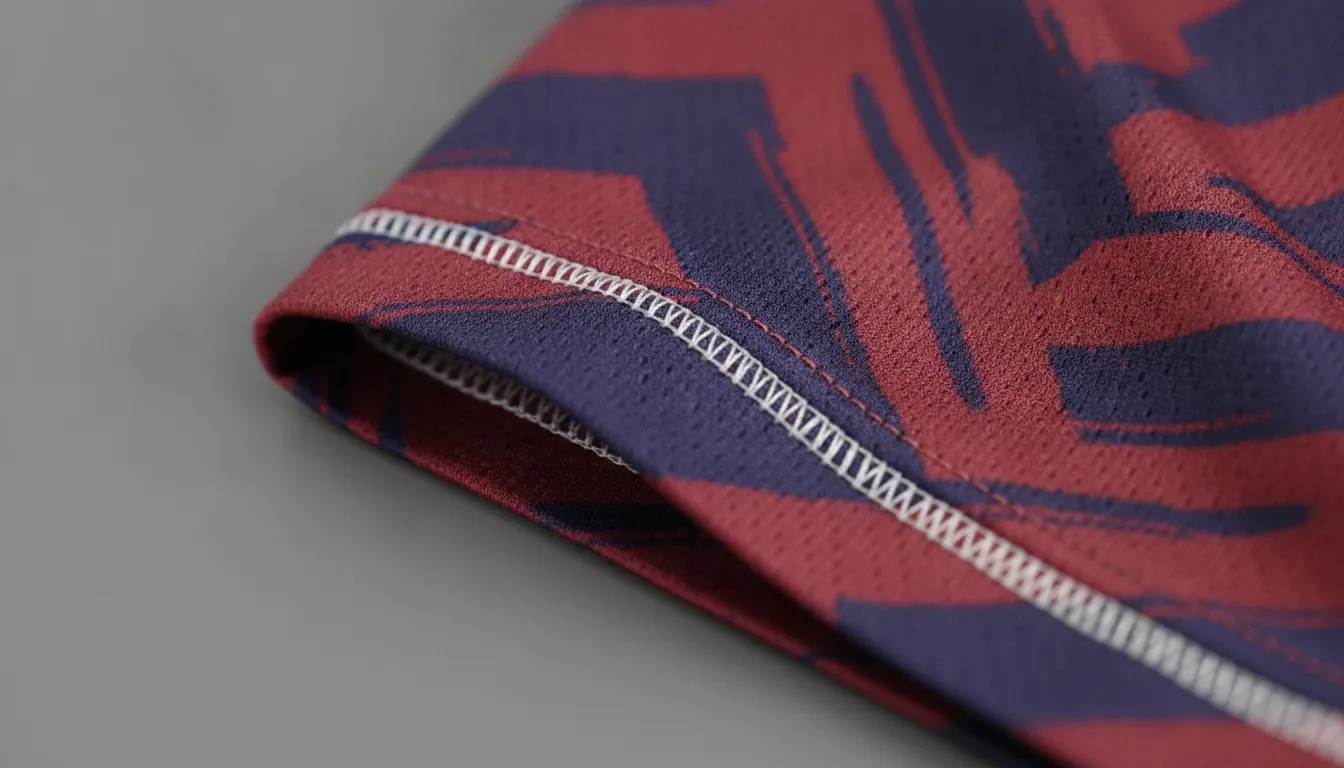
Polyester remains a practical foundation because it is lightweight, breathable, and durable. More importantly, moisture-wicking fabric helps move sweat away from the skin, so players can stay more comfortable during high-intensity play. A jersey should feel flexible rather than heavy or clingy when a player is accelerating, turning, or battling for the ball.
Construction matters as much as the fiber itself. Research from North Carolina State University describes bi-layer knitted fabric as effective for managing moisture and heat, which supports better thermal comfort for athletes (North Carolina State University textile research). Strategic mesh panels under the arms or across the back can add airflow where players tend to build heat. Look for durable stitching, too. Reinforced seams help a jersey withstand contact, frequent washing, and the everyday wear of a full season.
Choose the decoration method for the way the team plays
Sublimation is often the strongest all-around option for custom soccer jerseys. The color and design bond into the fabric instead of sitting on top of it. That means names, numbers, and logos are less likely to peel, crack, or add a stiff layer against the player. Sublimation also makes it easier to carry a detailed design across the jersey without changing the fabric's hand feel.
Screen printing and vinyl transfers can make sense when a team needs a more budget-conscious approach or a simpler decoration. They work well for straightforward numbers, names, and logos, but coaches should ask about wash care and expected wear. Washing printed jerseys inside out in cold water and air-drying can help protect surface decorations from friction.
Embroidery provides a premium, textured appearance, but it is less common on soccer jerseys. The raised stitching can create uncomfortable friction or chafing during play, particularly when a logo is placed over an area that moves against the player's skin. For most match jerseys, sublimation or a smooth print offers a better comfort tradeoff.
The right jersey is not defined by decoration alone. Confirm that the fabric, seams, artwork, and placement work together before ordering for the full roster. A sample lets you check those details under real-world conditions instead of discovering a problem on game day.
Jersey Styles and Fit Options for Youth and High School Teams
Choose a jersey around how players move, not just how it looks on a design screen. The right cut gives athletes room to sprint, turn, and battle for the ball without excess fabric. Youth and adult sizing require separate checks, while goalkeeper jerseys need added protection and every team benefits from a coordinated, regulation-ready design.
Balance mobility with a clean, secure fit
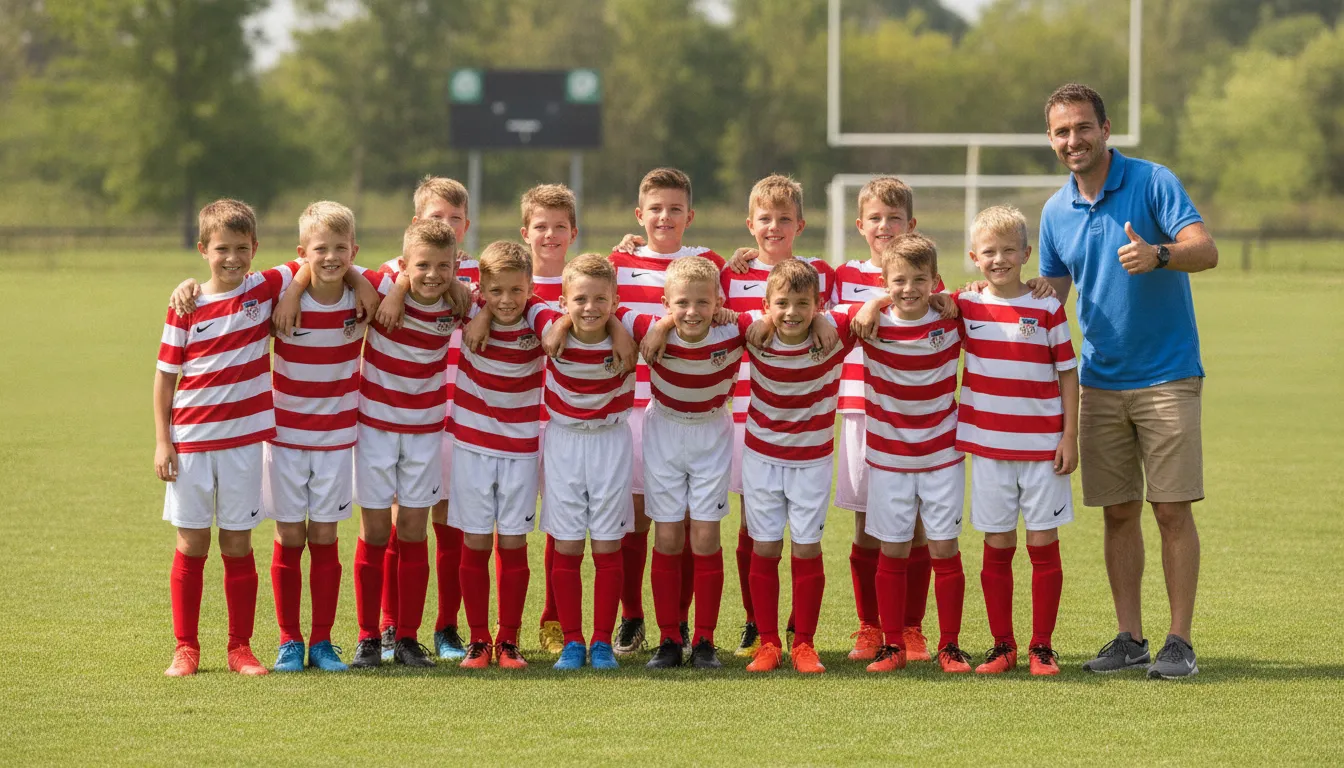
A soccer jersey should be loose enough to support a full range of motion, but tailored enough to keep excess fabric from catching, bunching, or distracting a player. Ask athletes to raise their arms, rotate their shoulders, and bend into a defensive stance when reviewing a sample. A jersey that feels comfortable while standing may feel restrictive once the match becomes fast and physical.
For high school teams, confirm whether your program prefers a traditional relaxed cut or a more athletic silhouette. The best choice can vary by player and position, so gather feedback before finalizing the order. A sample also lets coaches check sleeve length, torso coverage, neckline comfort, and how names and numbers sit on the finished garment.
Plan youth sizing separately from adult sizing
Youth sizing differs significantly from adult sizing, so do not estimate sizes from a roster or assume a player's usual shirt size will transfer directly. Set aside a sizing day with representative samples. Have each player try on the jersey over the layer they are likely to wear during training or competition, then record the selected size carefully.
Build in time to resolve outliers before customization begins. This is especially important for growing players and teams ordering in bulk. A sizing-day process reduces last-minute exchanges and helps coaches deliver a consistent look without sacrificing comfort.
Give goalkeepers position-specific protection
Goalkeepers have different equipment and movement demands. Goalkeeper-specific jerseys often use specialized materials and reinforced padding at the elbows to provide additional protection during dives and saves. Order the goalkeeper style separately from the field-player jersey, and check that its color clearly distinguishes the keeper from both teams and officials.
Customize the details that make the kit yours
Custom soccer jerseys can be tailored through jersey style, sock color, logo placement, school colors, and player personalization. Keep the visual system easy to recognize from the sideline. Strong contrast between the jersey, shorts, and socks supports visibility on the field, while a consistent crest or mascot reinforces team identity. High school programs should also verify numbering and branding requirements with their state association before approving the final design.
Soccer Shorts and Sock Requirements Every Coach Should Know
A complete soccer kit is more than a decorated jersey. Players need coordinated shorts and socks that support movement, keep shin guards secure, and create a consistent team appearance. Before ordering, confirm league expectations, choose practical materials, and decide whether home and away color options are necessary.
Start with the complete three-piece kit
A standard soccer uniform includes a jersey, shorts, and socks. Treating those pieces as one kit makes it easier to coordinate colors, confirm quantities, and avoid last-minute gaps on game day. Shorts should allow a full range of motion without feeling restrictive. Look for a cut that works while players sprint, turn, slide, and stretch.
Match the shorts to the jersey design rather than choosing them as an afterthought. A strong uniform uses a clear color hierarchy, with enough contrast to make players easy to distinguish on the field. That matters for the overall look, but it also helps preserve visual separation during a fast-moving match. If your program plays both home and away fixtures, consider ordering separate color combinations to avoid clashes with an opponent's kit. Home and away kits can also give coaches a simple backup when the primary colors are too similar.
Choose socks for security and comfort
Socks have a functional job beyond completing the uniform. They need to stay in place over the shin guards throughout warmups and play. A sock that slips can expose protective equipment, distract the player, or require repeated adjustments during a match. Confirm the fit around the calf and check that the material has enough stretch to hold the shin guard securely without creating uncomfortable pressure.
Moisture-wicking material is another important consideration. Soccer players spend long periods running, so socks should help move sweat away from the skin and support a cooler, more comfortable feel. When reviewing options, consider sock length, material, and sizing together. Youth players may need different dimensions than older athletes, and a single size may not fit every roster equally well.
Check league rules before finalizing colors
Many organized leagues require matching socks so every player presents a uniform appearance. Rules may also address color conflicts, so coaches should review competition requirements before approving the final design. Ask whether the league requires a specific sock color, prohibits certain combinations, or expects all field players to wear identical equipment.
Make a final checklist for jersey, shorts, sock color, and shin-guard compatibility before submitting the order. That small review can prevent a kit that looks complete in a mockup but fails to meet practical or league requirements when the season begins.
How to Order Custom Soccer Jerseys for Your Team
Reliable team orders begin well before the first whistle. Confirm the rules that govern your competition, build in time for review and delivery, test the sample, and make payment simple for families. A short checklist can prevent incorrect numbers, missed deadlines, sizing problems, and avoidable gaps on game day.
Verify state, league, and school requirements. Before approving artwork, ask your athletic director or league representative to confirm rules for jersey numbers, placement, colors, logos, and branding. High school programs may need to follow state association requirements, so do not assume a design that looks correct will be competition-ready. Save the approved specifications with your order notes and send them to the uniform provider.
Set your deadline four to six weeks before the season. Bulk orders need time for sizing, artwork approval, production, shipping, and corrections. Ordering at least four to six weeks before the season begins gives your staff room to handle late roster changes without turning delivery into a game-day risk. Work backward from your first match, not from the date you hope to submit the order.
Order a sample kit before committing to the full run. A sample jersey or kit lets you inspect the fabric, confirm the fit, review the colors, and check that numbers and logos appear as expected. Use it for a sizing session with players or representatives from each age group. Youth sizing can differ substantially from adult sizing, so measuring once for the whole team is safer than relying on assumptions.
Choose the payment process that fits your program. An online team store can let parents order and pay for their child's uniform directly, reducing the administrative work for coaches. Establish a firm ordering window, publish the required items clearly, and decide whether the store will include the complete kit or separate jerseys, shorts, and socks. Review the final roster and order report before production begins.
Plan for replacements and special roster needs. Order a few backup uniforms for lost, damaged, or heavily worn gear. This is especially useful when a team travels, plays on multiple surfaces, or has younger players still growing. For club teams, decide whether player names belong on the jerseys. Individual personalization can strengthen team identity, but it also requires an accurate roster and a clear cutoff for changes.
Keep the approved artwork, size results, roster, and deadline in one shared file. That record gives coaches, parents, and the supplier the same reference point, making the order easier to verify before it enters production. For a closer look at designing and ordering a full match-day look, see our guide to custom soccer uniforms from design through delivery.
How Much Do Custom Soccer Jerseys for a Team Cost?
There is no single answer because team uniform budgets depend on the scope of the order, not just the jersey itself. Start by deciding which pieces need decoration, how many kits you need, and whether every player gets personal details. Then choose a decoration method that fits your priorities for durability, appearance, and budget.
For teams managing a tighter budget, high-quality screen printing or vinyl transfers can provide a practical way to add numbers. Names, and logos without choosing the most advanced decoration method. These options work well when the design is straightforward and the team needs to control the scope of customization. Ask how the decoration will be applied, how it should be washed, and whether it is suitable for repeated game-day use. Screen-printed details last longer when jerseys are washed inside out in cold water and air-dried.
Sublimation is the premium choice when you want a no-peel finish. The process bonds color and design directly into the fabric, so names, numbers, and logos become part of the jersey rather than sitting on top of it. That makes sublimation especially useful for detailed designs, full-coverage patterns, and teams that want a consistent look over multiple seasons. It is also worth considering when comfort matters, since a smooth printed surface can be preferable to bulky decoration during play. Learn more about soccer jersey decoration options before you finalize the design.
Decide what your team actually needs
Build the order around the season rather than adding every possible option at once. A basic order may cover one jersey design with a team logo and player numbers. A broader kit may include jerseys, shorts, and matching socks, while a club program may also need player names. Goalkeeper variations, home and away colors, or a few backup sets for lost or damaged gear. Each choice changes the amount of customization and coordination required.
Before approving the order, confirm player quantities, youth and adult sizes, number assignments, and whether league rules affect logos or numbering. A sample kit can help you check fit, material, and decoration accuracy before the full order. Choosing a supplier that is fast and reliable can also protect the budget by reducing waste from late changes, incorrect sizes, or reorders. The lowest initial scope is not always the least expensive path if it creates avoidable replacement work during the season.
How Do I Design Custom Soccer Jerseys for My Team?
Start with the identity your players already know, then turn it into a clear, field-ready design. Choose school colors and mascot elements, build enough contrast for visibility, plan home and away options, and confirm the finished kit meets league requirements before ordering.
The strongest designs feel familiar to the school or club without becoming visually crowded. Begin by identifying the elements that should remain consistent across your program: the primary and secondary colors, mascot, school name, crest, and any established visual details. A professional designer can help translate those pieces into a jersey that looks distinctive at full speed and still feels like your team.
That identity has more meaning than decoration. Jersey designs often incorporate symbols and colors that represent a team's history and cultural identity, and the World Cup kit designs studied by design researchers at the University of Oregon show how much thought goes into that visual identity. Consider whether your design should reference a championship era, a school tradition, a local landmark, or a mascot detail. One strong visual idea usually works better than several competing graphics.
Use contrast to keep the kit readable
A design that looks good on a computer screen may lose clarity once players are spread across a large field. Contrast the jersey with the shorts, socks, numbers, and lettering so teammates, officials, and spectators can distinguish the kit quickly. The University of Oregon's discussion of World Cup jersey design emphasizes color contrast as a tool for visibility and a distinct on-field appearance. Test the design in natural light and at a distance, not only in a digital proof.
Think carefully about number placement and color. Numbers need to stand apart from the jersey pattern, while names and sponsor or school marks should remain legible without dominating the design. Your designer can recommend a restrained pattern, a contrasting panel, or a solid number area when a bold base color makes readability difficult.
Plan for match-day requirements
Many programs need both home and away kits to avoid a color clash with an opponent. The two versions can share the same crest, typography, and design language while using different dominant colors. This keeps the program recognizable without forcing a last-minute change before an important match. Include shorts and socks in the review, because the complete kit should work as one coordinated uniform.
Finally, check the design against your league or state association rules before approving production. High school programs may have specific requirements for numbering and branding, and league rules can affect acceptable colors, logos, or uniform combinations. Your provider's in-house design support can help prepare the artwork, but the coach or athletic department should confirm the final design with the governing organization. The goal is a kit that represents the team confidently, performs comfortably, and is approved when the season begins.
Frequently Asked Questions
How much do custom soccer jerseys cost?
Cost depends on the jersey style, fabric, decoration method, and whether you are ordering a complete kit with shorts and socks. Sublimation, screen printing, and vinyl transfers offer different ways to balance design detail, durability, and budget. Request a team-specific quote after confirming quantities, sizes, names, numbers, and decoration preferences.
How do I design custom soccer jerseys for my team?
Start with your school or club colors, mascot, logo, and preferred jersey cut. Then confirm the number and name placement, choose coordinating shorts and socks, and review a digital proof before production. For high school programs, verify numbering and branding requirements with your state association before approving the final design.
What comes with a complete soccer uniform?
A complete uniform normally includes a jersey, shorts, and matching socks. Ask whether each item is included in the quote, especially if your program needs home and away kits. Matching socks can also matter for league compliance, while the right sock height helps keep shin guards securely covered.
How early should a team order soccer uniforms?
Youth programs should generally place bulk orders at least four to six weeks before the season begins to allow time for customization and shipping. Build in additional time for collecting player sizes, checking artwork, approving proofs, and correcting any roster or numbering changes. Source: Uniforms Express soccer uniform guidance.
Are inexpensive custom soccer jerseys worth it?
They can be, if the material, decoration method, fit, and delivery schedule meet your program's needs. Compare more than the unit price. Lightweight polyester and moisture-wicking construction support comfort, while sublimation bonds the design into the fabric rather than leaving a surface layer that can peel. For a tight budget, ask about screen printing or vinyl options.
Get Started on Your Team's Custom Soccer Kits
With the right jersey, shorts, and socks selected together, your team can move into the season with a coordinated kit built around its needs. For help choosing options and organizing your order, design and order your team's custom soccer kits with a quick consultation and no-rush fees. You can also call 888-661-7044 to talk through your team's next step.


Comments