


Custom Baseball Jerseys: Styles, Fabrics and Design Guide
- Geoff Samuels

- 6 days ago
- 10 min read
When a baseball season is approaching, the uniform decision is more than choosing a color. Coaches and administrators need jerseys that fit the team's identity, hold up through practices and games, and arrive on a dependable schedule.
Custom baseball jerseys are built by choosing a jersey style, performance fabric, and decoration method that match how your team plays and presents itself. Button-up, v-neck, 2-button, and raglan designs create different looks and movement, while tackle-twill and sublimation offer distinct approaches to team branding. A vertically integrated manufacturer can also control production from raw materials through final delivery, supporting consistent quality and faster turnaround.
The right starting point is the jersey cut. Understanding how each style balances tradition, comfort, and range of motion makes it easier to narrow your options before evaluating fabric, graphics, names, and numbers.
Custom Baseball Jersey Styles: Button-Up, V-Neck, 2-Button and Raglan
The right jersey cut shapes how a team looks before the first pitch and how players feel through a full game. Custom baseball jerseys can be built in four core styles: full button-up, v-neck, 2-button, and raglan sleeve. Each creates a different visual impression, so the best choice depends on your team's tradition, age group, branding, and movement needs.
Full button-up: the traditional baseball look
A full button-up jersey delivers the most recognizable baseball aesthetic. The continuous front opening creates a classic, professional appearance that works especially well for high school programs. Established clubs, and teams that want a timeless look across multiple seasons. It also gives you a clean framework for placing a team name, logo, or contrasting trim without competing with a short neckline.
This style is a strong fit when uniform identity matters as much as on-field function. Pair it with traditional lettering or sewn decoration for a dimensional appearance, or use a modern color layout to give the classic silhouette a fresher direction.
V-neck: a clean, modern alternative
The v-neck offers a more streamlined alternative to the full button-up. Its open neckline creates a contemporary profile while keeping the jersey comfortable and easy to layer. Teams seeking a modern update without moving too far from a traditional baseball uniform often choose this style. It can also work well for programs that want a simple, uncluttered front and a strong focus on color blocking or sleeve details.
2-button: balanced and versatile
A 2-button jersey sits between the full button-up and v-neck in both appearance and function. The short placket retains a classic baseball detail, while the reduced number of buttons gives the front a lighter, more athletic feel. That balance makes it versatile for youth leagues, travel teams, and school programs with players who want a traditional uniform that feels less formal.
Because the neckline provides a distinct focal point, consider how it works with your team's name, logo, and trim. A well-planned 2-button design can look polished without adding unnecessary visual detail.
Raglan sleeves: built for movement
Raglan sleeves extend toward the collar rather than meeting the body at a conventional shoulder seam. That construction gives pitchers and fielders increased range of motion, an important performance consideration when throwing, reaching, and rotating repeatedly. Raglan sleeves also create a distinctive diagonal seam that can reinforce a two-tone color scheme or make the jersey feel more athletic.
When comparing styles, start with the way your team plays and the image you want to project. Review the available custom baseball jersey styles, then match the cut to your decoration method, team colors, and player needs. A manufacturer can help you confirm that the chosen neckline and sleeve construction support both a consistent team look and comfortable movement.
What Fabrics Make the Best Custom Baseball Jerseys?
The best jersey fabric depends on how your team plays, where it plays, and how much wear the uniform must withstand. For most baseball programs. Performance polyester is the practical starting point because moisture-wicking construction helps move sweat away from the skin and keeps players more comfortable during long practices. Hot tournaments, and doubleheaders. That comfort matters when athletes are sprinting, sliding, and standing in the sun for several innings.
Moisture management should not be confused with a guarantee that every polyester jersey feels the same. Yarn, knit structure, and finishing all affect the result. Advanced textile materials can improve thermophysiological comfort during heat stress. So coaches should ask what performance features are built into the fabric rather than choosing based on fiber name alone. The right specification should support movement without becoming heavy or restrictive when the jersey gets damp.
Performance polyester for a full season
Professional-grade fabric is designed to give a team more than a good first impression. It needs to hold its shape through repeated games, washing, travel, and equipment-bag wear. Fabric weight and knit structure create the main tradeoff: a denser or heavier knit can contribute to durability and a substantial feel. While a lighter, more open construction generally improves airflow and breathability. For a high school or travel program playing through warm weather, prioritize ventilation and moisture control. For a team facing frequent contact, repeated laundering, or a long season, place more emphasis on recovery, abrasion resistance, and overall durability.
Ask for a fabric recommendation based on your actual schedule. A coach outfitting a youth league may want a comfortable, durable option that can handle high turnover and regular washing. A select club may value a more premium hand feel and performance finish for year-round competition. Reviewing the details in Uniforms 101 can help your staff compare construction choices before approving a full team order.
When recycled polyester or UPF protection matters
Recycled-polyester yarns are another option to discuss with your uniform manufacturer. Research on standard and recycled polyester fabrics examines their mechanical and physiological performance in sports applications. But the final jersey still depends on the specific knit and manufacturing specification. Ask whether the selected recycled option meets your team's durability and comfort requirements, not simply whether it uses recycled content.
For teams that spend extended hours outdoors, ask whether a UPF 50+ fabric option is available and appropriate for the jersey design. Sun protection is a selection consideration, not a substitute for shade, sunscreen, or other coaching guidance. Finally, coordinate the jersey fabric with the rest of the uniform. A breathable top paired with well-matched custom baseball pants creates a more consistent feel across the full kit. The strongest choice balances comfort, breathability, and season-long durability for the conditions your players will actually face.
Decoration Methods: Tackle Twill vs Sublimation
Decoration determines how a baseball jersey looks on the field, how it feels during play, and how much flexibility the design team has. Custom baseball jerseys can use traditional tackle-twill sewn decoration or fully sublimated graphics, and each method suits a different team aesthetic. The right choice depends on whether you want a raised, classic uniform appearance or a lightweight jersey with detailed graphics across the entire garment.
When tackle twill is the better fit
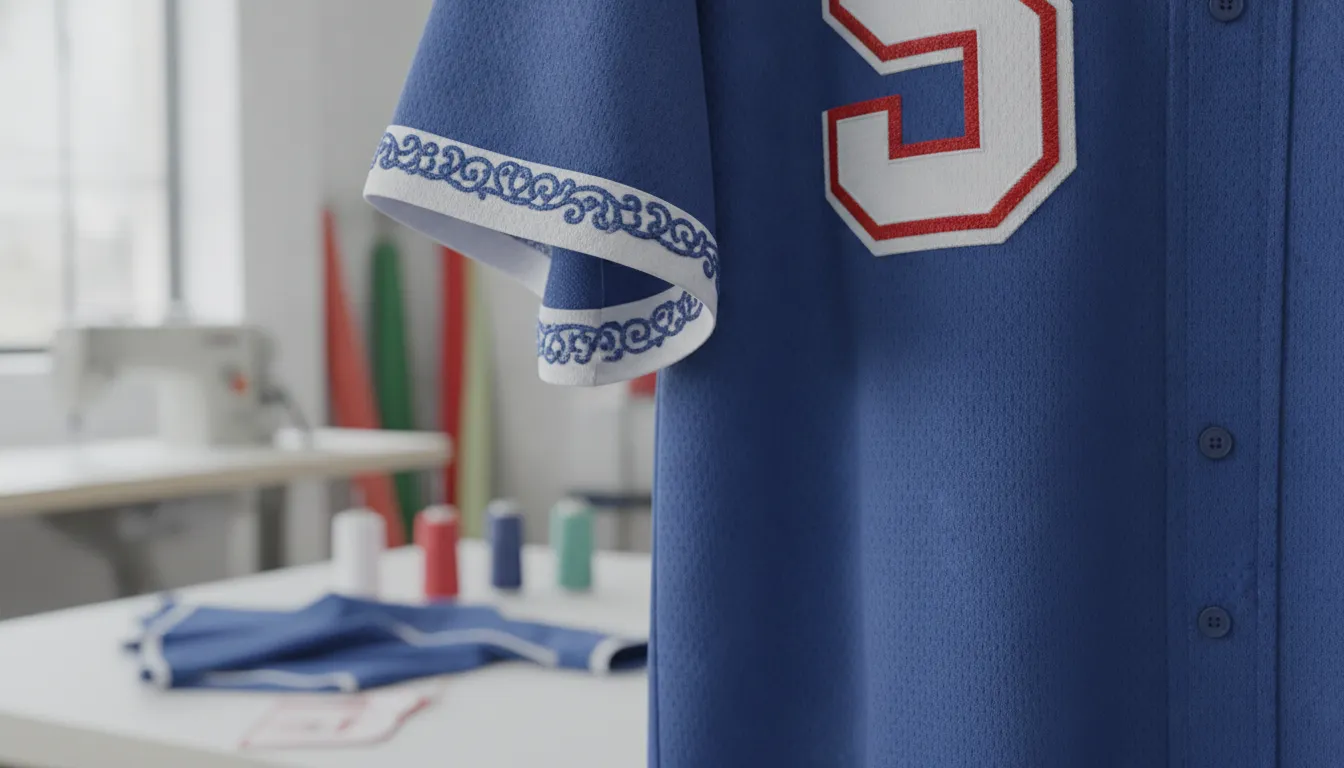
Tackle twill gives a jersey the unmistakable look of traditional baseball apparel. Sewn lettering and numbers stand away from the fabric, adding visual depth that works especially well for a clean wordmark, a simple crest, or a heritage-inspired uniform. It is a strong option for teams that want their identity to feel established and recognizable without covering the jersey in a complex graphic.
When sublimation makes more sense
Sublimation is the more flexible choice for an all-over design. The process fuses the graphic into polyester fabric rather than placing a separate layer on top, which helps prevent peeling and cracking. It also supports detailed artwork, multiple colors, and patterns that would be difficult to reproduce with sewn pieces. Because sublimated options use moisture-management technologies, they can support teams that prioritize a smooth, lightweight performance feel.
For a traditional look, start with tackle twill. For maximum design range and integrated performance graphics, start with sublimation. Review the available custom baseball jersey options with your team's logo, colors, roster details, and intended use in mind.
How to Design Custom Baseball Jerseys for Your Team
A strong jersey design does more than identify players on the field. It gives a roster a shared visual identity, reinforces team pride, and helps coaches present a consistent, professional image throughout the season. A practical design process also keeps the project focused, so every choice supports comfort, recognition, and the way your team actually plays.
Choose the jersey style and fabric
Start with the cut that fits your team's playing style and preferred look. Full button-up, v-neck, 2-button, and raglan sleeve designs are all available options. Raglan sleeves can provide more range of motion for pitchers and fielders, while a full button-up can create a traditional baseball appearance. Next, select a fabric suited to the season and workload. Moisture-wicking polyester helps athletes stay dry during activity, and professional-grade fabric is designed to withstand a competitive season. Fabric weight and knit structure also affect the balance between durability and breathability. Review the available custom baseball jersey styles and fabric options before committing to a sample direction.
Plan the logo and other brand marks
Decide which mark should lead the design. Many teams place the primary logo or wordmark across the chest, then use a secondary mark on a sleeve or upper back. Keep the most important element large enough to read from the stands, and make sure its placement works with buttons, seams, and the player number. Personalized athletic apparel can support a club's broader brand identity, particularly for travel and select programs. A consistent logo system helps every player look like part of the same organization rather than wearing unrelated pieces.
Assign player numbers and team naming
Confirm the roster and numbering before artwork is finalized. Player numbers should be clearly visible from the front and back, with enough contrast against the jersey body for quick recognition. Establish how the team name, city, mascot, or club abbreviation will appear, including capitalization and spelling. This small review prevents avoidable artwork revisions and makes sure every jersey follows the same naming convention.
Set the color system and decoration approach
Choose a primary color, supporting color, and accent that reflect the team without making the numbers or logo difficult to read. Check the palette under outdoor sunlight and stadium lighting, not only on a computer screen. Then match the decoration method to the desired result. Tackle-twill sewn decoration offers a classic, dimensional baseball look, while sublimation supports detailed, all-over graphics and moisture-management performance. Both approaches can produce a cohesive identity when the colors, marks, and typography are used consistently.
Review the design for the season ahead
Before approval, check the final proof against the roster, planned weather, game schedule, and replacement needs. A lighter, breathable choice may be more comfortable for warm-weather play, while a durable construction matters for teams wearing the same design through practices and games. Ask players and staff to review visibility, fit expectations, and overall identity. Once the group agrees, approve one complete sample or proof for consistency before placing the team order.
When each decision supports both performance and recognition, the finished uniform becomes part of how the team carries itself. Clear design standards make it easier to outfit new players, replace worn pieces, and preserve the identity your program has built.
Ordering From a Direct Manufacturer: Turnaround, Minimums and Support
Ordering custom baseball jerseys should give your program a clear path from design approval to game day, not a chain of uncertain handoffs. Uniforms Express controls production from raw materials through final delivery as a vertically integrated manufacturer. That structure supports more direct communication, tighter quality oversight, and practical turnaround options for high school programs, youth leagues, and travel clubs.
A manageable minimum for growing teams
The minimum order for custom baseball apparel is 12 pieces. That works well for a small roster, a youth team, or a club ordering a limited run for coaches and players. It also gives larger programs room to order by team, age group, or season rather than committing to an unnecessarily large quantity at the start. Youth leagues, in particular, need uniforms that balance durability and affordability as rosters change from year to year.
Turnaround built around the season
New baseball orders have a two-week turnaround time. For a team working toward an opening-day deadline, that timeline can make custom uniforms practical even when planning starts later than expected. It is still important to submit accurate sizes, names, numbers, artwork, and approvals promptly so production can begin without avoidable delays.
Unexpected problems require a different kind of support. When a uniform is damaged or a replacement is urgently needed during the season, emergency replacement may be possible in under one week. Availability depends on the order details and production requirements. But the option gives athletic directors and coaches a meaningful way to respond when a player cannot wait for a standard reorder cycle.
Speed and value without extra production layers
Because Uniforms Express owns and manages its manufacturing facilities, the team overseeing your order can work within the same production system responsible for making it. This direct model helps connect design decisions, manufacturing, quality control, and delivery. It also avoids the added markups associated with intermediary arrangements, helping keep custom uniform value accessible for programs with different budgets.
Support continues after the order is placed. Uniforms Express backs its uniforms with a lifetime warranty and offers a 15-minute callback guarantee. Those commitments matter when a coach needs an answer before practice, an administrator is coordinating several teams, or a replacement question cannot wait for a generic support queue. You can learn more about the company's production approach on the Uniforms Express About Us page and review options for complete custom baseball uniform sets.
Frequently Asked Questions
What styles of custom baseball jerseys are available?
Teams can choose full button-up, v-neck, 2-button, and raglan sleeve designs. Raglan sleeves are a practical option for players who want added freedom of movement while pitching, batting, or fielding. The best style depends on your team's preferred look, playing needs, and decoration plan.
Which decoration method works best for a baseball jersey?
Tackle-twill sewn decoration creates a classic, dimensional baseball look, while sublimation supports detailed, all-over graphics with designs fused into the fabric. Choose based on the visual style, level of detail, and performance priorities your team has established.
What fabric should teams choose for baseball jerseys?
Moisture-wicking polyester is a common performance choice because it helps move sweat away from the body during play. Professional-grade fabrics can support durability across a competitive season, while fabric weight and knit structure should be considered alongside breathability and the team's playing environment.
What is the minimum order for custom baseball jerseys?
Uniforms Express requires a minimum order of 12 pieces for custom baseball apparel. That minimum can work for a full roster, a smaller club, or a planned replacement group. Confirm sizes and quantities before approving the final production details. See the baseball jersey options.
How long does it take to get custom baseball jerseys?
New baseball orders have a two-week turnaround, and emergency replacement may be possible in under one week. Share your required in-hand date when requesting a quote so the production team can review the schedule and recommend the appropriate path. Learn about the manufacturing process.
Schedule a Custom Baseball Jersey Consultation
A brief consultation can help your team align its jersey style, fabric, decoration, and design details before requesting a quote. When you are ready to get started, request a free custom baseball jersey consultation and quote. Uniforms Express can help you move from your team's ideas to a clear uniform plan, with no-rush fees.


Comments