


Coach Uniforms Custom Buying Checklist for Coaches

A team can take the field looking unified and still leave its coaches in mismatched gear that does not fit the job. Planning coach uniforms custom is easier when you decide who needs apparel, where it will be worn, and which details must match the players’ uniforms before you request options.
What should you decide before ordering coach uniforms custom?
Start with the staff roster and the situations each person’s apparel must handle. A head coach working in the dugout may need a different combination from a base coach, bullpen coach, or administrator traveling with the team. Set the use, quantity, and coordination goals first; those decisions make product selection and approval much more straightforward.
First, define who belongs in the order. List head and assistant coaches, volunteers who need team apparel, athletic staff, and any other approved team representatives. Confirm the number of people with the person responsible for the roster, rather than estimating from last season. Staff changes, role changes, and new assistants can all affect quantities and sizes.
Next, write down when and where each person expects to wear the apparel. Consider practices, games, travel, pregame activities, team events, and daily school or club duties. A garment that works well for a cool evening game may be too warm for a summer practice. A polished sideline look may call for a different layer than an item intended for workouts. List these use cases rather than asking one item to do everything.
Decide whether the goal is a complete staff uniform or a coordinated set of separate pieces. A complete set can create a consistent appearance across the coaching group. A smaller selection of matching tops, jackets, or hats may be more practical if staff members have different duties or already own suitable team-colored clothing. Choose a clear standard for what makes the group look coordinated: matching colors, a shared logo placement, or a consistent combination of items.
Before seeking product options, collect the team’s approved colors, logo files, preferred name and number treatment, and any school or club identity rules. Confirm who has permission to approve the artwork. If coaches’ apparel should match player gear, decide which elements must align and which can differ for staff. Browse the custom baseball uniform options as a reference point for the team’s overall look, then identify the staff pieces that would complement it.
Finally, name the decision-maker and the person who will coordinate sizes, proof review, and delivery. That may be the head coach, team manager, athletic director, or purchasing contact. One clear owner helps keep feedback consolidated and reduces the chance that different staff members approve conflicting versions.
Before requesting the first proposal, separate must-haves from preferences. The team’s approved identity, usable fit, and required date may be essential; a second optional layer or extra personalization may be flexible. This distinction makes it easier to compare realistic combinations and gives the person approving the order a clear basis for saying yes, adjusting the scope, or asking for another option.
Which coach apparel options fit different baseball duties?
There is no single best coach outfit for every team. Choose apparel based on the wearer’s role, movement, weather, and how formal the team wants to look. A short list of items selected for specific uses is easier to budget and size than a large assortment chosen without a purpose.
For field work and practice, look at breathable tops and training apparel that allow coaches to move, demonstrate drills, and work around equipment. Decide whether short sleeves, long sleeves, or both make sense for your schedule and climate. Coaches who spend time outside may want a layer for changing conditions, while staff who mainly work in a dugout or indoor facility may prefer a different mix.
For game days, consider whether the staff should wear a matching jersey, a team shirt, or a coordinated outer layer. The choice depends on your team’s identity and the level of formality you want. A matching top can distinguish coaches from spectators and present a deliberate team appearance. Jackets can make sense for cool weather or travel. The baseball jacket options offer a useful product reference when planning a layer that belongs with the rest of the team look.
Hats can be an easy way to keep the staff’s appearance consistent, but do not assume one style or fit works for everyone. Ask staff members which cap shape they are comfortable wearing and whether they need adjustable sizing. If hats are part of the order, review the available custom baseball hat choices alongside the team’s other apparel so the colors and identity elements feel connected.
Some programs prefer to coordinate coaches with players closely; others want staff apparel to share the team colors while using a distinct design. Both approaches can work. Make the choice deliberately. A staff-only accent, simplified decoration, or different garment type can create a clear distinction while preserving the team identity. The key is consistency across the coaching group, not making every piece identical to a player’s uniform.
Use the table below to turn general preferences into a practical shortlist. It is a planning aid, not a rule that every coach needs every item. Cross out options that do not fit your season, staff roles, or existing apparel, and use the remaining rows to guide a product conversation.
Apparel option | Best fit for | Decision to make | Coordination check |
Performance or training top | Practice, instruction, and active field work | Short or long sleeve; number of pieces per person | Match the team colors and choose logo placement |
Game-day jersey or team shirt | Games, team events, and a unified sideline look | Which coaches need one and how names or numbers will appear | Decide how closely it should echo player uniforms |
Jacket or warm-up layer | Cooler conditions, travel, and pregame wear | Layer type, expected use, and who needs it | Check color and decoration against the main top |
Custom team cap | Outdoor use and a consistent staff identity | Cap style, fit, and who will wear it | Confirm the logo treatment and colors are legible |
Baseball pants or coordinated bottoms | Programs seeking a more complete staff uniform | Whether matching bottoms are actually needed | Check the combination with the selected tops |
For teams ordering player and staff apparel together, keep the scopes clear. Record which products are for the roster and which are for coaches, and ask how the products can be coordinated in one design plan. Uniforms Express has a dedicated baseball uniform packages page for teams reviewing complete player sets; use it to clarify the player order separately from the coaches’ apparel plan.
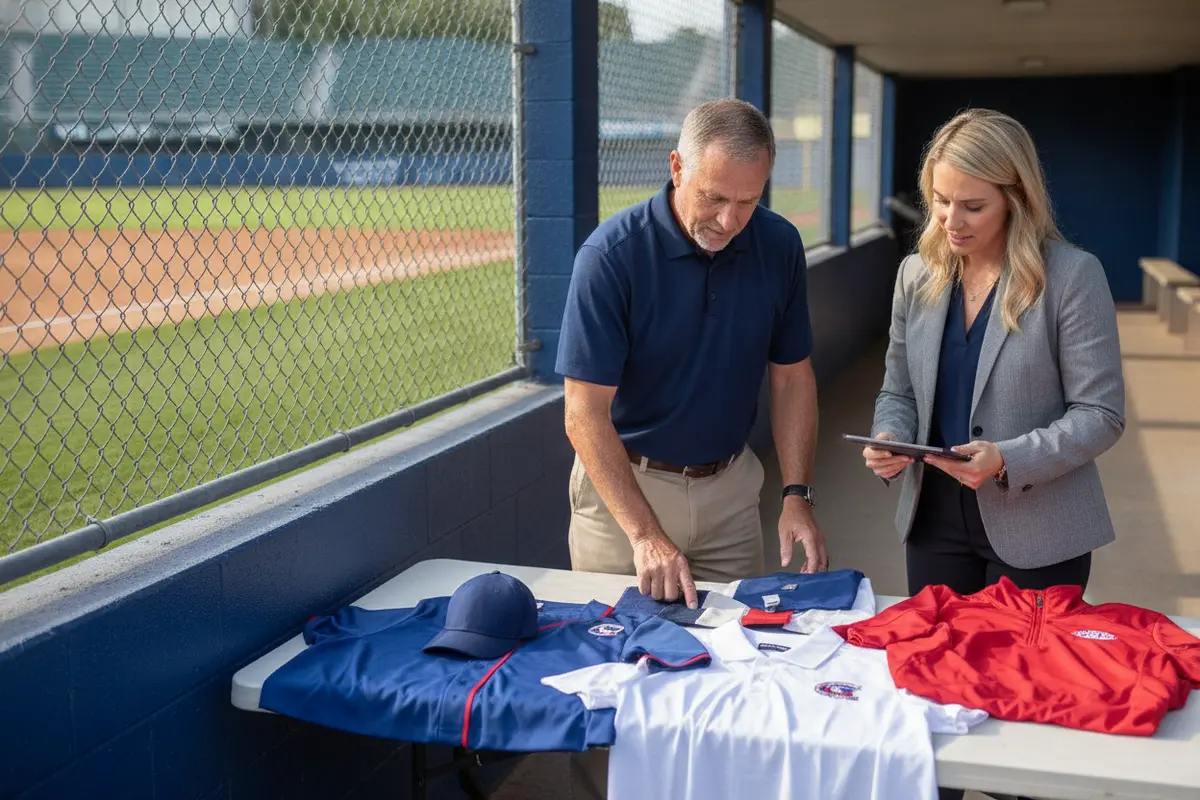
How should you select fit, sizing, and quantities?
A good-looking proof cannot rescue an order built on guessed sizes. Set a simple collection process, give every staff member the same instructions, and keep the roster tied to the exact product being ordered. Fit preferences differ, so verify them for each person instead of assuming that one garment’s size automatically transfers to another style.
Start with a roster sheet that includes each person’s name, role, requested items, size for each item, and any approved personalization. Use separate fields for tops, jackets, and other products. If a coach orders two different garment types, collect the size for both; do not copy one measurement across all items without checking the size information for each product. Consult the team uniform sizing charts as a starting reference and have staff compare the relevant chart with the garment they plan to wear.
Tell staff how to choose between a closer fit and room for a base layer. Ask them to consider the actual use: a top worn during active practice may be selected differently from a jacket intended to fit over another shirt. If someone is between sizes or unsure, have that person review the product-specific guidance and ask the supplier for clarification before the order is finalized. Do not infer a fit guarantee from a photo or from another person’s experience.
Make the sizing request easy to follow. Give the group one due date, one place to submit responses, and clear instructions for identifying each item. If coaches will be able to review a sample or use a fitting session, ask in advance how that process works and which products it covers. Avoid circulating informal size suggestions as though they were official guidance. Staff should use the relevant product information and record their own selections so the coordinator can check the order against each person’s choices.
Set a deadline for responses and assign one coordinator to check the list. That coordinator should flag blank sizes, duplicate names, inconsistent spelling, and missing item selections. Confirm names and numbers against the approved list before decoration. A quick second check is particularly valuable when several coaches are submitting information through separate messages or when the same person appears in multiple staff roles.
Quantities should reflect the final list, not a rough headcount. Separate confirmed staff from possible additions and decide whether you want to request options for both cases. Ask about order minimums, available size ranges, and whether late additions can be handled as a separate reorder. These details depend on the product and order, so confirm them directly rather than assuming that a small staff order follows the same process as a full team order.
Also decide how you will handle replacements or new staff later. Keep the final product names, artwork version, color choices, and size records somewhere accessible to the next coach or administrator. A clean record helps the program communicate its established look when staff change. It also makes it easier to ask about a future order without relying on a memory of what was selected.
Which design and decoration details should coaches approve?
Approve the staff apparel as a complete visual system, not as a collection of disconnected garments. Check colors, logos, lettering, placement, and readability on every selected product. A clear review process helps catch mismatched shades, unintended wording, or decoration that does not suit the garment before the order moves forward.
Gather the team’s approved artwork before requesting a design. If multiple logo files exist, identify the current one and say which versions are not approved. Confirm the spelling of the school, club, team, and any staff names. Establish whether coaches’ garments should include names, numbers, a role label, or only the team identity. Keep the information consistent across all items unless there is a deliberate reason to vary it.
Review decoration in the context of each garment. Logo size and placement that look balanced on a jersey may not translate directly to a jacket, hat, or training shirt. Ask to see how the design will appear on each product in the order. Check that important artwork is not hidden by seams, pockets, closures, or other construction details. Review contrast so the team name and logo remain easy to distinguish against the chosen colors.
Ask which decoration approach is appropriate for each design and product. Custom apparel may use methods such as embroidery, screen printing, heat press, tackle twill, or sublimation, depending on the product and artwork. Do not assume every method is available for every garment. When comparing decoration choices, ask how the artwork will be applied, what details can be reproduced clearly, and whether any elements need to be simplified. The decoration methods overview can help frame questions about two approaches without substituting for a product-specific recommendation.
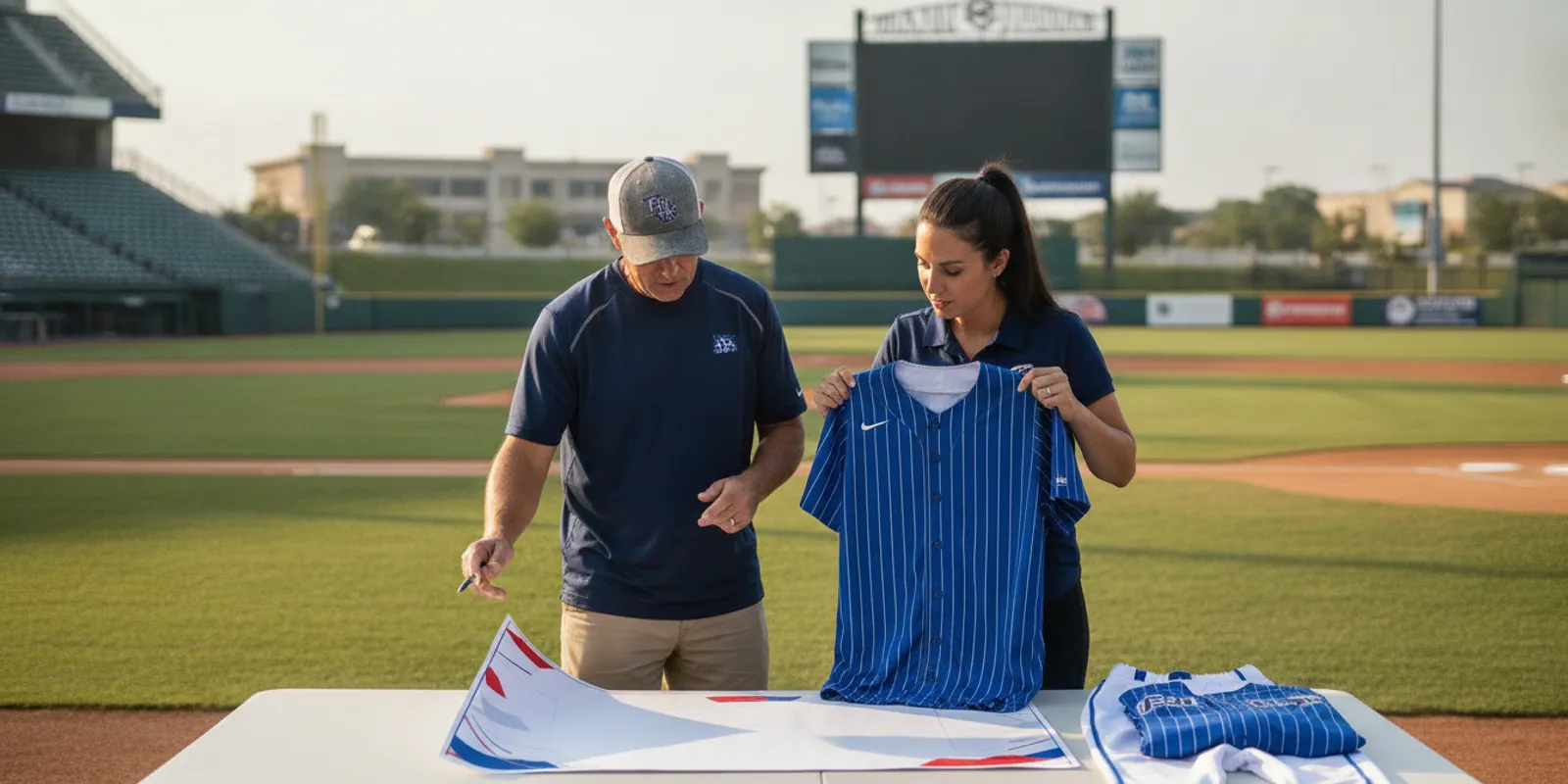
Use a written approval checklist: product and color, logo version, lettering, names and numbers, placement, and the final staff list. Ask one authorized person to consolidate comments. When the proof arrives, compare it with that checklist line by line rather than replying with a general “looks good.” If changes are requested, identify the exact location and wording. Then review the revised proof again; approval of an earlier version should not be treated as approval of a changed one.
Keep a copy of the approved version and note who approved it. This record can help staff understand what was ordered and gives the coordinator a reference if a question comes up later. It is also useful when player uniforms and coach apparel are designed together: document which details are shared and which are intentionally different.
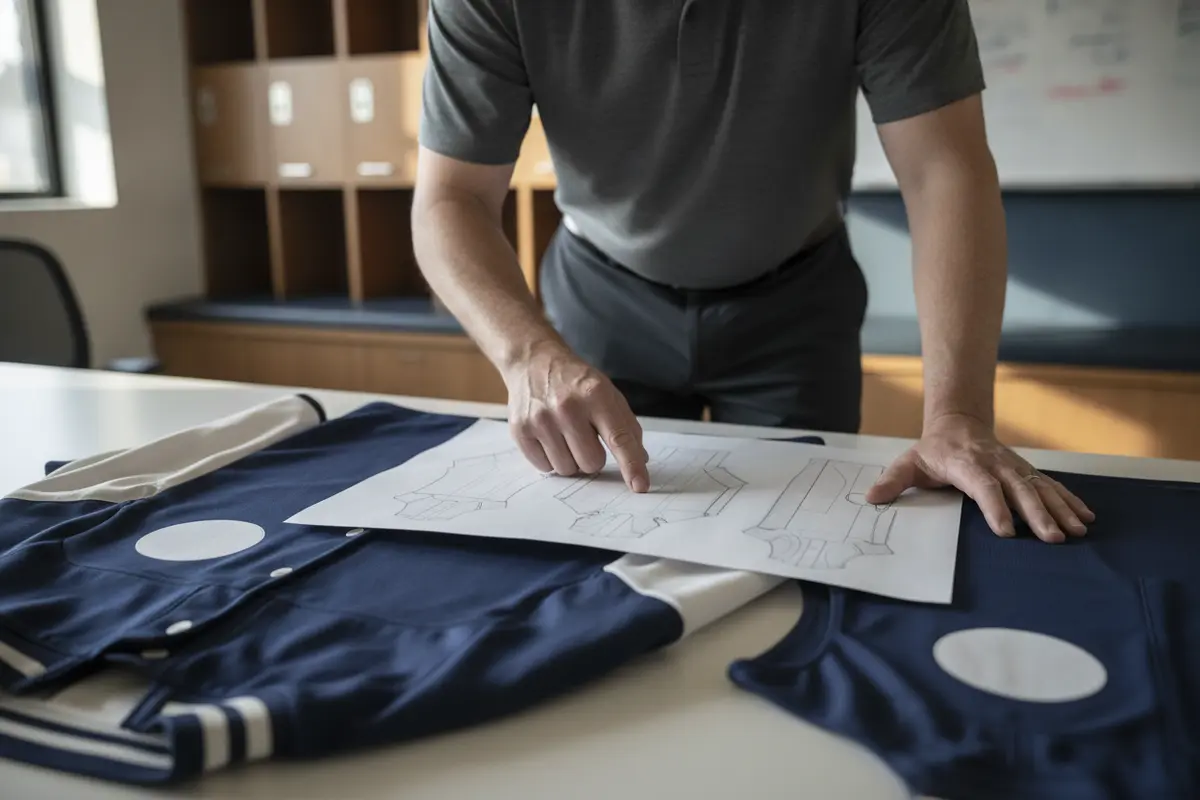
How can you plan the order timeline and delivery?
Work backward from the first date the coaches need to wear the apparel, leaving time for roster collection, design decisions, proof review, production, and delivery. The exact schedule depends on the products and order details, so ask for a timeline specific to your request. Do not treat a general turnaround statement as confirmation of a date for your particular order.
Put the real deadline on the calendar first: first practice, team photo, media day, opening game, or travel date. Then identify the latest practical date for each earlier step. Staff must submit sizes before the roster can be checked. Artwork must be selected before a proof can be reviewed. The proof must be approved before production can follow the agreed plan. If any step slips, the remaining time can narrow quickly.
When contacting a supplier, share the deadline and the complete scope. Include the number of people, product types, quantity estimates, decoration needs, and whether any items are especially time-sensitive. Ask what information is still needed to confirm a schedule. If the program is considering a rush option, ask whether it applies to the specific products and order, what turnaround it covers, and whether rush pricing or other conditions apply. Availability and terms must be confirmed for the order; do not assume every request qualifies.
Build a review window into the plan. Coaches and administrators often need time to check a proof, and a missing approver can hold up a decision. Set a response date, name a backup reviewer if appropriate, and tell everyone where to send comments. Consolidated feedback is more useful than multiple conflicting messages. Schedule a final check of quantities and spelling before approval, when changes are still easier to identify.
After approval, keep the order confirmation and the agreed delivery details together. Confirm the delivery address, the person who will receive the shipment, and how the staff will be notified when it arrives. When the apparel is received, compare the items with the order record: product, quantity, sizes, colors, personalization, and any other agreed details. Raise discrepancies through the supplier’s stated support process promptly.
If your schedule is especially tight, contact the supplier early rather than waiting until every minor preference is settled. You can share the deadline, explain what is already decided, and ask which open choices affect timing. Uniforms Express describes its uniform ordering and delivery approach as a resource for understanding the process; confirm the specifics that apply to your own coach apparel order directly.
How should you compare options and manage the team budget?
Compare complete options, not isolated garment names. One proposal may include only tops, while another may combine layers, hats, or personalization. Align the scope before comparing, then evaluate how well each option meets the staff’s needs, how clearly the terms are documented, and what the program must do next. No single lowest-cost or largest assortment is automatically the best fit.
Ask for an itemized description of the proposed products and decoration. Confirm who is included, which products each person receives, and whether names, numbers, or other customization are part of the scope. Ask about minimum quantities, order changes, shipping, payment, and the conditions that apply if the roster changes. Because product selection and terms vary, get the answers for the specific order in writing instead of relying on assumptions.
Set the program’s spending limit before asking staff to choose optional items. Separate essential apparel from optional layers or accessories. If the full wish list does not fit the available budget, prioritize what coaches will use most often and what best supports the team’s shared appearance. Consider whether the program can order a core set now and revisit optional additions later, but first check whether a later order would have different product availability, timing, or terms.
Also make clear who pays and how the order will be authorized. A school, club, booster group, or individual coaches may have different purchasing procedures. Confirm whether a purchase order or another payment arrangement is needed, who can approve it, and what information the supplier requires. Do not allow informal staff preferences to become a commitment before the person responsible for the budget approves the final scope.
Compare suppliers using the same questions: Do they understand the intended use? Can they show how the design will look on the selected items? Are the size and artwork approval steps clear? Is the timeline explained for your specific order? Are the terms and next actions documented? For a team considering both coaches’ apparel and player uniforms, the custom baseball jersey page can help keep the player-jersey portion of the discussion distinct from staff apparel.
For high school programs, check the current requirements of the governing body or school before approving any apparel intended for competition. The National Federation of State High School Associations (NFHS) is a starting point for high-school sports information; consult the applicable current rules and your school’s own policies for your situation. This is especially useful when coaches are selecting items that could be worn during official competition rather than only at practice or travel.
A useful comparison record is brief: chosen items, intended wear, quantity, decoration, sizes, approval owner, confirmed schedule, and written terms. When everyone can see the same scope, the program can make a decision based on use and clarity instead of a vague impression that one option “looks better.”
Frequently asked questions
These answers cover common planning questions coaches and administrators raise when coordinating staff apparel. Product availability, sizing guidance, decoration choices, turnaround, and order terms can depend on the selected products and request, so confirm the details for your order before giving final approval.
What should coaches choose first: a complete set or a few matching pieces?
Start with the occasions and duties the apparel must cover, then choose the smallest useful set. Some groups want a coordinated game-day look; others need practice tops and an outer layer more than a full set. Decide which garments are essential, who will wear each, and how the items should match. You can then compare a complete set with a smaller selection without ordering pieces the staff is unlikely to use.
How should a coach choose the right size?
Check the sizing information for each product rather than assuming that the same size fits every garment. Consider how the item will be worn, including whether it needs room for a layer underneath. Collect each staff member’s size choice on a roster and verify that no product field is blank. If a person is uncertain, ask for product-specific guidance before the order is approved.
Which decoration method is best for coach apparel?
The best method depends on the garment, artwork, and appearance you want. Ask which options work with the selected product and whether fine details, colors, or placement need adjustment. Review a proof for every product type, since one design can look different on a hat, jacket, and shirt. Approve the exact artwork and placement rather than choosing a method based on its name alone.
How early should a team order coach uniforms?
Begin with the date the apparel must be ready and plan backward through roster collection, design, proof approval, production, and delivery. Ask the supplier for a schedule based on your actual products and order details. If the deadline is near, disclose it at the first conversation and ask about availability and any rush conditions. Do not rely on a general timeline as a promise for a particular order.
How can a team keep coach apparel within budget?
Set a spending limit before selecting optional pieces. Prioritize the items coaches will use most, define the number of people included, and compare proposals with matching quantities and decoration. Request clear information about the products, customization, shipping, and applicable terms. If you are considering ordering in stages, confirm the implications of a later order before deciding.
Should coach apparel match player uniforms exactly?
Not necessarily. A team may use the same colors and identity elements while choosing different garments or a staff-specific layout. Decide whether coaches should blend into the team look or be readily distinguishable from players, then apply that approach consistently across the staff order. If apparel will be worn in competition, confirm the applicable rules and school policies.
With roles, products, sizes, design approval, budget, and timing documented, coaches can make a deliberate choice and give the supplier a clear brief. Keep the approved scope and order details together so the staff knows what to expect and the program has a useful reference for future needs.
Comments