


Custom Embroidered Team Uniforms: When and How to Use Embroidery

A uniform can look polished on the day it arrives and still miss the mark if the decoration does not suit the garment or the way athletes use it. Custom embroidered team uniforms are a strong choice for certain logos and garments, but embroidery is not the right answer for every design or placement. Coaches can make a better decision by matching the stitch method to the artwork, fabric, and job the uniform needs to do.
When do custom embroidered team uniforms make sense?
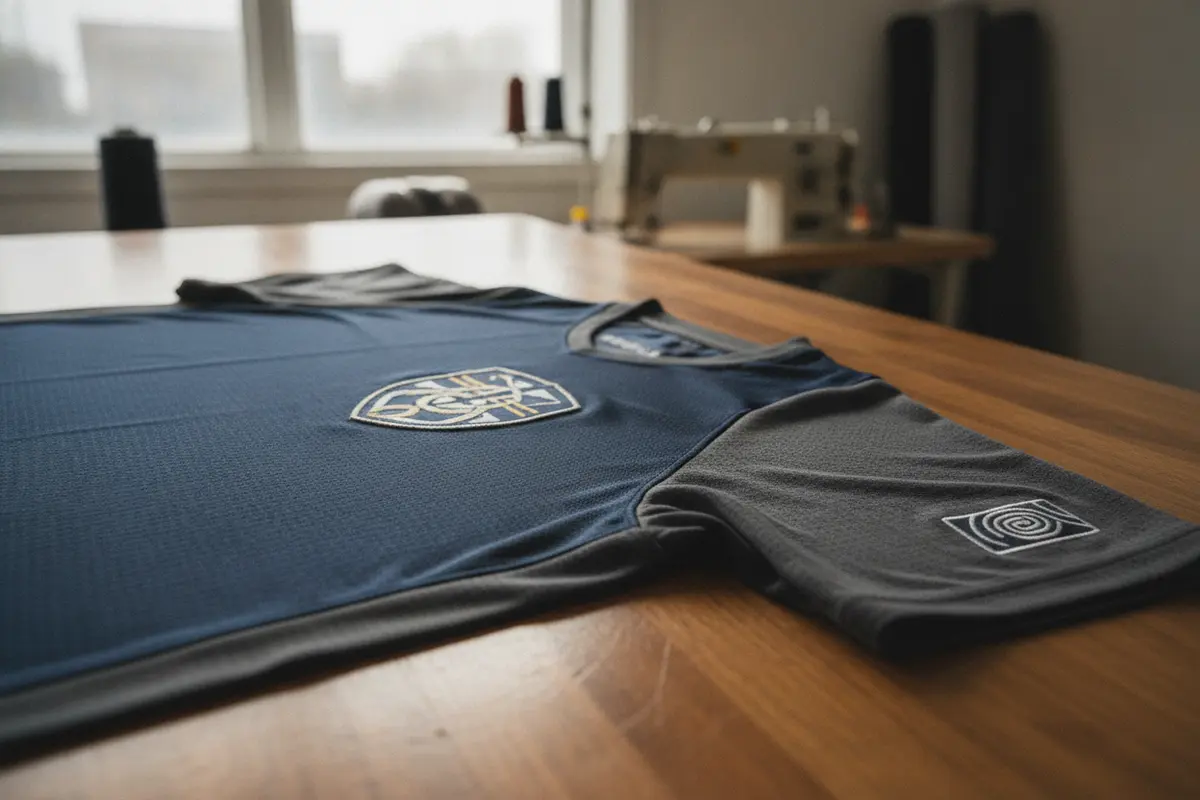
Embroidery works well when a team wants a raised, stitched detail that gives a logo, monogram, or small emblem a dimensional finish. It is often best suited to selected placements and garments with enough stable fabric to support stitching. Consider it for a polished mark, not automatically as the decoration method for every panel or every player garment.
Coaches often consider embroidery for a chest crest, sleeve emblem, cap, jacket, or coaches’ apparel. It can help connect game uniforms to sideline layers and team accessories. A consistent stitched mark across those pieces can make the program feel coordinated even when the apparel uses different silhouettes and fabrics.
Embroidery may also make sense when the design is compact and has clear shapes. Stitches create texture, so a simple icon or bold letterform can read cleanly at a practical size. Very fine lines, tiny lettering, and intricate gradients are harder to represent with thread. If the logo depends on small details, ask the supplier to review the actual artwork and intended finished size before the team settles on embroidery.
Fabric matters as much as the logo. A stable, appropriately weighted panel is usually a better candidate than a thin, highly stretchy, or perforated area that may pucker or distort under dense stitching. This does not mean embroidery is limited to one type of garment; it means the garment and placement should be evaluated together. If you are ordering a full uniform set, decide which items need a stitched mark and which may be better decorated another way.
For a baseball program, for example, a team might choose an embroidered emblem on a cap or a warm-up while using a different finish for a lightweight game jersey. A coach ordering custom baseball uniforms can plan those pieces as one visual system without requiring identical decoration across every item. The goal is a coherent look that still respects each garment’s use.
Where should a team place embroidered details?
Start with the garment’s role and the athlete’s movement. A small chest or sleeve mark can add identity without covering a large area, while a cap or jacket can provide a more stable canvas for a crest. The right placement should be visible, comfortable, proportionate to the garment, and compatible with its seams, panels, and construction.
For jerseys, teams commonly consider the upper chest or sleeve for a compact emblem. Before choosing, look at the garment front and back as a complete design. Names, numbers, piping, buttons, stripes, and sponsor or league marks may already occupy important areas. Leave breathing room around each element so the result does not feel crowded or make a key detail hard to see.
For caps, check how the front panel is shaped and whether a logo will fit without running into seams or the bill. For jackets and warm-ups, evaluate the front chest, sleeve, and back separately. A large, complex crest may be more suitable on a broad panel, while a small mark can fit neatly on the chest. Do not assume the same artwork size will look balanced on adult and youth garments; review sizing and placement across the actual size range.
Ask for a visual proof that shows the embroidery at the proposed size and position on the garment. Check the design from a normal viewing distance as well as close up. Confirm that the mark will not overlap numbers or cover functional details such as a zipper, pocket opening, or ventilation area. If a team has a roster that includes several garment sizes, ask how placement will be kept visually consistent across them.
A useful placement plan identifies the item, location, approximate size, and artwork version for each embroidered mark. Keep that plan with the approved proof. It can make later reorders clearer, particularly when a program adds new players or orders matching staff apparel. For sizing references, review the team uniform sizing charts while collecting measurements and garment sizes.
How does embroidery compare with other uniform decoration?
Embroidery creates a stitched, textured mark, while other decoration methods apply color or lettering to the fabric in different ways. The best choice depends on the artwork, garment, coverage, and intended feel. Teams do not have to use one method everywhere: a focused embroidered emblem can work alongside another finish on jersey graphics or numbers.
Method | Typical strengths | Questions to ask |
Embroidery | Raised thread texture; a defined logo or monogram can look polished on suitable panels and apparel. | Will the fabric support the stitches? Is the design clear at the planned size? Will the texture suit the location? |
Tackle twill | Layered fabric lettering or shapes can create a classic, dimensional sports look. | Will the design’s shapes and garment work with sewn-on pieces? What is the desired look and feel? |
Screen print | Printed graphics can suit bold artwork and larger areas, depending on the garment and design. | How much area needs decoration? Does the artwork suit the print process and fabric? |
Sublimation | Color and graphics can be incorporated into suitable performance fabric as part of the printed design. | Is the garment and artwork being produced for sublimation? How should the full design read across panels? |
Heat press | Applied lettering or graphics can be useful for selected personalization and artwork applications. | Which material and garment are involved, and what application does the supplier recommend? |
This table is a starting point, not a promise that one process is right for every fabric or design. A dense embroidered patch can feel different from stitching directly into a garment, and construction details can change what is practical. Ask the uniform provider to review the specific item and explain any tradeoffs before the team approves production.
For a closer look at the distinction between two sewn or printed approaches, see this guide to tackle twill and sublimated lettering. Keep the current decision focused on the team’s purpose: a small, dimensional crest may call for embroidery, while extensive color coverage or large jersey graphics may call for another option. The methods can be coordinated, but only if the proof shows how they will work together.
What should you inspect on an embroidery proof?
A proof is the team’s chance to confirm how the approved artwork will translate to a particular garment. Check more than whether the logo looks familiar: review its size, thread colors, position, proportion, and relationship to every other mark. Ask questions about anything that looks crowded or unclear before the responsible coach or administrator gives final approval.
First, compare the proof with the source artwork. Confirm that the correct logo version is being used and that the key shapes and lettering are present. Tiny elements may need adjustment to remain legible when translated into stitches. Check that the colors are consistent with the team’s approved palette and that the overall design remains recognizable when shown at the actual proposed size.
Next, look at the garment mockup. Is the mark centered where expected? Does it clear the seams, buttons, pockets, numbers, and other decoration? Does its scale look appropriate on the smallest and largest sizes? The same logo can appear dominant on a youth garment and restrained on an adult one. Ask how the supplier will handle scale and placement if a full size run is involved.
Check the proof on each item rather than approving one image as a stand-in for every garment. A cap’s front panel, a jacket chest, and a jersey sleeve have different shapes and usable areas. The team might use the same artwork in different dimensions or placements. Make sure every variation appears clearly on the proof and that the order record identifies which version belongs to which item.
Finally, keep the approved proof and record who approved it and when. Confirm the roster, garment, quantity, spelling, and other personalization against the final order details. If any element is revised, review the updated version rather than assuming an earlier approval still applies. A careful check is simpler than discovering after delivery that the order reflects an outdated logo or roster.
What should coaches prepare before approving embroidery?
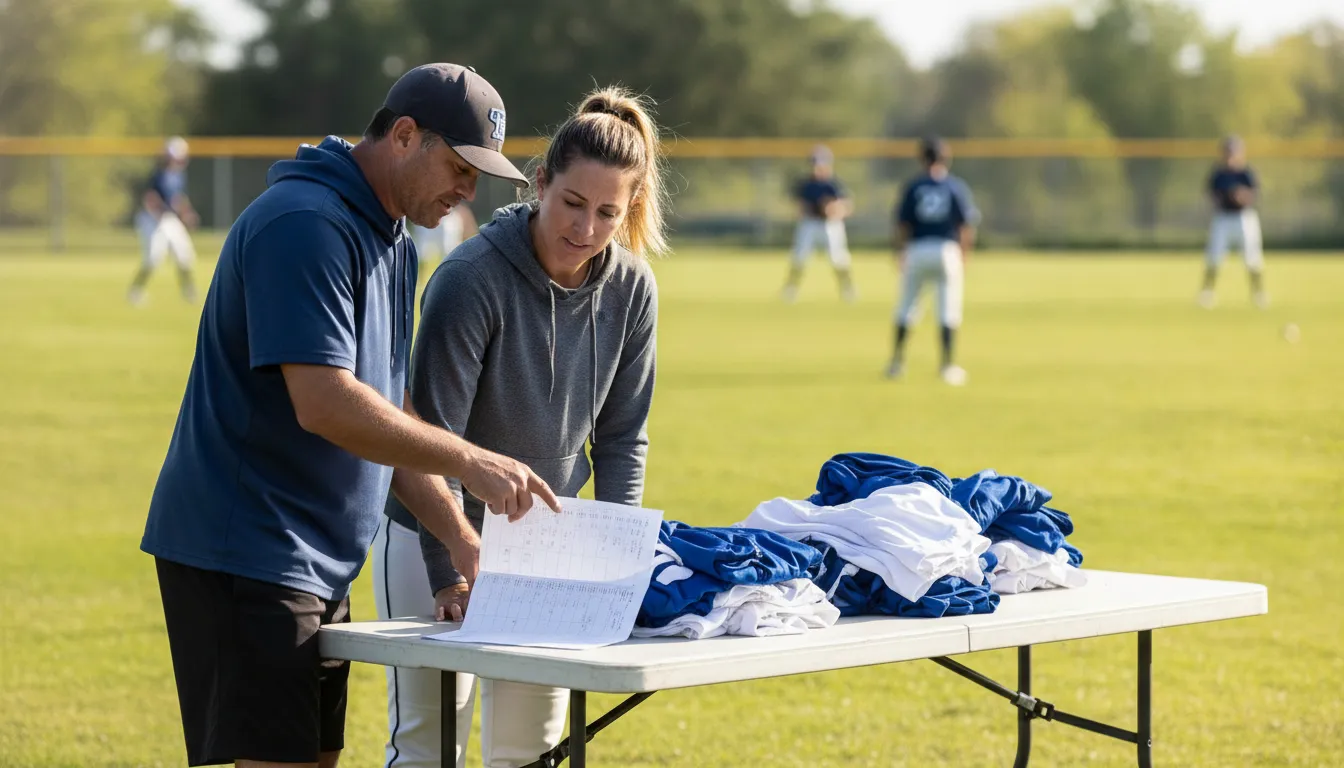
A smoother order starts with clean artwork, a clear placement plan, and one person responsible for confirming team details. Before a proof is approved, gather the logo file, garment choices, size range, placement preferences, and any league or school requirements. Reviewing these items together helps catch design and production questions before they become late-stage changes.
- Choose the garment and use.
Identify whether the mark is for a game jersey, cap, jacket, coaches’ shirt, or another item. Athletes may need a different finish from staff apparel.
- Supply the best available artwork.
Share the original high-resolution or vector artwork if available. Do not rely on a small screenshot or a logo downloaded from an unknown source. Identify the approved colors and provide any school or league brand guidance.
- Describe the intended placement.
Specify garment area, approximate size, and whether the mark should be direct embroidery or another format recommended by the supplier. Ask to see a proof showing scale and position.
- Confirm roster and garment details.
Gather names, numbers, sizes, and quantities in one current roster. Check the roster against the intended order and make sure garment sizing is handled across the full group.
- Review the proof carefully.
Inspect spelling, shape, color, position, proportions, and how the mark sits with other decoration. Have the coach or administrator authorized to approve the order confirm the final version.
- Clarify timing and next steps.
Ask for the current production schedule and what date the supplier needs the approved artwork and roster. Turnaround depends on the order and its details, so confirm the timeline for your specific project rather than relying on a general estimate.
Schools and organizations may have rules about which marks and artwork can appear on apparel. Check your own requirements before sending a logo to production. As one example of institution-specific guidance, Idaho State University’s apparel guidance discusses using official secondary logos and an officially licensed vendor for internal apparel. That page applies to its institution; coaches should consult their own school or league rules.
Keep the final approval record, artwork, and roster together. If the program later needs replacements, a saved reference helps the team explain what must match and what can change. If the request involves baseball, the available custom baseball jersey options can help frame garment and design discussions.
How should embroidery fit into a complete team order?
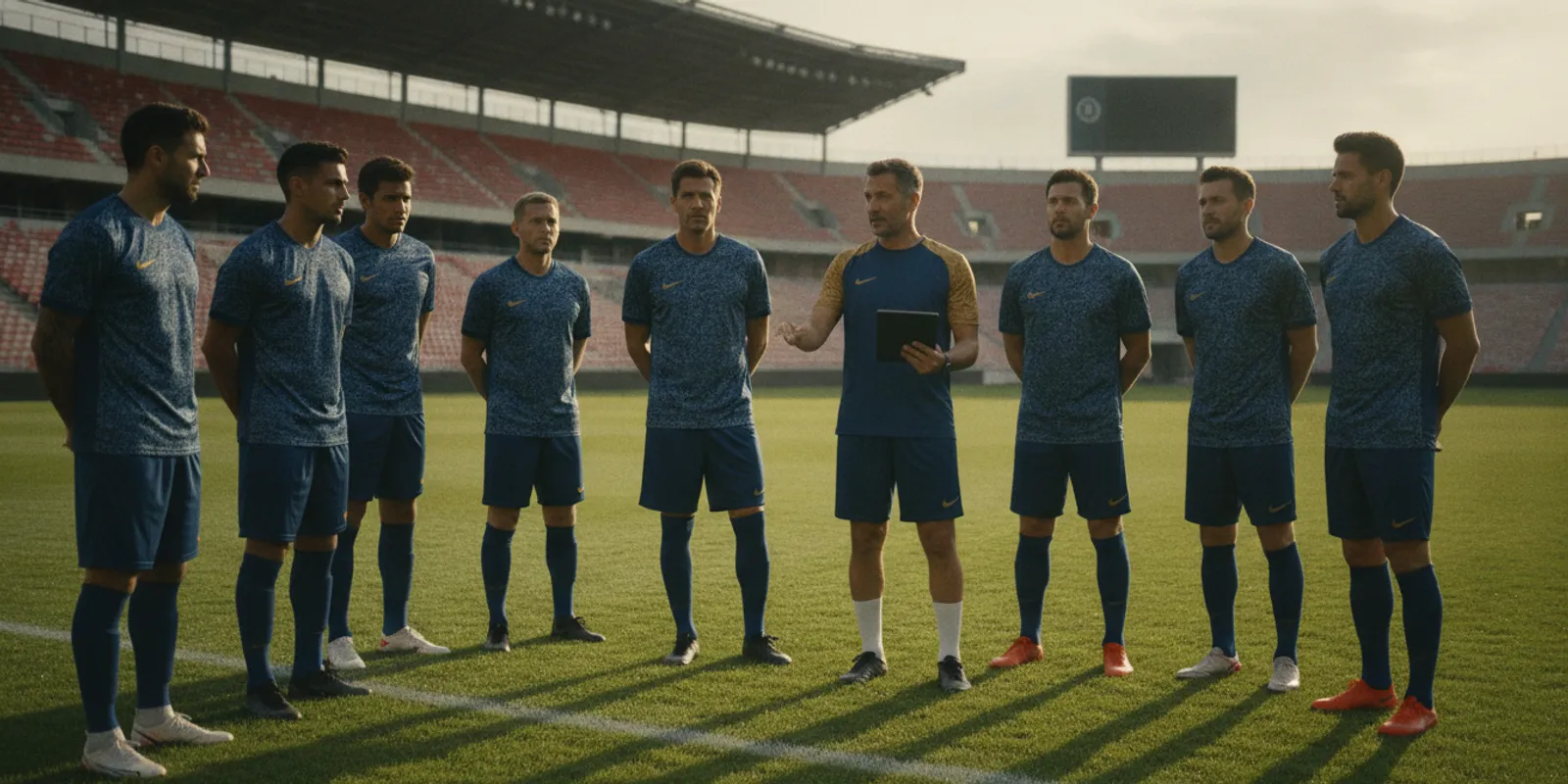
Think of embroidery as one part of the uniform system, rather than a stand-alone decision. Map the core game garments, optional layers, and staff apparel first; then decide where a stitched mark adds value. A coordinated plan keeps the team’s identity recognizable while allowing different garments to use the decoration best suited to their construction and purpose.
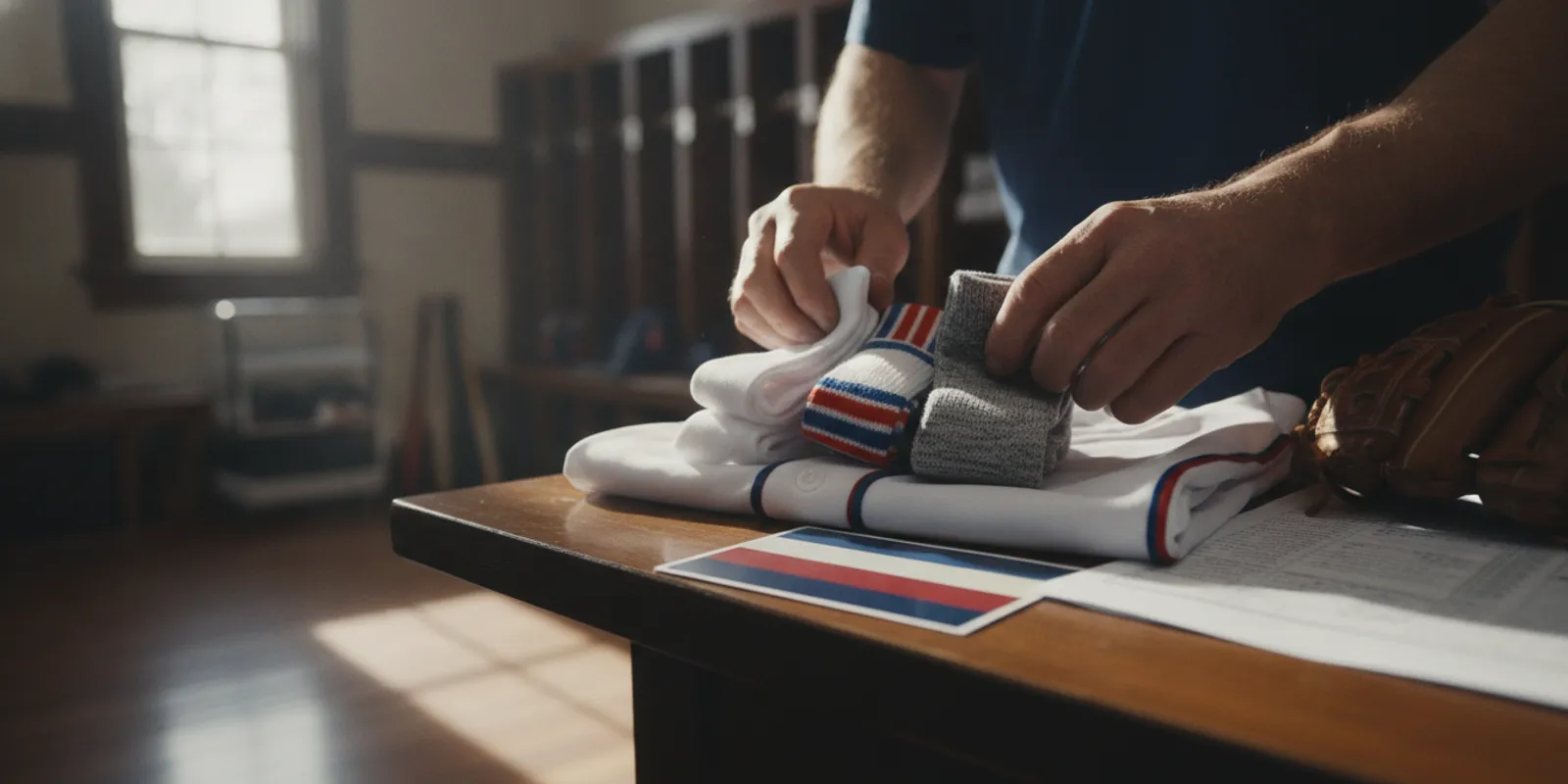
For a baseball order, start with the jersey and pants, then consider whether caps, jackets, or other apparel need a matching emblem. Uniforms Express offers baseball uniform packages as one route for planning a coordinated set, and a college baseball program order may involve a broader mix of team items. Confirm exactly what is included in any package and discuss decoration needs for each garment.
The same principle applies beyond baseball. A football program can look at its custom football uniform options alongside sideline layers, while a soccer coach can review custom soccer uniforms for the needs of that sport. For another team context, compare the available basketball uniform options. These links help you explore the sport-specific garments; ask the supplier about embroidery suitability for the particular item and placement.
Consistency does not require putting the same decoration in the same place on every piece. It means using an intentional combination of colors, logo versions, and placements. A crest might sit on a cap front, a chest panel, or a jacket sleeve depending on the garment. Decide which elements are fixed across all pieces and which may vary, then make sure the proof reflects that plan.
Before final approval, make a simple inventory: each item, quantity, size, decoration method, location, and artwork. Ask the supplier to flag any combination that could affect comfort, visibility, or the finished appearance. This conversation is especially useful when an order mixes lightweight jerseys with heavier outerwear. For background on the ordering process and uniform decisions, consult Uniforms Express’ uniform resource guide.
How can teams care for embroidered uniforms?
Follow the care instructions for the specific garment and decoration, because fabric, thread, and construction can differ. Before washing a full order, read the garment label and supplier guidance. A practical care plan helps protect both the base fabric and the stitched design, and gives athletes and families one consistent set of directions to follow throughout the season.
Turn garments inside out when care instructions allow, and avoid rough handling that can snag threads. Use the wash temperature and drying method listed by the manufacturer. Do not assume every uniform can be treated like a cotton shirt; performance fabrics and multi-part garments may have different care needs. If a mark catches, do not pull the thread. Ask the supplier how to handle the particular issue.
Inspect the stitched area from time to time, especially after frequent use. Look for loose threads, puckering, or distortion, and address concerns before they worsen. Avoid ironing directly over embroidery unless the garment’s instructions specifically permit it; heat can affect some materials and finishes. When the care label is unclear, seek item-specific advice rather than relying on a generic rule.
For a program with shared laundry or equipment staff, put the care directions somewhere easy to find. Coaches can also include a short reminder when distributing uniforms so that players and families know to check labels and follow the supplier’s instructions. A few clear steps can help keep the uniform appearance consistent across a roster.
Frequently asked questions
These practical answers cover common decisions coaches face when considering stitched team decoration. The right choice still depends on the garment, artwork, roster, and schedule. Ask the supplier to review your specific items and provide a proof before the team commits to a final layout or production timeline.
Which team uniform items are best suited to embroidery?
Caps, jackets, coaches’ apparel, and selected jersey panels are common candidates when the garment has a stable area for stitching. Suitability depends on fabric, panel construction, design size, and intended placement. Ask the supplier to assess the actual item rather than assuming one approach will work for every garment.
Can a detailed team logo be embroidered?
It may be possible, but tiny lines, small lettering, and fine details can be difficult to reproduce clearly with stitches. Share the original artwork and ask for a proof at the proposed size. If the important details do not read well, simplify the artwork or discuss a different decoration method.
How should coaches handle sizing and placement across a roster?
Collect the current size information for every player and decide on the intended location before proof approval. Ask how the mark’s scale and position will appear across the range of garment sizes. Review the sizing chart and check that the placement does not conflict with numbers, seams, or other design elements.
How long does a custom embroidered team uniform order take?
Timing depends on the items, quantities, artwork, approval process, and current production schedule. Share the team’s needed-in-hand date early and ask the supplier to confirm a timeline for the specific order. Leave time for roster collection and proof review, and do not treat a general turnaround statement as a guarantee for every project.
How can a coach plan the budget for embroidered uniforms?
There is no single cost that applies to every order. Garment choice, quantities, design complexity, placement, and the mix of decoration methods can all affect a quote. List the required items and optional add-ons separately, then request a project-specific estimate. This makes it easier to compare a core uniform set with upgrades such as embroidered caps or jackets without relying on outdated pricing.
Embroidery can give the right team garment a distinctive, dimensional finish when the artwork, placement, and fabric work together. Plan the details before approval, review the proof across the roster, and confirm care and timing for the specific order.
Comments