


Custom Team Uniform Size Runs: A Coach's Guide

A roster can look complete and still produce a bad uniform order. One player needs a larger jersey than pants. Another is between youth and adult. A late signup arrives after you already sent totals. Custom team uniform size runs turn that moving list into a count the shop can actually make.
A size run is the count of each size for each garment, such as four youth medium jerseys, six adult large pants, and two adult extra-large jackets. It is not a guess at the most common size, and it is not a measurement chart. You collect a size for every player and every piece, then add those sizes into a production total.
Coaches, athletic directors, and team managers use the same process for baseball, softball, football, basketball, soccer, and other team sports. The garments change. The worksheet does not. Start with the player. End with a total you can defend when someone asks why you ordered that many mediums.
Start a custom team uniform order with Uniforms Express once the size run is ready to review.
What belongs in custom team uniform size runs?
A useful size run ties every athlete to every garment, size, fit note, and decoration detail. A single total by size is not enough when one player wears a jersey, pants, and jacket in three different sizes. Keep the player row until the order is checked.
Collect these fields before you add anything up:
Player name and roster status, such as confirmed, pending, or cut.
Jersey size and a fit note, such as standard or roomier.
Pant, short, or skirt size when that piece is in the set.
Outerwear size for a jacket, hoodie, or warm-up.
Youth or adult range, when both are offered.
Jersey number, name, and position for decoration.
A note for growth room, layering, or a confirmed exchange.
Do not assume a youth medium in one style matches a youth medium in another. A baseball jersey, a football pant, and a basketball short can use the same label and still fit differently. If the order includes more than one piece, give each piece its own column.
Use one master roster. Texts, paper slips, and separate spreadsheets will disagree. When a parent sends a size in a message, copy it into the master row and mark it received. The person who places the order should be able to open one file and see who is still missing.
Leave a column for the source of the size. Write "measured," "tried on," or "parent report." A parent report is a starting point. A try-on is stronger. When two sources disagree, the try-on wins, and you note why.
How do you collect every player's size?
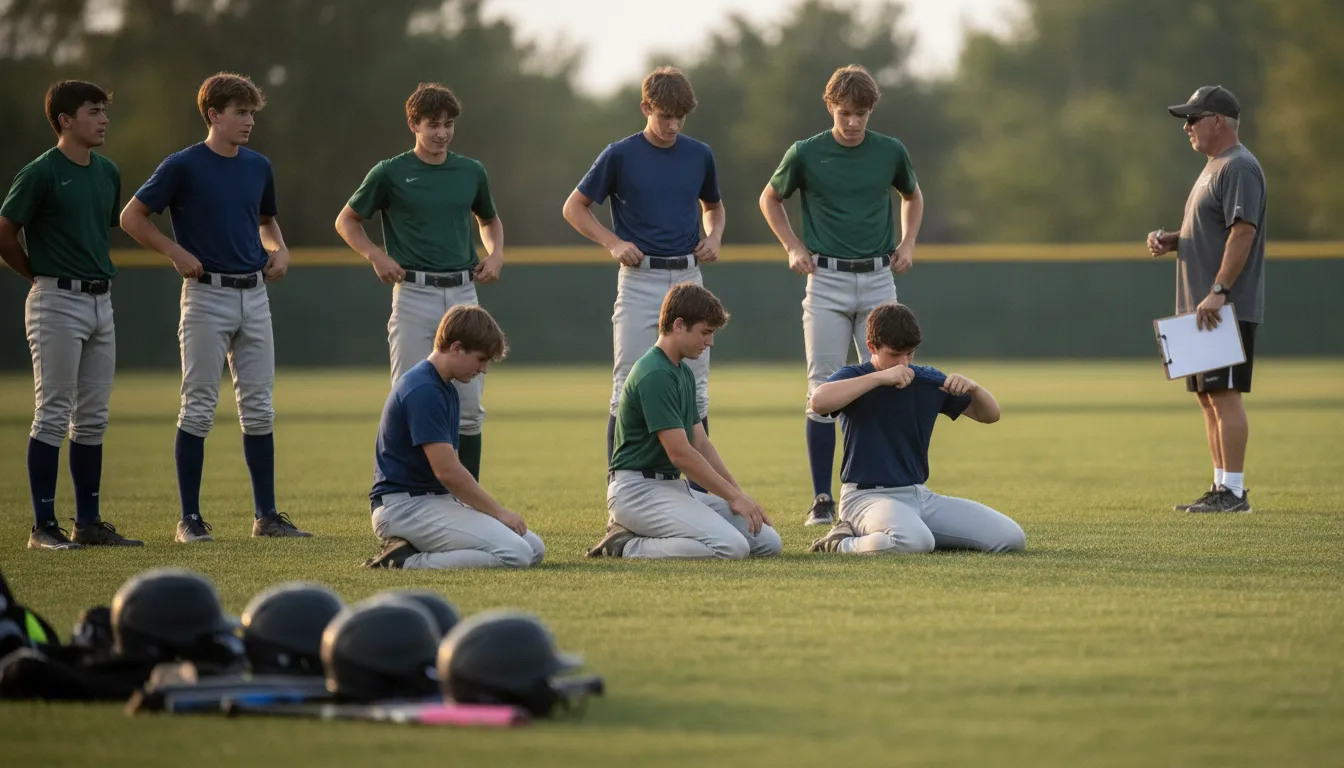
Pick the garment style first, then measure and try on before you lock a size. A number on a tape cannot tell you whether a player wants a fitted jersey or room for a base layer. Collection works best after the team has narrowed the style.
1. Choose the style before the final size
A sample jersey, pant, or jacket gives athletes something real to judge. If you collect sizes before you choose between a fitted cut and a looser cut, you will do the work twice. For a multi-piece order, mark which pieces share a chart and which do not.
Record each garment in its own column. An athlete might need an adult medium jersey, an adult large jacket, and a different pant size. That is normal. One team size is too blunt for a full set.
2. Measure the same way for every player
Put one adult in charge so the method stays the same. Follow the chart for where the tape goes. Keep the tape level, do not pull it tight, and use the unit the chart uses. Have a second adult look at odd results instead of quietly changing them.
Ask athletes to stand naturally in light clothes. A bulky sweatshirt or a held breath will skew the number. For youth teams, write down whether you want a close fit now or a little room to grow. Room to grow is not a reason to order a size that gets in the way of play.
Keep the method boring and repeatable. The National Institute of Standards and Technology length guidance is a reminder that a tape only helps when everyone uses the same unit and the same posture. Your chart still decides the size. The tape only feeds it.
For sport-specific tape placement, use the guide that matches the uniform. A baseball uniform sizing guide covers chest, waist, inseam, and cap for baseball. Do not copy those tape steps onto a different sport's chart.
3. Try on the borderline sizes
If a player falls between two sizes, or has a long torso and a shorter limb, use a sample. Have them raise both arms, take a throwing or shooting motion, and sit if the sport needs it. A size that looks fine while standing can bind at the shoulder or ride up at the waist.
Write the decision on the roster the same day. "Between medium and large, chose large for a base layer" is more useful than a blank note. If no sample exists yet, mark the row as provisional and do not treat it as final.
How do you turn a roster into size totals?
Add sizes only after every confirmed player has a size for every garment. Count pending players in a separate column so they do not inflate the order. Then build one total per garment, not one total for the whole uniform.
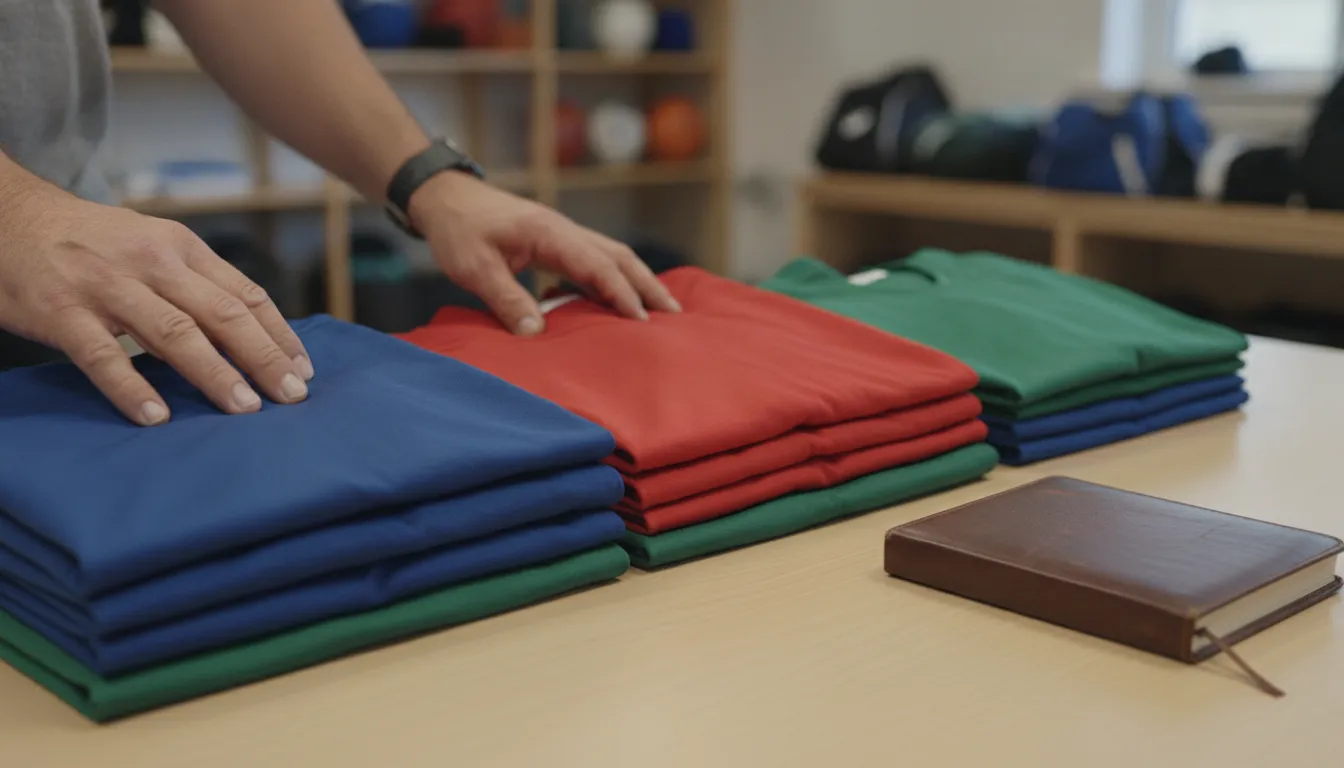
A simple tally separates each garment and keeps youth sizes away from adult sizes.
Garment | Youth medium | Youth large | Adult medium | Adult large | Adult extra large | Status |
Jersey | Three | Four | Six | Five | Two | Confirmed players only. |
Pants | Two | Five | Five | Six | Two | Confirmed players only. |
Jacket | Three | Four | Four | Seven | Two | Two rows are still provisional. |
The pants row does not match the jersey row. That is expected. Players often size up in a jacket for layering and stay smaller in pants. If your totals match across every garment, check the sheet. Someone may have copied one column into the next.
Keep youth and adult counts apart even when the letter is the same. A youth large and an adult large are different garments. Mixing them in one cell is a common way to receive the wrong box.
Match decoration to the same rows before you send totals. The name, number, and position have to sit on a specific size, not on a pile. If number 12 is an adult large jersey and a youth large pant, the decoration file should say so. A custom name and number order guide is the place to check spelling and number rules. The size run only needs to show which size gets which name.
Read the totals out loud against the roster once. Count the player rows. Count the size cells. Those two numbers must match for each garment. A missing row is easier to catch here than after production starts.
How much buffer should a size run include?
Add buffer only for a reason you can name, and keep it out of the player rows. A spare is not a player's size. Put spares in their own line so a later edit does not look like a roster change.
Common reasons to add a spare:
A roster spot is still open and you know the likely size range.
A youth player is near the top of a size and the season is long.
You have a history of one or two late additions at a common size.
A sample fitting left two players undecided between the same two sizes.
Do not add a spare in every size "just in case." That raises the order without solving a real gap. Pick the one or two sizes where a miss would be hardest to fix, usually the middle of the roster. Write the reason next to the spare so the next coach can see it.
Growth room belongs on the player row, not in the spare line. If you size a player up on purpose, say so. "Ordered large for growth, measures medium" keeps a reorder honest next year. A silent size-up looks like a mistake when someone else reads the file.
Layering is a different decision from growth. A jacket worn over shoulder pads, or a jersey worn over a cold-weather shirt, may need the next size even when the body measurement says otherwise. Note the layer. Do not treat it as growth room, or next year's order will keep climbing.
Most custom team pieces at Uniforms Express start at a 12-piece minimum per item. A buffer still has to respect that floor, but the floor is not a reason to invent sizes. If the true roster is under the minimum, ask about the item before you pad the run. Padding to hit a number is how teams end up with a box of unused smalls.
When should you freeze the size run?
Freeze the roster on a date that still leaves time to produce and deliver before the first game. After the freeze, new sizes go on an add-on list. They do not get typed into the approved total in secret.
Set a collection deadline and tell families what happens if they miss it.
Hold one fitting for missing and borderline players.
Build confirmed totals and a separate pending list.
Match names and numbers to sizes.
Add named spares, if any, on their own line.
Have a second person recount rows against totals.
Send the frozen run with the quote request and keep a copy.
Uniforms Express averages about 25 business days, with a six-week guaranteed window on standard custom work. Rush production can be faster when you ask, including emergency replacements in under a week when the schedule allows. Count backward from the first game, then put the freeze earlier than that window, not on the same day you hope to order.
A school purchase order does not replace this freeze. The team uniform purchase order checklist covers the paperwork. The size run is the attachment that tells production what to make. Send both, and do not let the PO date become the first time anyone looks at sizes.
After you order, keep the frozen file. Fill-ins and next season's changes belong in a reorder conversation, not in a rewritten history of the first run. The custom team uniform reorder guide picks up once this order is in production.
What should you check before you request a quote?
A quote-ready size run has no blank confirmed rows, no mixed youth and adult cells, and no decoration that points at the wrong size. If any of those are open, you are not ready to approve production.
Use this check before you call or submit:
Every confirmed player has a size for each garment in the set.
Provisional rows are labeled and excluded from the main total.
Youth and adult counts are in separate cells.
Spares are on their own line with a reason.
Names and numbers match the size they will be applied to.
A second person recounted the player rows against the totals.
The freeze date still leaves the production window before game day.
Look up the letter size on the chart for that exact garment. Uniforms Express keeps team uniform size charts for baseball, softball, basketball, and football. The chart tells you which size the measurement maps to. Your worksheet tells the shop how many of that size to make.
When the check is clean, request the quote with the frozen totals attached. You can use the Virtual Quote tool or call (888) 661-7044 on weekdays from 7am to 6pm Pacific. Live support also promises a callback within 15 minutes during those hours. Have the roster file open so a question about one size does not turn into a guess.
Frequently Asked Questions
What is a size run for team uniforms?
A size run is the count of each size you need for each garment in the order. It comes from a player-by-player roster, not from a single team size. Jerseys, pants, and jackets often need different counts even for the same athletes.
Should parents pick the size or should the coach measure?
Use a parent report as a start, then confirm with the same measuring method and a try-on when the player is between sizes. Write down which source you trusted. A try-on beats a remembered size from last season.
Do youth and adult sizes go on the same line?
No. Keep youth and adult counts in separate cells even when the letter matches. A youth large and an adult large are different garments, and combining them is a common cause of the wrong shipment.
How many extra uniforms should we order?
Add a spare only for a named reason, such as an open roster spot or two players stuck between the same sizes. Put that spare on its own line. Ordering one extra in every size usually leaves unused garments.
Can we change a size after we send the order?
Ask before production starts. Once the run is frozen and the order is in production, a change belongs on an add-on or reorder list. Rewriting the original totals hides what you approved.
Build the size run, then request the quote
A clean size run is a roster, a total for each garment, and a freeze date that still leaves time to produce the order. Charts and tape measurements support that file. They do not replace it.
When your totals match the player rows, request a custom team uniform quote from Uniforms Express or call (888) 661-7044. Bring the frozen size run so the quote matches the team you actually have.
Comments