


Team Uniform Purchase Order Checklist for Schools

A late or incomplete school uniform order can create more than a scheduling headache. Missing sizes, unclear artwork, an unapproved budget, or a purchase order that does not match the quote can force extra follow-up when the season deadline is already close.
A team uniform purchase order checklist should cover the sport and team, garments, quantities, player sizes, colors, customization, delivery address, needed-by date, quote reference, budget approval, and authorized approver. Confirm the exact forms, thresholds, vendor requirements, and submission process with your school or district before sending it.
Get help reviewing your team order at 888-661-7044.
A purchase order is one part of a broader school buying process. Public-school guidance describes connected stages that can include requisition, specifications, quotation, PO issuance, delivery follow-up, receiving, quality control, and invoice approval. Starting with those handoffs makes it easier to identify what belongs on your order and who needs to confirm each detail.
What Should a Team Uniform Purchase Order Checklist Include?
A team uniform purchase order checklist is a control document for moving an order from an approved request to payment. It connects the requisition, uniform specifications, quote, purchase order issuance, delivery follow-up, receiving, quality review, and invoice approval. The exact fields and approvals should match your school or district's purchasing process.
Unlike a product page or supplier quote, the checklist follows the handoffs that happen inside the school. It helps the coach, athletic director, purchasing office, supplier, and receiving staff work from the same information.
Start with the requisition and specifications
Record the sport, team, season or program, and the person responsible for the order. Then list the requested garments and accessories, quantities, player-level sizes, colors, decoration, names or numbers, and any approved artwork. For example, a basketball order might separate game jerseys, shorts, warm-ups, and bags rather than treating the purchase as one undefined uniform set.
Include the ship-to location, requested delivery or distribution date, budget or funding reference, and the staff member authorized to approve the final design and order. These are practical preparation fields, not universal requirements. Your purchasing office may require additional vendor, tax, coding, or authorization information.
Connect the quote, PO, and receiving record
Keep the supplier quote and its revision date with the checklist. Before submitting the PO, compare the quote against the final item list, quantities, artwork approval, shipping details, and any terms your school must document. A purchase order may be an accepted payment method, but it does not by itself establish that production can begin. Confirm the supplier's acceptance and next step directly.
The New York State Education Department describes school purchasing as a sequence that can include requisition, specifications, quotations, PO issuance, delivery follow-up, receipt of goods, quality control, and invoice approval. That framework is useful even when your district uses different forms or names for each step: review the NYSED purchasing stages.
For broader preparation before you build the document, review these uniform planning basics, then confirm the checklist with your school's purchasing office and supplier.
Which School Approvals Should You Confirm Before Ordering?
Before ordering, confirm your school's requisition path, budget code, vendor setup, authorized signer, local spending thresholds, tax documentation, and final artwork approver. These steps are not universal requirements. Ask your purchasing office which forms, signatures, deadlines, and supporting documents apply to your school or district, then confirm the supplier's next step.
A useful starting point is to separate the internal approval from the supplier conversation. Indiana school accounting guidance distinguishes a requisition, quotation, and purchase order, which may be handled as separate documents or stages in your local process. Review the Indiana school accounting guidance as an example of why a quote should not automatically be treated as an approved PO.
Confirm the district's purchasing path
- Requisition:
Ask who initiates the request and what information must be attached, such as the quote, team details, or specifications.
- Budget code:
Confirm the account or fund that should pay for uniforms, accessories, decoration, and shipping if those costs are separated.
- Vendor setup:
Check whether the supplier must be registered, provide tax information, complete a vendor form, or meet another district requirement before a PO can be issued.
- Authorized signer:
Identify who can approve the requisition and who can sign or release the purchase order. A coach may manage the order without being the authorized signer.
- Local thresholds:
Ask whether the total requires additional quotes, competitive purchasing steps, board approval, or another review. Do not assume one dollar threshold applies everywhere.
Clarify tax, exemption, and artwork documents
If your school uses a tax-exemption certificate or other tax documentation, confirm which document is current and where it should be sent. Also decide who has final authority over names, numbers, logos, colors, and design proof. Written art approval can prevent an approved PO from being paired with an unapproved design.
New Mexico public school purchasing guidance highlights local policies, approvals, division of duties, receiving, and payment as parts of the purchasing framework. That is a helpful reminder to ask how your district separates ordering from receiving and invoice approval. Once the internal path is clear, share the approved requirements with your supplier and keep a copy with the order record.
For broader preparation, review these uniform planning basics before requesting or reconciling a quote.
What Details Belong on the Purchase Order?
A complete purchase order gives the supplier one dependable record of what the team needs, who will receive it, and which approved quote it follows. Include the sport, garments, quantities, player-level details, decoration, artwork, delivery information, and authorization references. Confirm school-specific forms, approvals, and payment terms with your purchasing office before submission.
Purchase order fields to review before submitting a team uniform order:
Field | What to specify | Who confirms it |
Sport and team | Name the sport, school or organization, team level, season, and coach or team contact. | Coach, athletic director, or program administrator |
Garments and package components | List each jersey, short, pant, warm-up, sock, bag, or accessory included. Compare the list with the custom team uniform package options under consideration. | Coach and supplier representative |
Quantities | State the total quantity for every item, separating team issue, staff items, approved extras, and replacement units when applicable. | Coach, roster manager, and purchasing approver |
Player-level sizes | Attach or reference the final roster with each player's item, size, and quantity. Note unresolved sizes rather than guessing. | Coach or uniform coordinator, then supplier |
Colors and design | Identify garment colors, trim, colorway, and any approved design version. Use the same names shown on the quote or proof. | Coach, authorized art approver, and supplier |
Names and numbers | Provide the player name and number list, including spelling, number changes, and any items that should not receive personalization. | Coach or roster manager |
Decoration | Specify logo, name, number, placement, decoration method, and garment location. Uniforms Express supports options such as tackle-twill, sublimation, screen printing, heat press, and embroidery; confirm the selected method with the supplier. | Authorized art approver and supplier |
Artwork and proof reference | Include the approved artwork or proof file name, version, and approval date. Reference the final proof rather than an earlier draft. | Authorized school approver and supplier |
Ship-to details | Give the complete delivery address, receiving contact, phone or email, delivery restrictions, and any school receiving instructions. | School office or receiving department |
Needed-by date | State the date uniforms are required for distribution, not only the first game. Confirm product-specific production and delivery timing directly. | Coach, athletic director, and supplier |
Quote and PO references | Include the quote number, revision date, vendor name, school vendor or account number, and the internal requisition number if your district uses one. | Purchasing office and supplier |
PO and payment terms | Record the authorized PO number, billing information, tax or exemption details if applicable, and the payment terms confirmed by both parties. | School purchasing or finance office and supplier |
How Do You Finalize Sizes, Artwork, and Customization?
Finalize a team order by connecting one current roster to verified sizes, approved artwork, and a written decoration plan. Use a roster worksheet, collect measurements through a fitting or size-chart review, set a firm local deadline, follow up on missing responses, and secure one final proof approval before the purchase order moves forward.
Start with a roster worksheet that lists each player, requested garment, quantity, size, name, number, and any approved notes. Include coaches or staff only if they are part of the order. This record becomes the working source for the size breakdown, so keep one person responsible for updates rather than accepting changes across scattered texts and emails.
Choose a sizing process that fits your program. A fitting session lets players compare garments in person, while a supplier size chart can work when an in-person fitting is not practical. Share the relevant chart, explain how measurements should be taken, and set a firm deadline based on your school's schedule. Follow up directly with anyone who has not responded, then mark unresolved entries for review before submitting final quantities. Do not assume that last season's sizes are still accurate.
For larger programs, it can help to organize uniform items by player so every garment and accessory is connected to the right person. This is especially useful when jerseys, bottoms, warm-ups, bags, or other coordinated pieces use different size or personalization details.
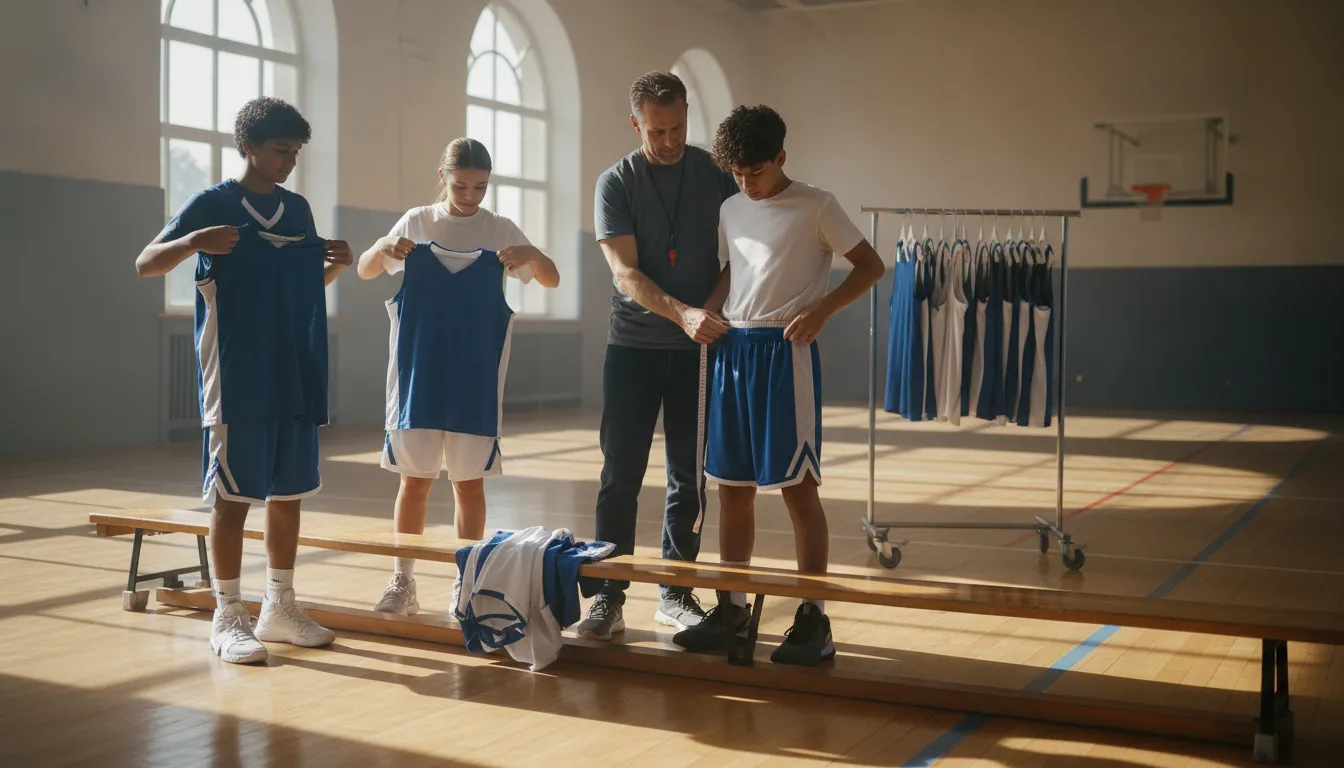
Treat artwork as a separate approval checkpoint. Provide the best logo file available, identify the approved colors, and specify names and numbers exactly as they should appear. Ask the supplier to show placement, scale, spelling, and number assignments in a final visual proof. One authorized coach, athletic director, or administrator should approve that proof in writing. After approval, document who can authorize a change and how a revised proof will be handled.
Finally, record the decoration method for each garment instead of using a vague instruction such as "add the logo." The plan may use tackle-twill, sublimation, screen printing, heat press, or embroidery. The best option depends on the garment and desired result. Specify the decoration location and personalization details, then confirm that the approved method appears on the quote and order record. Uniforms Express supports custom logos and several decoration approaches, but the supplier should confirm the best method for the selected products before production.
How Should You Build the Timeline Around the Season?
Build your schedule backward from the first game or uniform distribution date. Start by confirming school purchasing steps, then allow time for specifications, roster details, artwork approval, purchase order processing, supplier confirmation, production, shipping, and inspection. The exact timing depends on your products and school workflow, so confirm each commitment before submitting the order.
- Set the season deadline, budget, and vendor path.
Identify the date players need uniforms, whether that means distribution day or the first game. Then confirm the available budget, the purchasing contact, and the supplier path your school permits. New York State guidance describes purchasing as securing the right quantity and quality at the right time and price, while New Mexico guidance emphasizes local policies, approvals, and separation of duties. Those controls vary by school and district, so ask your purchasing office what must happen first.
- Gather specifications and request the quote.
Define the sport, garments, quantities, sizes, colors, customization, accessories, ship-to address, and needed-by date. Ask for a quote that reflects the complete scope, including any items that may be ordered separately. Keep the quote, specifications, and later PO together so the approver can compare them without guessing.
- Finalize the roster and artwork.
Collect player-level sizes, verify quantities, and resolve missing responses before the order is submitted. Confirm logo files, names, numbers, decoration placement, and the person authorized to approve the final proof. Leave room for practical review rather than assuming revisions can happen without affecting the schedule.
- Allow time for school purchase order approval.
A requisition, quotation, and purchase order may be separate steps or forms, rather than interchangeable documents. New York school purchasing guidance lists requisition, specifications, quotation, PO issuance, delivery follow-up, receiving, quality control, and invoice approval as distinct stages. Submit through your school process early enough for budget and authorization review.
- Get supplier confirmation before treating the order as scheduled.
Confirm that the supplier received the approved PO, accepted the specifications, and has the correct contact, ship-to address, and needed-by date. A PO alone does not necessarily mean production has started. Ask what approval, payment, or other release step remains.
- Plan product-specific production and shipping.
Request timing for your actual garments and customization, then add shipping time and a reasonable buffer before distribution. Avoid relying on a universal turnaround promise. Changes to sizes, artwork, quantities, or delivery details can affect the schedule, so document the final version and ask how changes are handled.
- Reserve time for receiving and inspection.
When the shipment arrives, count the cartons and items, compare sizes and decoration with the approved order, and record damage or discrepancies. New Mexico purchasing guidance treats receiving and payment as separate processes. Give your purchasing or finance contact the receiving record and any issue documentation before the invoice is approved.
For a more detailed planning reference, use this guide to plan the uniform ordering timeline while adapting each milestone to your school policy and supplier confirmation.
How Should You Review the Quote and Submit the PO?
Review the supplier quote against the school purchase order before submitting either document for approval. Confirm the quote version, every line item, quantities, sizes, artwork, ship-to address, and needed-by date. Then verify the supplier accepts the PO, understands the school's payment process, and will send written confirmation of the approved order.
Use this final reconciliation pass to make sure the quote and PO describe the same order:
- Quote version:
Record the quote number, date, and revision or version being approved. Remove older copies from the submission folder so the purchasing office and supplier are working from the same document.
- Line items and totals:
Match each garment, accessory, package component, decoration, and customization method. Recheck the total quantity against the roster, including the player-level size breakdown, team colors, names, numbers, and any approved extras.
- Artwork and proof:
Attach or reference the final artwork proof. Identify the approved logo, decoration placement, names, numbers, and other customization details. The authorized school or team approver should be clear in the records.
- Delivery details:
Enter the complete ship-to location, receiving contact, and needed-by date. If the school has a separate distribution date or game deadline, share that context with the supplier rather than assuming the date has the same meaning.
Approval and payment:
Confirm the local purchasing office requirements, authorized signer, vendor setup, budget or account coding, and any tax documentation. School procedures can separate requisitions, quotations, purchase orders, receiving, and payment approval, so follow the district's process rather than treating a quote as authorization to order.
New York's school purchasing handbook
illustrates how these stages may be handled separately.
- Supplier acceptance:
Ask whether the supplier accepts the school's PO format and whether a deposit, upfront payment, or another approval step applies. Uniforms Express lists purchase orders as a payment method, but a PO alone should not be assumed to start production. Confirm the applicable terms and next step directly.
After submission, save the PO, reconciled quote, final proof, roster, and supplier correspondence together. Request written confirmation that the supplier received the complete order and note the contact responsible for questions, revisions, delivery, and receiving follow-up.
Request help with a team order or call 888-661-7044 to review the quote and next steps.
What Should Schools Check When the Uniforms Arrive?
When uniforms arrive, compare every carton with the packing list and purchase order before distributing anything. Confirm the item count, player names or numbers, sizes, colors, decoration, and garment condition. Record what was received, photograph damage or errors, report discrepancies promptly, and give the approved receiving record to the staff member handling invoice payment.
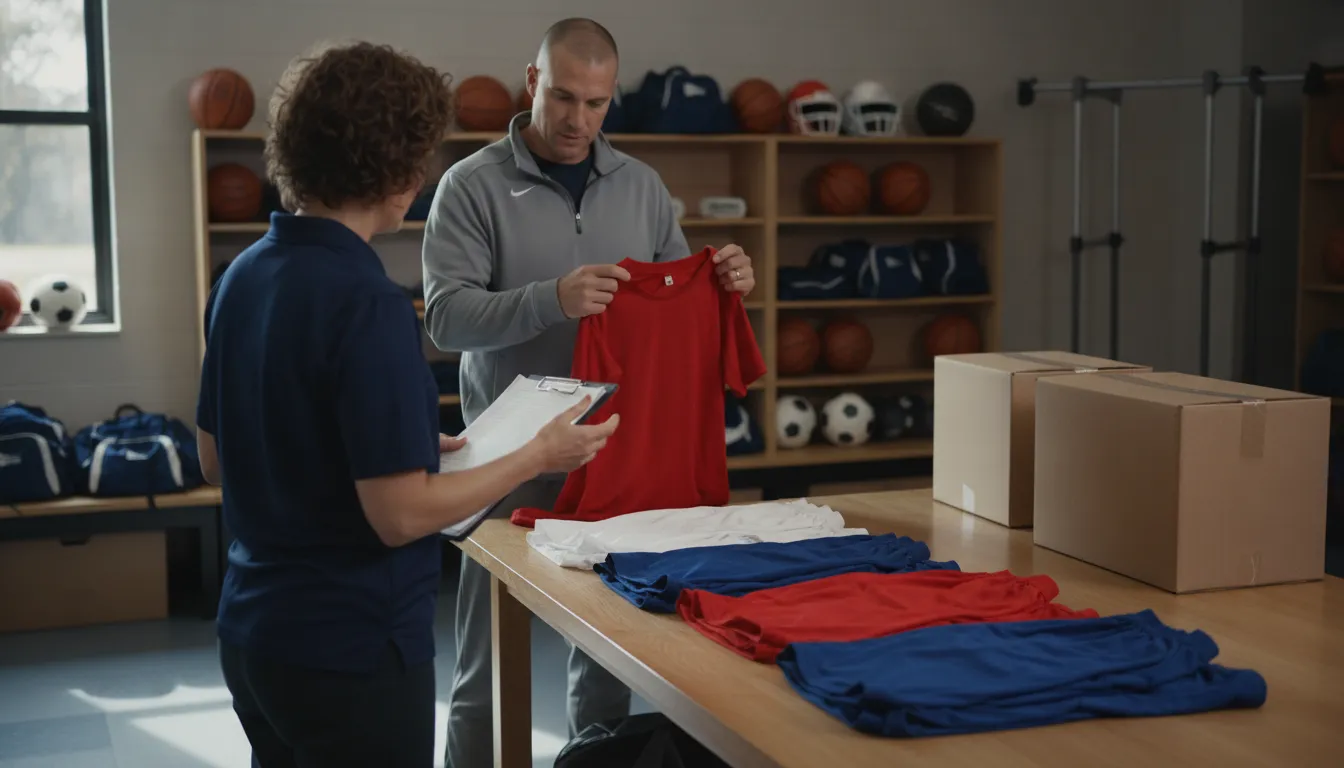
Start with the cartons and packing list. Check that the number of boxes matches the shipment, then count each garment by type and size. For rostered items, verify player names and numbers individually. Compare the result with the final approved order, not only the outside carton labels. This catches missing jerseys, duplicate numbers, incorrect sizes, or omitted accessories before athletes receive them.
Inspect garments in good lighting for tears, stains, loose seams, incorrect colors, and decoration problems. Look closely at logos, names, numbers, and placement. Keep any affected item separate, note the issue beside its line on the receiving record, and take clear photos. Contact the supplier with the order reference, item description, quantity affected, and requested resolution. Ask whether the item should be returned and how a replacement or correction will be handled.
Receiving and payment are often separate control steps in school purchasing procedures, so do not treat delivery as automatic invoice approval. New Mexico school guidance, for example, addresses receiving and payment as distinct processes: review your local receiving and payment requirements. Send the signed or approved receiving record, packing list, and discrepancy notes to the purchasing or finance office, while keeping copies for the athletic department.
Frequently Asked Questions
What fields should a team uniform purchase order checklist include?
Record the sport and team, garments and accessories, quantities, player-level sizes, colors, customization, ship-to address, needed-by date, quote reference, and the person authorized to approve the order. Confirm any required budget code or vendor information with your school or district.
Who needs to approve a school uniform purchase order?
That depends on local policy. Confirm the required requisition, budget approval, purchasing-office review, authorized signer, vendor setup, and final artwork approval before submission. Ask whether the district uses separate forms or approval thresholds for this type of purchase.
How can coaches collect accurate uniform sizes?
Give each player access to the applicable size chart, then collect item-specific sizes on a roster worksheet or approved form. Set a local response deadline, follow up on missing entries, and have a coach or administrator review the final size breakdown before it reaches the supplier.
How much lead time should schools allow for custom uniforms?
Work backward from the first game or distribution date. Allow time for specifications, quote review, artwork and size approval, school purchasing steps, production, shipping, and receiving inspection. Product timing varies, so confirm the schedule and any cutoff dates directly with the supplier.
What should a team uniform package include?
List every item by garment and quantity, such as jerseys, bottoms, warm-ups, socks, bags, or other coordinated accessories. Specify which items are required, optional, or assigned by player, and confirm that the quote and purchase order describe the same package.
Should a school order extra uniforms or replacement pieces?
Consider the program's history of roster changes, growth, damage, loss, and midseason additions. If extras fit the approved budget, identify the garments and sizes most useful for replacements. Ask whether those pieces should appear on the original PO or be handled through a later order.
How should a school confirm PO and payment status?
After submission, verify that the supplier received the PO, the school approval is complete, and the agreed payment or deposit process is understood. Request written confirmation of the final specifications, artwork, sizes, ship-to details, and next production step rather than assuming the PO alone starts production.
Ready to Review Your Team Uniform Purchase Order?
A quick review can help your school confirm that the team details, quantities, customization, approvals, and delivery information are aligned before submission. If you would like help checking the order or purchase order, contact Uniforms Express at 888-661-7044.


Comments