


Custom Name Number Jerseys: A Coach's Order Guide

One misspelled name, duplicate number, or unapproved placement can delay an entire team order. For coaches and administrators, personalization is less about making one attractive jersey and more about controlling a shared set of decisions before production begins.
Custom name number jerseys are team garments personalized with player names and numbers, usually alongside selected colors, fonts, logos, and decoration methods. The safest ordering process treats each player record and design choice as information to verify, then uses a final proof for stakeholder approval.
That workflow applies across baseball, basketball, football, soccer, volleyball, and other sports, even though league rules and garment layouts can differ. Start by separating the jersey features your team wants from the information every player record must contain, then confirm how those choices work together on the finished uniform.
What Are Custom Name Number Jerseys?
Custom name number jerseys are team garments personalized with each athlete's name, number, and approved design details. They turn a shared uniform concept into an organized order. The team selects the garment and decoration, then verifies every player's spelling, size, number, placement, and proof before production. The same workflow can support baseball, basketball, soccer, football, volleyball, and other sports, with rules checked for the specific league or program.
The phrase covers more than printing a name and number on a shirt. For a coach or team manager, it describes a set of decisions that must stay consistent across a roster. The front, back, sleeve, or other placement may vary by garment and sport. Decoration may be sewn-on tackle-twill, which is durable and high contrast, or sublimation, which supports complex color work without cracking or peeling. The right choice depends on the look, use, and specifications your program needs.
A reliable order starts with one controlled roster. Collect each player's name exactly as it should appear, preferred number, size, and any approved customization. Check for duplicate numbers, unclear abbreviations, and last-minute changes before anyone approves a proof. Numbering and placement rules are not universal, so confirm them with the league, school, or governing body rather than assuming a format from another sport.
Design decisions should also be visible to the people approving the purchase. Uniforms Express offers multiple custom jersey design options, including lettering styles, team colors, layouts, and logo placement. Teams can save and share designs for feedback, helping a coach, athletic director, and team representative review the same version. You can also visualize a team design before finalizing the roster details.
Think of custom name number jerseys as a repeatable team-order system, not a sport-specific shortcut. Keep the design consistent, document each player's details, and make proof approval the decision gate before ordering. That approach reduces avoidable corrections while leaving room to confirm the requirements of each team and competition.
How Should Coaches Collect Names, Numbers, and Sizes?
Collect roster details in one controlled workflow before ordering custom name number jerseys. Record each player's approved display name, legal name for team records, jersey number, size, and any deadline-sensitive notes. Then validate the list, assign one approval owner, and lock the version everyone will use for production.
- Choose one roster source.
Use one shared roster or approved order record rather than scattered texts, screenshots, and spreadsheets. Give every player one row. Capture legal name, display name exactly as it should appear, requested number, garment size, and a contact or team note only when it is needed for administration.
Set the collection deadline.
Tell families when information must be submitted and when corrections close. This is more than an internal convenience. The City of Rogers, Arkansas, says coaches receive rosters at meetings and notes that jersey timing for late registration is not guaranteed in its youth basketball program. That example should not be treated as a universal policy, but it shows why late entries need a clear, written cutoff. See the
Rogers youth basketball information
for that program's details.
- Separate legal and display names.
A legal name can support records and communication, while the display name controls the lettering on the jersey. Ask players or guardians to confirm capitalization, spacing, hyphens, apostrophes, and shortened names. Do not assume a nickname, surname, or preferred spelling from an earlier season is still correct.
- Validate numbers and sizes.
Sort the roster by number and look for duplicates, missing values, accidental reversals, and entries marked same as last year. Check sizes directly with each player, especially when youth and adult size ranges or different garment cuts are involved. Confirm any number limits or placement requirements with the league, school, or governing body before approval.
Run a final proof check.
Send one clean roster and design proof to a single approval owner, such as the head coach, athletic director, or designated team manager. That person should confirm names, numbers, sizes, spelling, and the change deadline in writing. Save the approved version so later conversations do not reopen settled details. For broader
uniform planning and ordering guidance
, use a checklist that covers the full order, not just personalization.
Quick checklist: legal name recorded; display name confirmed; number unique and rule-checked; size verified; cutoff communicated; one approval owner assigned; final roster and proof saved.
Where Should Names and Numbers Go on a Team Jersey?
Place names and numbers where players can be identified quickly without crowding logos, seams, or other required markings. The right location depends on the sport, garment cut, and governing rules. Confirm the layout with your league or school before ordering, then approve a proof showing every placement.
Start with the viewing context. A back name usually sits above the back number, while the number needs enough open fabric to remain easy to read from the stands. On a reversible jersey, check both colorways before approving the same artwork. A location that looks balanced on one side may lose contrast or compete with a logo on the other.
Front placement often depends on the neckline, chest logo, pockets, and seams. Do not assume that a centered number is always correct. Compare the actual jersey template and mark the available decoration area before collecting final artwork. For team orders, use one approved layout for the group unless a particular garment requires a documented adjustment.
Use sport rules as the starting point
Rules can be more specific than general apparel guidance. For example, the University of Arkansas at Little Rock intramural handbook says numbers may appear on the front or back and should contrast with opponents: review the UA Little Rock example. That is a policy for that program, not a universal placement rule.
The University of Georgia basketball rules provide another useful example. They specify numbers on both the front and back, at least 4 inches high, with contrasting numbers: see the UGA basketball example. Requirements like these can affect the jersey style you select, the size of the decoration, and whether a logo must move.
Check your own league, school, tournament, or governing body's current rules before finalizing a design. Ask specifically about number location, minimum size, contrast, duplicate numbers, player names, and acceptable decoration methods. If the rules are unclear, send the rule excerpt with your proof request so the placement can be reviewed against the actual requirement.
Match placement to the garment
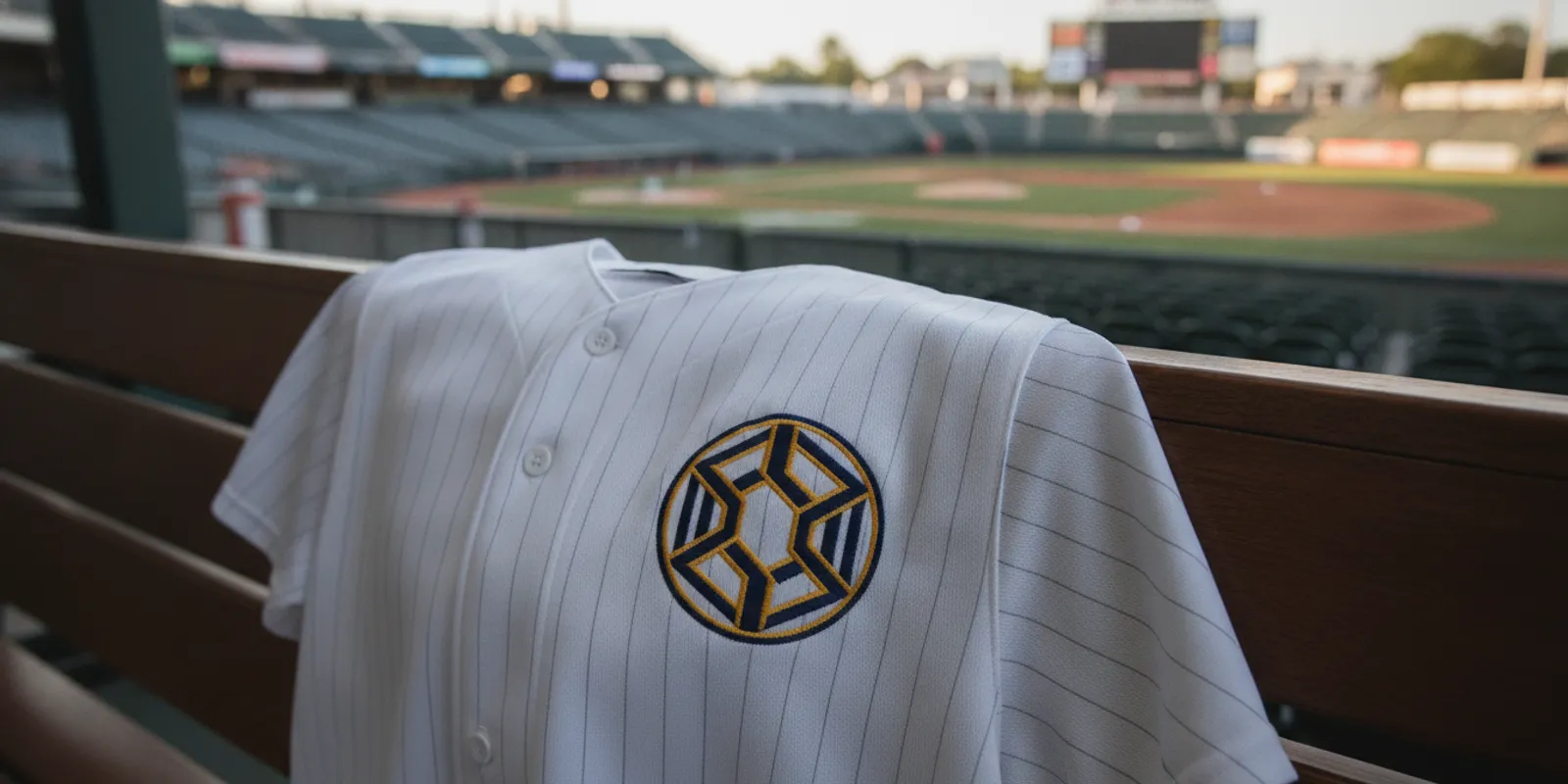
The garment itself should guide the final proof. A baseball top may have a button placket or piping that changes the usable chest area, so review the template when ordering custom baseball jerseys. A football top may use a different shoulder and sleeve layout, making a separate proof important for custom football uniforms.
Before production, verify the player list, spelling, number assignments, front and back views, colors, and garment sizes. Have one authorized coach or administrator approve the complete proof. That simple checkpoint helps prevent a correct name from being placed on the wrong number, or a readable design from becoming noncompliant after the order is made.
Which Fonts, Colors, and Decoration Methods Work Best?
For team personalization, the best choice balances quick recognition with a clean, durable finish. Start by checking the proof at full size: names and numbers should be easy to read from the sideline. Colors should contrast with the jersey body, and every logo or mark should have a confirmed location. Then select the decoration method that fits the look and expected use.
Choice | What it supports | Best review question |
Font style | Distinctive names and numbers with clear shapes | Can officials, coaches, and teammates read it quickly? |
Color and layout | 1-3 color lettering, team colors, and logo placement | Does the lettering contrast without competing with the logo? |
Tackle-twill | Sewn-on lettering with a durable, traditional finish | Does the raised sewn appearance fit the team design? |
Sublimation | Complex color work integrated into the garment | Does the design need detailed color transitions or artwork? |
Choose readability before novelty
Review the available lettering, colors, layouts, and logo placement options in the proof before approving the design. A distinctive style can help a team build a recognizable identity, but a complicated font or crowded outline can make names harder to scan. Compare capital letters, narrow numbers, and likely player names in the proof rather than judging the style from a single sample.
Color decisions should account for the jersey base, trim, and logo. One to three lettering colors can create contrast, while a simpler treatment may be easier to read at distance. Confirm whether the logo belongs on the chest, sleeve, short, or another approved location. You can also review custom basketball jerseys and custom soccer jerseys for sport-specific design direction, then apply the same proof checks to your team.
Match the process to the artwork
Tackle-twill is sewn onto the garment, giving names and numbers a durable, dimensional finish that suits traditional team uniforms. Sublimation is useful when the design depends on more complex colors or artwork. The color is incorporated into the garment, so the finish does not crack or peel. In either case, ask for a final proof that shows the actual placement, lettering, color treatment, and logo before the roster is released for production.
Before approval, have the coach, team manager, or designated administrator compare the proof against the team's intended look. Check the spelling of every name, the shape of each number, the contrast against the garment, and the location of every decoration element. This review catches design issues while changes are still manageable and gives the production team one clear version to follow.
What Jersey Number Rules Should Teams Check?
Before approving custom name number jerseys, confirm the number range, digit format, duplicate policy, size, placement, and color contrast with the governing league. For example, the UA Little Rock intramural policy allows numbers 0-99 and requires a number on the front or back. The UGA intramural basketball policy, by contrast, limits numbers to one or two digits, restricts eligible digits, and treats 0 and 00 as the same number. These are local policies, not universal standards.
Verify the permitted range and digit count
Start with the official rulebook for the exact sport, league, school, or tournament. Do not assume that a number accepted in one program will be accepted in another. The UA Little Rock intramural policy says jersey numbers must be 0-99 and prohibits triple-digit numbers and symbols. Read that as a useful example of a two-digit ceiling, not as a cross-sport requirement: UA Little Rock intramural equipment policy.
The UGA intramural basketball policy is narrower. It requires one- or two-digit numbers, allows only 0, 1, 2, 3, 4, and 5, and prohibits duplicate numbers. It also specifically states that 0 and 00 count as the same number. That detail matters when assigning a roster, but it applies to this local intramural basketball policy rather than every basketball organization or sport: UGA intramural basketball rules.
Check duplicates, placement, height, and contrast
Build a roster number audit before sending the order. Search for exact duplicates, then check whether the governing body treats formats such as 0 and 00, or other visually similar choices, as equivalent. Confirm whether numbers are required on the front, back, or both. The UGA example requires numbers on both locations, at least 4 inches high, and in a contrasting, visible color. It also requires numbers to be ironed or sewn on, not made with tape or marker. Again, these are local policy examples, not universal decoration rules.
Use this verification sequence:
Open the current rulebook or written policy for the competition.
Record the allowed range, digit count, duplicate rule, and any special treatment of 0, 00, or retired numbers.
Confirm required locations, minimum height, decoration method, and contrast standard.
Compare the approved rules against the roster and design proof.
Have the coach or league administrator sign off before production.
If your team is ready to review sport-specific layouts, explore custom volleyball uniforms and carry the same rule-checking process into the final proof.
What Should Teams Confirm Before Approving a Jersey Proof?
Before production, the approving group should compare the proof with the final roster and confirm every visible detail: spelling, player numbers, garment, sizes, placement, colors, logo position, and font. Save the approved design, share it with the people who control the order, and record one clear sign-off so production is based on the same version.
Use one proof review, not a series of guesses
Start with the design itself. Check that the jersey shown in the proof is the garment the team selected, including the sport-specific cut, color, and sleeve or panel details. A correct decoration on the wrong garment can still create a correction, so compare the proof with the original team decision before reviewing individual names.
Next, review each personalized line against the approved roster. Read every name slowly, including capitalization, spacing, punctuation, and any approved shortened name. Confirm that each number belongs to the right player and that no number is duplicated when the league or school prohibits duplicates. Check sizes separately from names and numbers; a proof can look correct while the order record contains a different size.
Inspect the visual treatment at full size. Confirm the front, back, sleeve, or other placement; logo position; lettering color; outline or contrast; and selected font. The design should be readable against the garment and consistent across the team. Rules and placement requirements can vary by sport and governing body. So the coach or athletic director should make the final compliance check rather than assuming a standard layout applies everywhere.
Get the right people to approve the same version
Teams can save and share a team design for feedback before ordering. Use that shared version as the review reference. Ask the coach, team manager, school or league contact, and any logo owner who must approve the order to review it before the deadline. Consolidate comments instead of sending conflicting edits from separate files.
When changes are made, save a new final version and remove ambiguity about which proof is approved. Keep the roster and design notes together so the person placing the order can follow one set of instructions. The Uniforms Express team can then receive an organized approval rather than a chain of corrections.
Final approval checklist
Garment, cut, color, and size are correct for every player.
Names are spelled and formatted exactly as approved.
Numbers are assigned correctly and comply with the applicable rules.
Placement, font, colors, contrast, and logo position are correct.
All required stakeholders reviewed the same saved design.
One person recorded final approval before production.
How Can Teams Handle Late Roster Changes?
Handle a late roster change as a controlled update, not as a separate informal order. Confirm the player, size, name spelling, number, decoration, and needed date. Then compare the request with the approved team design before contacting the supplier. Ask whether the item is currently available and what turnaround is realistic before communicating a firm commitment to the family.
Late additions, transfers, and replacements are easier to manage when the approved roster and design records are organized. Keep the latest version in one shared location, with clear ownership for changes and approvals. When you contact the supplier, ask about the current change process, available garment and decoration options, production timing, and delivery expectations. Processes and availability can change, so do not assume that a previous order can be repeated on the same schedule.
Do not promise that a late order will arrive by the next game. The City of Rogers, Arkansas, warns that jerseys for late registrations may not arrive in time for the start of league games and that delivery timing cannot be guaranteed. That is a league-specific example, not a universal rule, but it illustrates why coaches should communicate timing risk clearly and early. Read the Rogers youth basketball registration guidance.
Use a simple change-control checklist
Record the player's full name, preferred spelling, jersey size, number, and team.
Check that the requested number does not conflict with the approved roster or applicable league rules.
Confirm that the decoration method, placement, colors, and logo treatment match the approved design.
Ask about current stock, production status, shipping options, and estimated arrival. Treat every response as an estimate unless the supplier confirms otherwise.
Send the family a written update explaining what is confirmed, what remains subject to availability, and what the player should wear if the jersey is delayed.
Save the final change and approval with the team order records so the next request starts from accurate information.
For a fill-in order, keep the replacement as close as practical to the team standard. Confirm the match with the supplier rather than assuming that a later garment, name treatment, or number application will be identical. If a change affects the whole roster, pause individual ordering and obtain a new proof approval before proceeding. This prevents one urgent request from creating mismatched names, numbers, or decoration across the group.
Once the change is approved, give the player and family a clear status update. Include the requested details, the supplier's current estimate, and any contingency for a delayed delivery. A documented decision is easier to correct than a verbal promise, and it gives the coach a reliable record for future team orders.
Frequently Asked Questions
How do I choose the right jersey style for my team?
Start with the sport, garment cut, team colors, logo needs, and where names and numbers must appear. Build one design, save it, and share it with coaches or league stakeholders for feedback before collecting final player details.
How should I choose jersey sizes for every player?
Collect each player's requested jersey size in the same roster record as their name and number, then review the list for missing or unusual entries. Confirm the size range and fit against the selected garment and any league or school requirements before approving the order.
Which decoration method is best for names and numbers?
Tackle-twill is a sewn-on option suited to a durable, high-contrast team look. Sublimation supports more complex color work and does not crack or peel. Compare the desired appearance, garment, logo treatment, and use before selecting a method.
How early should I order custom jerseys before the season?
Set the deadline backward from the first game and leave time for roster collection, design review, proof approval, production, and delivery. Ask about current turnaround before committing. Late additions may require a fill-in or reorder, so availability and timing should be confirmed rather than assumed.
How much do custom name number jerseys cost?
Pricing varies with the garment, quantity, decoration method, artwork, and individual customization. Request current details for your team design and roster instead of budgeting from a generic online figure. Confirm what is included before approving the order.
Ready to Start Your Team Jersey Order?
A clear roster and approved design make the next step easier for coaches, administrators, and players. Review the available customization choices, organize your team details, and explore custom jersey options and start your team order with Uniforms Express .
Comments