


Custom Football Gloves for Team Programs: What to Specify

A glove order can look simple until the first pair arrives in the wrong colors, fits differently across the roster, or cannot be decorated as expected. Before you order custom football gloves, define exactly what your program needs—and confirm whether the supplier offers the glove model and customization you have in mind.
What do you mean by custom football gloves?
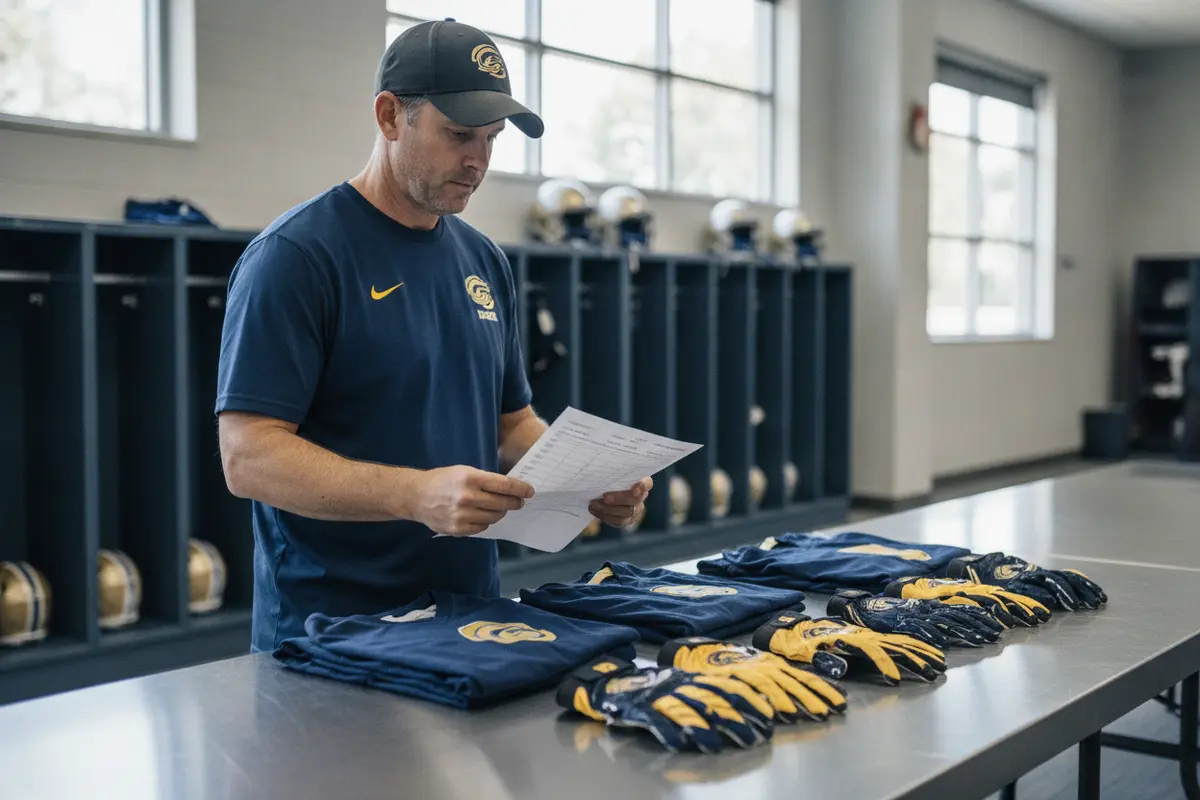
“Custom” can describe several different things: choosing a glove in a team color, adding a logo or player identifier, selecting different sizes for a roster, or coordinating gloves with a full uniform order. Those are not automatically the same service. Start by defining the product and decoration you want, then confirm availability, customization options, and ordering details directly with the supplier.
This distinction matters for Uniforms Express. Its published offering covers custom team uniforms and apparel, including football jerseys, pants, and related gear. The available product information does not establish that it manufactures or decorates football gloves. So use this guide to prepare a precise inquiry, not as a promise that a particular glove or customization is available. For a broader team apparel discussion, see the football uniforms and apparel overview.
Before requesting a quote, decide which of these outcomes you want:
- Coordinated appearance:
Gloves in colors that complement the team uniform, with no added mark.
- Personalized appearance:
A logo, initials, number, or other design element, subject to the glove’s decoration area and the supplier’s capabilities.
- Complete team presentation:
Gloves considered alongside jerseys, pants, and other team apparel so the full look is consistent.
Do not assume every glove can be decorated in every way. A logo may not fit the available surface, and a supplier may offer only specific base models, colors, or decoration choices. Ask for the actual options before making a roster-wide promise. If the supplier does not offer the glove itself, you can still keep the apparel order aligned by confirming colors, artwork, and delivery plans across the products it does provide.
It helps to put the request into one sentence before you contact anyone: “We need 36 pairs for varsity and junior varsity, in a dark base color that works with our approved uniform palette; please confirm available models, size options, decoration possibilities, and a delivery estimate.” That is not a final specification, but it quickly exposes unanswered questions. If the answer is that gloves are not available through the apparel supplier, you can then take the same written requirements to a glove vendor without rebuilding your plan from memory.
What should a coach specify before requesting a quote?
A useful request gives the supplier enough information to identify a suitable product and explain what is possible. State the intended use, the number of players, the desired color and decoration, and the date the equipment is needed. If you are comparing glove options, ask for model-specific information rather than assuming all styles share the same fit, surface, or decoration limits.
Build your request around a short specification sheet. It can be a simple document or spreadsheet, but it should make open questions visible instead of hiding them in an email thread.
- Identify the buyer and program.
Include the school, club, team level, coach or administrator contact, and the person authorized to approve the design and order.
- Give the quantity and roster status.
State the expected number of pairs and whether the roster is final. Note whether coaches, replacements, or late additions may need separate quantities.
Name the use and constraints.
Explain the level of play and any league, school, or program requirements you need the product to meet. Ask the supplier to confirm the product details; do not infer compliance from a picture or a general product description. For high school football, check current equipment and rule guidance from the
National Federation of State High School Associations (NFHS)
and your state association before approving equipment.
- Describe the look.
Provide approved team colors, logo files if available, and a clear description of where you hope a mark will appear. Identify any colors or visual elements that must not be used.
- Set the required date.
Give the date the team needs the items in hand, not just the first game date. Leave time for review, size collection, production, shipping, and resolving a problem.
- Request a written confirmation.
Ask the supplier to document the exact model, options, decoration, quantities, sizes, expected schedule, and any limitations before you approve.
Separate facts from preferences. “The roster has 42 players” is a quantity; “we would like a logo on the backhand” is a preference that needs feasibility confirmation. That separation makes it easier for the supplier to say what is confirmed, what needs adjustment, and what information is still missing.
If you are ordering gloves alongside apparel, list each product on its own line. A request for “a football uniform package” may not communicate that gloves are expected, and the name of a uniform product page does not establish that every accessory is included. Review the actual garment choices on the football uniforms page and custom football jerseys page, then ask how those items can be coordinated with any separately sourced equipment.
For a practical handoff, label each item in your worksheet as decided, needs supplier confirmation, or not included. For example, the jersey color may be approved, while the glove base color remains unconfirmed and logo placement is still under review. This simple status check prevents an early idea from being mistaken for a purchase commitment. It also helps an athletic director or purchasing office review the order without having to interpret a long chain of informal messages.
How should teams handle fit, sizing, and roster changes?
Glove sizing should be confirmed for the specific product, using that supplier’s size guidance rather than a generic chart or another brand’s fit. Collect each player’s size privately and consistently, allow time to resolve uncertain measurements, and keep a record of the final size list. A careful process reduces preventable exchanges and helps the order match the team roster.
Use these practical steps:
- Start with the product-specific guide.
Ask for the manufacturer’s or supplier’s current sizing instructions for the exact model under consideration. Do not transpose a jersey, batting glove, or different football glove chart.
- Explain how to measure.
If the supplier gives a measuring method, share it with players and families as written. Avoid improvising units or measurement points.
- Flag uncertain sizes early.
Identify players who cannot confidently select from the chart. Ask whether a sample, fitting option, or other confirmation is available; do not assume one is offered.
- Assign a roster owner.
One coach or team administrator should maintain the master list and check duplicate names, missing sizes, and late changes.
- Freeze the list before approval.
Set a cutoff date for changes. After the supplier confirms production details, ask how an adjustment would affect the order and schedule.
For apparel, use the product’s own size chart too. The team can refer to the Uniforms Express team sizing charts for its apparel order, but that information should not be treated as a glove sizing chart. If a player’s glove size is uncertain, get guidance for the actual glove model from its supplier.
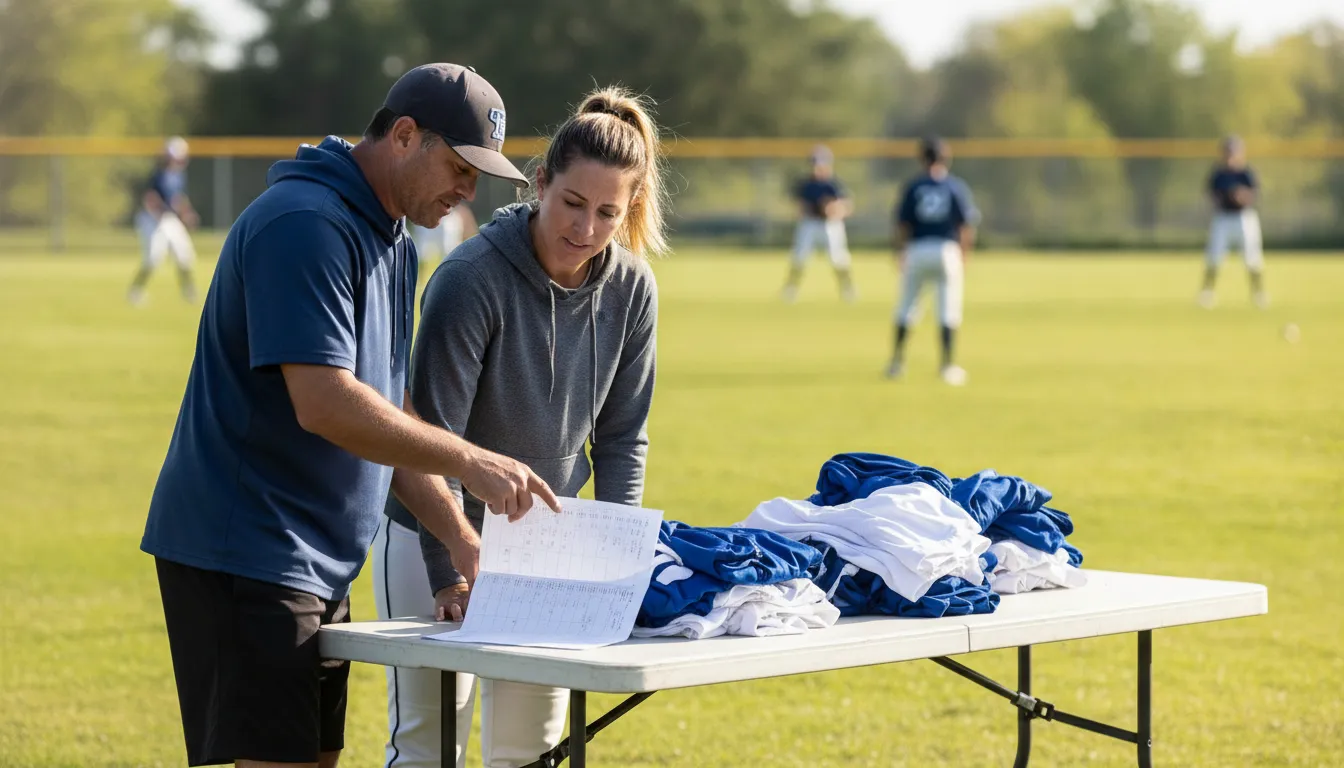
Build a clean roster file with one row per person and separate columns for player name, jersey number if relevant, garment size, glove size, and any approved personalization. Use a consistent spelling convention and have a second person check the list against the roster. Keep personal information limited to what the order needs, and share it only with people managing the purchase.
Roster changes are easier to manage when they are anticipated. Ask whether additions can be ordered later, whether the same product and colors are expected to remain available, and what details the supplier needs to match the original order. Do not assume a reorder will use identical materials, colors, or terms without confirmation. Uniforms Express also provides a terms and conditions page for its ordering policies; review applicable terms with the supplier before committing.
Before sending the roster, check it in two passes. First, compare the number of size entries with the confirmed number of pairs; a blank cell can otherwise be overlooked when the total seems right. Then compare names and any personalization against the team’s approved roster, including spelling, capitalization, and player numbers. If the supplier needs a separate size list for gloves and apparel, keep those lists clearly labeled rather than combining measurements that follow different guides. Record the date of the final version and remove outdated copies from the approval thread so the wrong file is not used.
How can decoration and team colors work together?
Decoration should be planned around the actual glove surface, not just a mockup of a uniform. Ask what parts of the glove can be customized, which methods are available for that exact item, and whether the artwork remains legible at the finished size. Then coordinate the approved glove look with the jersey, pants, and other apparel without assuming every product uses an identical color or decoration process.
Prepare the artwork and visual direction before requesting a final proof. Share a high-quality logo file if the supplier requests one, specify the approved colors, and state whether the design must include a team name, mascot, initials, or number. If a mark is optional, say so. A design that works on a large jersey panel may need to be simplified or repositioned for a smaller glove surface.
Ask the supplier to answer these questions before the team approves:
Is the requested glove model available in the desired base color?
Can the logo or other mark be applied to that model, and where?
What decoration method is available for the requested location?
Will the supplier provide a visual proof showing the final placement and colors?
Are there limitations involving artwork detail, color matching, or personalization?
What must the coach review before the proof is considered approved?
Review the proof at its actual intended scale. Check that the logo is not clipped, the important lines remain visible, and the colors and placement match the written request. Confirm the number of pairs and any player-specific details as well. Send corrections in one consolidated response, then request an updated proof if the design changes. Keep the final approved version with the order record so everyone is working from the same reference.
Make the proof review specific rather than relying on a general “looks good.” One reviewer can verify artwork and spelling, while another checks product details, quantities, and sizes. If the design includes a small symbol or narrow lettering, zooming in on a digital proof is not enough: ask whether the mark can be produced clearly at the actual size on the glove. If the requested decoration is unavailable, ask for a revised option and review that version as a new approval. Keep a dated copy of the approved proof and the supplier’s written description of the item together; that record makes it easier to resolve a mismatch between what the team requested and what it understood was confirmed.
For Uniforms Express apparel, decoration may include methods such as screen printing, embroidery, heat press, or tackle twill, depending on the product and design. Those apparel options should not be assumed to apply to gloves. To understand garment decoration choices, compare the relevant uniform options or ask about the tackle twill and sublimation approaches for uniform lettering. That comparison is about uniforms, not a claim about glove decoration.
How do you coordinate gloves with the complete football order?
Think of gloves as one line in a larger team presentation plan, not as proof that every item comes from one supplier. Keep the color palette, marks, and schedule in one order checklist, then confirm which products each supplier is responsible for. This avoids gaps between a glove request and the custom uniforms, jerseys, or pants the team is actually ordering.
The table below helps divide the decisions. Use it to track what your team must decide and what the supplier must confirm; it does not imply that each product or service is available from every vendor.
Order item | Team should specify | Supplier should confirm |
Football gloves | Desired use, quantity, size list, base color, and requested mark | Exact model, available sizes and colors, decoration feasibility, proof, and schedule |
Jerseys | Style, color, names or numbers, roster, and artwork approval contact | Available garment options, sizing guidance, decoration details, and production timing |
Pants | Style, color, quantities, size list, and any required coordination | Product options, fit guidance, decoration or color limits, and order timing |
Other team apparel | Which pieces are needed, who receives them, and when the team needs them | Available products, sizes, customization choices, and whether items can be scheduled together |
When a team is ordering jerseys and pants through Uniforms Express, use the appropriate product pages to evaluate the apparel itself. The football pants options and custom football jersey information can help you frame product questions. Confirm details with the company rather than assuming a glove is bundled with either garment.
A shared color reference is useful, but screen colors and material colors can look different. Ask each supplier what color references it can use and what degree of matching it can confirm. Avoid promising players an exact match until the products and proof have been reviewed. If gloves come from one source and uniforms from another, assign one person to compare the final approvals and communicate any mismatch risk before purchase.
When two vendors are involved, create a simple responsibility map. List who is supplying the gloves, who is supplying each garment, who holds the final artwork, and who will contact each vendor if the schedule changes. Set one shared deadline for approved colors and one for final quantities, but let each supplier confirm its own production and shipping dates. If an item is delayed or unavailable, the coach can decide whether to adjust the look, source it elsewhere, or leave it out before the rest of the order is finalized. This is more useful than treating a multi-item order as one package when no one has confirmed that every product is included.
When should you approve the design and place the order?
Work backward from the date the team needs its equipment in hand. Include time to confirm the product, collect sizes, review artwork, approve a proof, produce the order, ship it, and address an unexpected issue. A supplier’s actual schedule depends on the product and order, so request a written estimate instead of relying on a general turnaround claim.
Use a simple sequence:
- Confirm scope.
Identify which items are included and which are being sourced elsewhere. Confirm glove availability before building the rest of the purchase around it.
- Collect requirements.
Check program rules, roster, size guidance, color expectations, artwork, and delivery location.
- Request options and timing.
Ask about exact models, decoration choices, costs, order minimums if applicable, and a schedule for the requested items. Pricing and availability can vary, so get current details directly.
- Review the proof and order summary.
Compare it with your specification sheet. Check spelling, numbers, colors, locations, sizes, quantities, and delivery details.
- Approve in writing.
Identify who is authorized to approve and keep the supplier’s confirmation with the final proof and roster.
- Track delivery and inspect the order.
Compare received items with the confirmed order and raise discrepancies promptly with the supplier.
If your season is close, say so at the start of the conversation and ask what options are realistic for your order. Uniforms Express describes its business around custom team uniforms and apparel, but timing depends on the specific item and order. Do not assume an urgent request is guaranteed or that rush pricing is waived. Confirm turnaround and any related costs in writing before approval.
Uniforms Express offers a uniform builder for designing team uniforms. It can help you work on apparel concepts, while glove model options and glove decoration still need direct confirmation. If you need help identifying an appropriate apparel path, use the catalog request page or ask the company directly which products it can support for your team.
Frequently Asked Questions
These answers help coaches turn a general glove idea into a clear purchasing request. Confirm product-specific fit, availability, decoration, schedule, and current costs with the supplier before the team commits or tells players what to expect.
How do I choose custom football gloves for a team?
Start with the exact product and use the supplier’s current information for that model. Compare its available sizes and colors, ask whether the requested customization is possible, and confirm the team’s rules or program requirements. Get the final model, quantity, size list, decoration, and delivery expectations in writing before placing the order.
How should players find the right glove size?
Use the size chart and measuring instructions for the specific glove being considered. Do not rely on another brand’s chart or apparel measurements. Ask the supplier what to do when a player falls between sizes or is unsure, and collect the final selections through one roster owner.
Can a team add its logo, numbers, or names to football gloves?
That depends on the glove model, its available decoration area, and the supplier’s services. Send the requested artwork and placement as a question, and ask for a proof and written confirmation before assuming it can be done. Uniforms Express’s listed decoration methods relate to its apparel; they are not confirmation of glove customization.
How much time should we allow for custom football gloves?
Ask the supplier for a current schedule based on the exact model, quantity, customization, and delivery destination. Work backward from the date the team needs the order and include time for roster collection, proof approval, production, shipping, and resolving errors. Do not treat a general turnaround statement as a guarantee for a specific glove order.
What should a team budget for custom football gloves?
Request current pricing for the exact glove, quantity, sizes, decoration, and shipping requirements. Pricing can change by product and order details, so do not rely on an old quote or a price for a different item. Compare the complete confirmed order, including any separate apparel purchases, rather than comparing a glove base price alone.
Make the product and approval details clear
A strong team order starts with a specific request, a checked roster, and a written confirmation of what the supplier can deliver. Treat gloves and uniforms as separate product decisions unless the supplier confirms otherwise. For Uniforms Express apparel, share your football program’s requirements and confirm available options before approving the order.
Comments