


Custom Football Jerseys With Names and Numbers: A Team Approval Guide

A misspelled name or duplicate number can turn a team-uniform order into a last-minute problem. Before approving custom football jerseys with names and numbers, coaches and athletic directors need a dependable way to coordinate the roster. Choose readable personalization, confirm fit, and catch errors on the proof.
What should a team decide before ordering custom football jerseys with names and numbers?
Start with the decisions that affect every jersey: the approved roster, the number system, the name format, and the look the program wants on the field. Assign one person to own the master list and proof review. Resolving those basics before design approval helps prevent avoidable revisions and keeps players, coaches, and administrators working from the same version.
A jersey order is a set of individual garments built around one team identity. That means the roster is not an administrative afterthought; it is part of the design specification. A coach may know the starting lineup, while an athletic director manages purchasing and a team manager collects sizes. Choose a single decision-maker to consolidate those inputs and approve the final details.
Build one authoritative roster
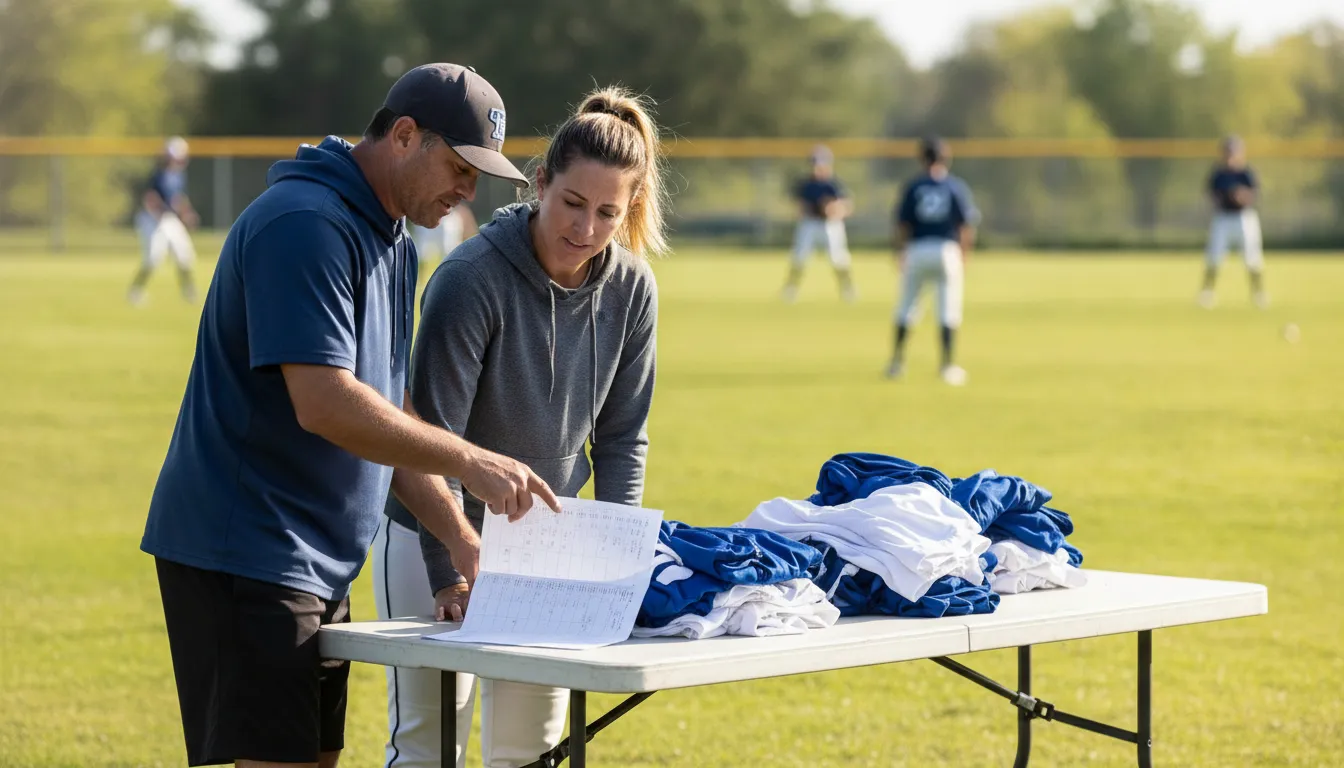
Use a spreadsheet or other shared record with one row per player. Include the player's name exactly as it should appear, the assigned number, the requested size, and any approved exception. Keep the roster in one place rather than combining details from text messages, email threads, and handwritten notes. Mark a version date and make clear who may edit it.
Check for duplicate numbers, missing entries, and names that do not match the program's preferred spelling. Confirm whether the team wants a first name, last name, nickname, or another established format. Do not assume a familiar name is the spelling the player or school expects on the garment. For a school or club order, make sure the appropriate coach or administrator settles any naming convention questions.
Separate decisions from open questions
Keep a short list of items that still need an answer: a late roster addition, a number conflict, an uncertain size, or a school-color approval. Resolve those before the proof is treated as final. If a change comes in after approval, send it as a specific revision to the order contact and ask for an updated proof. Avoid making side agreements with multiple people, since they can leave the production team with conflicting instructions.
For a first pass through available styles and personalization choices, browse custom football jerseys and design options. The broader football uniform collection can also help a program think beyond the jersey, including how the top fits into the complete game look.
How should names and numbers be planned for readability?
Personalization should be easy to identify at a glance and consistent across the team. Decide where names and numbers belong, how large they should appear in relation to the jersey, and which colors will contrast with the fabric. Ask to review a complete design proof rather than relying on a verbal description or a small decorative sample. The final visual check should reflect the actual garment colors and layout.
Coaches have to balance identity with practical readability. A dramatic letter style may suit a program's look, but narrow or highly decorative characters can be harder to distinguish from a distance. Likewise, a number color that looks bold on a computer screen may blend into the jersey fabric under stadium lighting. Keep the name and number system legible first, then refine the style around it.
Set the rules for name format and number use
Choose whether the roster uses surnames, full names, or another consistent form. Consider how longer names will fit within the available space. Ask how the design accommodates different character lengths so that one player's name does not appear crowded while another's looks disproportionately small. Check punctuation, capitalization, spacing, and any accented characters in the proof.
Confirm the number assigned to each player and whether the team has any position-specific, league, or school requirements to follow. Do not assume that every number is available or that a player may change numbers without affecting the rest of the order. If the program has a required number format, provide that direction before the artwork is finalized.
For high school programs, check the applicable rulebook before finalizing number placement and styling. The NFHS football jersey and pant rules address numbering and visibility requirements, so the coach or athletic director can compare the proposed design with the rules that govern the team.
Compare decoration approaches in context
The decoration method affects the surface appearance and how the design works with the garment. Uniforms Express offers decoration methods including sublimation, tackle twill, screen printing, heat press, and embroidery. The right choice depends on the jersey construction, desired look, art, and production details. Ask the supplier which methods suit the specific jersey and design rather than selecting a technique based only on a photo of another uniform.
For example, a team seeking an integrated, all-over graphic may want to ask about a sublimated design, while a program looking for a layered lettering effect may ask about twill options. Those are discussion points, not a substitute for reviewing the actual product and proof. If you are considering a full custom design, explore custom sublimation football jersey options and discuss which decoration is compatible with your chosen garment.
How can coaches prevent roster, spelling, and number errors?
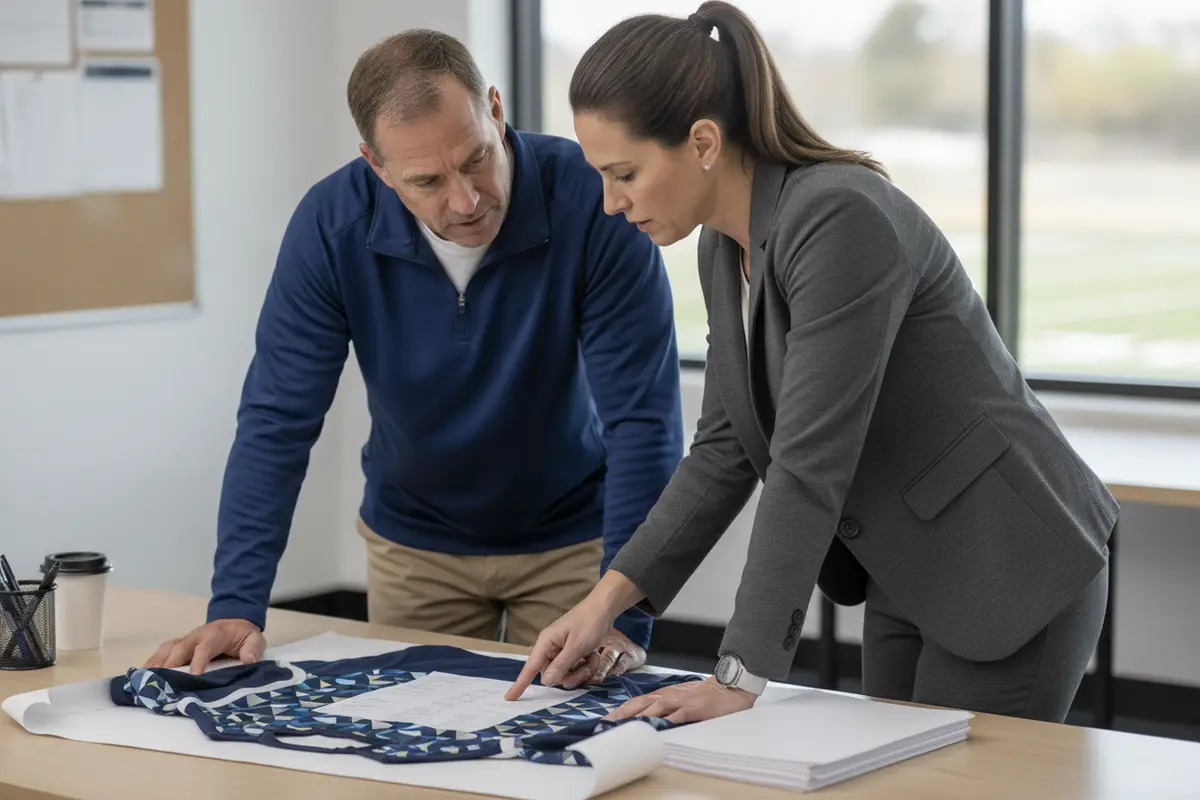
Use a deliberate proof-review process that checks every personalized jersey against the same approved roster. Review names character by character, verify each number, and inspect the design as a whole for consistency. One person should lead the review, but a second person can independently cross-check the final list. A calm, systematic pass is more reliable than trying to catch details while rushing through a long email attachment.
Start by matching each proof entry to the roster row, not to memory. Read the name aloud or spell it from the source record, then compare the number and size. If the proof groups multiple garments together, keep a tracking mark beside each reviewed player so that no line is skipped or checked twice. Ask the supplier how changes should be submitted and whether revisions result in a new proof to approve.
Review area. | What to verify. | Common issue to catch. |
Player name. | Spelling, capitalization, punctuation, and chosen name format. | Typo, missing letter, or inconsistent surname format. |
Player number. | Approved number matches the correct player and jersey. | Duplicate, transposed, or outdated number. |
Artwork and placement. | Position, scale, color contrast, and alignment on the jersey. | Element appears crowded, off-center, or hard to read. |
Roster and sizing. | Every player has the correct garment and approved size. | Missing player, wrong size, or unconfirmed fit. |
Final version. | Proof reflects all requested corrections and approval. | Earlier draft mistaken for the final art. |
Review the proof at a useful size. Enlarging a digital image can reveal a spelling or alignment problem that is easy to overlook in a thumbnail. Check the jersey front and back, and ask questions about any details that are not clear. Keep written confirmation of the approved version so that everyone knows which artwork and roster were accepted.
A uniform design builder can help a team explore a visual direction, but an on-screen concept should not be treated as a final production proof unless the supplier confirms it is the approved art. Programs can also review the supplier's uniform ordering guidance for broader planning considerations.
How do you confirm fit and sizing across a full team?
Collect sizes deliberately instead of estimating from a player's age or the size of a previous uniform. The goal is to give each person a garment that fits the way the team intends to wear it while keeping the order record clear enough for a final audit. Use the current size information for the selected product, note any fit questions, and confirm that the submitted sizes correspond to the right names and numbers.
Players may prefer different amounts of room for pads or layering. A size that works for a fitted practice top may not feel the same in a game jersey worn over protective equipment. Ask the team to consider the intended use and try-on conditions when confirming fit. When possible, use the supplier's product-specific sizing information rather than transferring measurements from another garment or brand.
Collect fit information in a consistent way
Give players a clear deadline and a standard method for submitting sizes. Tell them which garment they are sizing and whether it will be worn over pads or other layers. Ask players or guardians to confirm the submitted information; do not silently change a size based on a guess. For a school program, follow the school's established process for collecting and verifying uniform information.
Before the order is approved, sort or filter the roster by size and check that each entry remains attached to the correct player. Look for blank fields, unexpected duplicates, and last-minute edits. A coach or administrator should review exceptions directly with the player or family and document the confirmed choice. The Uniforms Express sizing charts are a useful reference, but confirm that the chart applies to the specific style being ordered.
Think about the complete uniform
A jersey does not exist in isolation on game day. Consider how its fit and color work with pants and other team pieces. If the program is ordering coordinated apparel, settle whether all pieces are part of the same order or separate decisions. Matching color and style across garments is easier to plan before approvals are complete than after a team has already committed to a final look.
Check whether the team wants a consistent fit across the roster or must account for different product options. Ask how a late size correction should be communicated. Then give players a concise summary of what was ordered and when to expect the next update, without promising a delivery date that has not been confirmed.
What timeline and approval steps keep the order on track?
Work backward from the first date the team needs the jerseys, but leave room for roster confirmation, proof review, revisions, and production. Uniforms Express says game-ready uniforms may be available in as quick as two weeks; actual timing should be confirmed for the specific design and order. Do not treat a best-case turnaround as a guaranteed date for every team or every set of circumstances.
Begin by identifying the first game, required delivery location, and any school or league approval dates. Ask the supplier for the current expected schedule once the product, quantity, artwork, and roster details are understood. Clarify what event starts the production timeline, how long proof revisions may affect it, and how shipping is accounted for. A clear conversation upfront is more useful than relying on a generic turnaround statement.
- Set the deadline.
Work back from the first use date and identify the latest practical date to have uniforms in hand.
- Confirm the scope.
Decide which players and garments are included, and identify any possible additions or exceptions.
- Submit design and roster details.
Provide one current source for colors, artwork, names, numbers, and sizes.
- Review and approve the proof.
Check every personalized detail and return corrections together where possible.
- Confirm the schedule.
Ask for the order-specific timeline and what could affect it before treating the date as settled.
- Keep a final record.
Save the approved roster, proof, and order communication for future reference.
Late changes can create extra review steps and may affect timing. If the roster is not final, ask the supplier how to handle the uncertainty before approving the full order. If the team needs a rush option, state the required date early and ask whether the requested product and order can meet it, along with any applicable terms. Rush availability and pricing depend on the specific request; never assume a blanket rush policy.
For another route to discuss a team order, use the catalog request page or review Uniforms Express and its team-uniform background. Keep one contact responsible for consolidating questions so the design, roster, and schedule stay aligned.
What should you ask before approving the final order?
Before signing off, make sure the remaining questions have direct answers from the supplier. Confirm that the jersey style, decoration, personalization, sizes, and order scope match the team's intent. Ask how the approved proof is recorded, when the schedule is confirmed, and where to send any correction. A final checklist gives the coach, athletic director, and supplier the same definition of "ready.
Does the final roster include every intended player and no unintended entries?
Are every name and number spelled, assigned, and displayed as approved?
Do color, artwork, placement, and decoration match the agreed design?
Have player sizes been checked against the correct garment information?
Is the proof version clearly identified as the one being approved?
Has the supplier confirmed the order-specific production and delivery expectations?
Does the team know how to request a change if something is still unresolved?
Keep the answers and approved materials together. A simple folder with the final roster, proof, sizing notes, and order communication makes future reorders easier and helps the program avoid rebuilding its decisions from scratch. For a team planning a broader apparel set, the football jersey collection is another relevant product path to review with the supplier.
Frequently asked questions
Most personalization problems are preventable when the coach owns one current roster and checks the production proof carefully. These answers address common decisions about names, numbers, fit, decoration, and timing. Confirm product-specific details directly with the supplier, since available options and order schedules depend on the selected jersey and the team's requirements.
Should every player's last name go on the jersey?
Not necessarily. Decide whether the team wants last names, full names, or another consistent format, and confirm any school or league rules. Check longer names for fit and legibility in the proof before approving the full roster.
Can two players have the same jersey number?
Do not assume duplicate numbers are acceptable. Confirm the team's rules and the applicable league or school requirements, then check the complete roster for duplicates before sending it for personalization. Resolve conflicts before proof approval.
How do we choose the right jersey size?
Use the sizing information for the specific jersey style and consider how players will wear it, including whether it goes over pads. Collect a confirmed size from each player and review the final list against the roster before approving the order.
Which decoration method is best for names and numbers?
There is no single method that is right for every design. The choice depends on the garment, desired appearance, and artwork. Ask the supplier which decoration methods work with the selected jersey and inspect the actual proof before deciding.
How far ahead should a team order custom football jerseys?
Start early enough to finalize the roster, approve artwork, resolve sizing questions, and allow for the order-specific production and delivery schedule. Uniforms Express says game-ready uniforms can be available in as quick as two weeks, but confirm timing for your exact order rather than treating that as a universal guarantee.
A verified roster and careful proof review help teams avoid preventable order errors.
Comments