


Custom Football Uniform Turnaround: How to Plan for Opening Day

Opening day does not move because a roster is late, a proof is still under review, or a size list needs another round of corrections. Planning a custom football uniform turnaround means treating every approval and handoff as part of the season schedule—not guessing from the date you hope the uniforms will arrive.
How do you plan a custom football uniform turnaround backward from opening day?
Start with the first date the team must wear the uniforms, then work backward through delivery, production, final approval, and the information your supplier needs to begin. Ask the supplier to confirm the current schedule for your specific order, including any rush options, before you promise a date to players or families. A calendar with named owners and deadlines is more dependable than a general estimate.
First, define what “ready” means. Do uniforms need to be in hand before equipment distribution, a team photo, a scrimmage, or the first official game? Build in time to count the shipment, check names and numbers, and raise any issue while there is still room to address it. If your program wants to practice in the new gear, use that earlier practice date as the working deadline.
- Set the wear-by date.
Use the earliest activity for which the team needs the new uniforms, not just opening day.
- Ask for a schedule tied to your order.
Confirm the estimated production period, shipping window, and what must be approved before the schedule starts.
- Reserve review time.
Coaches and administrators need time to inspect the proof and resolve roster questions.
- Add a receiving and inspection window.
Plan when someone can receive, sort, and check the pieces.
- Set an internal cutoff.
Tell the team when sizes, spelling, numbers, and other details must be final.
Uniforms Express describes game-ready custom uniforms in as little as two weeks, but a short advertised possibility is not a substitute for a confirmed schedule for your exact order. Product choices, order details, approval timing, and the delivery plan all matter. Ask what the estimate assumes, when the clock begins, and what could change it. For context on the team options, start with the football uniforms and apparel page, then verify the timing with the team-order contact.
Put the confirmed milestones in writing. A simple schedule should say when the roster and sizes are due, when the proof is expected, when approval is required, when production is expected to begin, and when shipment is anticipated. It should also state who is responsible for each response. This is especially useful when a coach, athletic director, purchasing office, and team manager all have a part in the order.
Which order details can slow down production?
The most preventable schedule problems often begin before manufacturing: missing sizes, changing names or numbers, incomplete artwork, and approvals that sit with the wrong person. Gather the required information once, identify who has authority to approve it, and keep one current version of the roster and design notes. A clean handoff gives the supplier fewer open questions to resolve.
Build a single source of truth for the order. It can be a shared spreadsheet or the supplier's ordering process, as long as the team avoids competing files. Include player name, jersey number, garment size, and any approved personalization exactly as it should appear. If names will not appear, mark that clearly. Do not rely on a text message or an old roster to silently update a submitted order.
- Roster:
Confirm the spelling of every name and the final jersey number with the responsible coach.
- Sizes:
Record each player's selected size in one place, and identify entries still awaiting confirmation.
- Artwork:
Use the approved logo file and provide team colors and placement directions clearly.
- Decision makers:
Name the person who can approve the proof and a backup if they are unavailable.
- Order scope:
List each garment, quantity, and any separate apparel requested so nothing is assumed.
- Delivery:
Confirm the destination, receiving hours, and who will be available to accept the shipment.
Changes after proof approval can mean new review and schedule coordination. Before approving, compare the proof against the roster and design request, not just against what the team remembers discussing. Check every number and name, color, logo placement, garment style, and quantity. If any point is unclear, ask for a corrected proof rather than assuming the production team will infer the intended change.
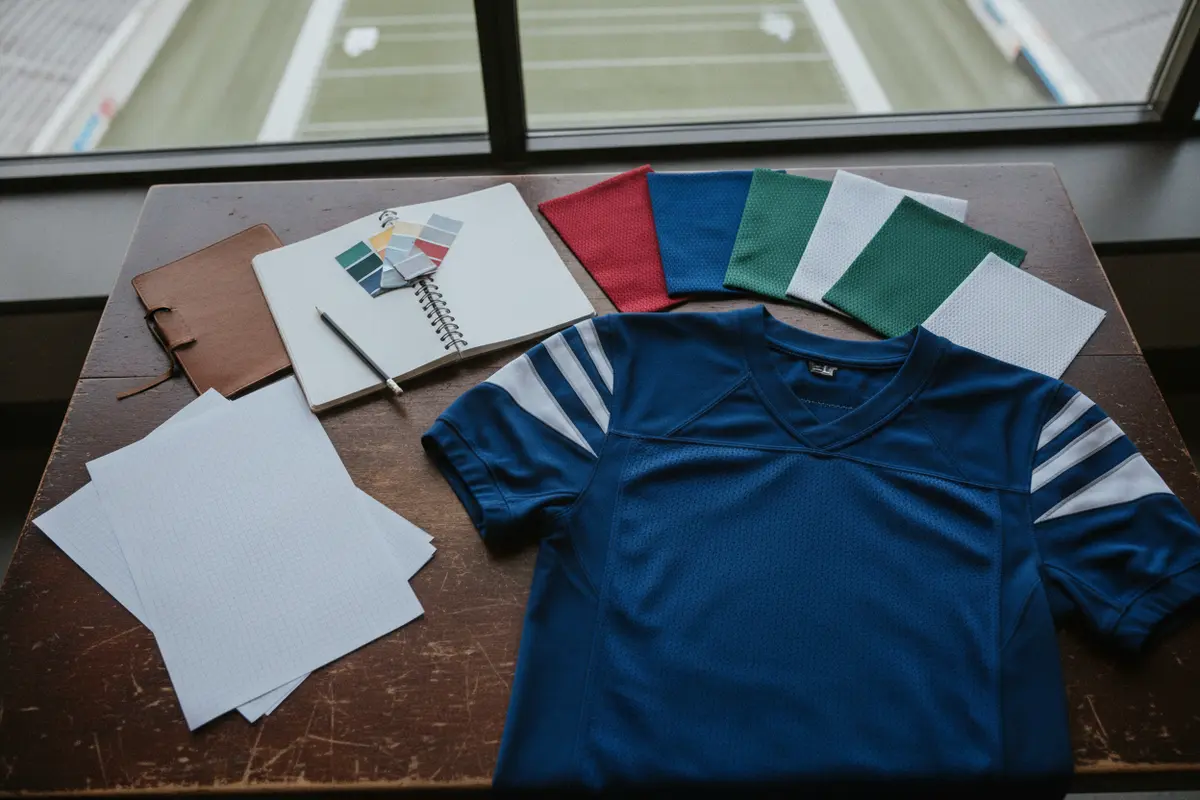
For team members who need help choosing between uniform options, make the product decision before the final proof stage. You can review custom football jerseys and coordinate related pieces such as football pants as part of the same planning conversation. Keep one person responsible for confirming that the complete set matches the team's approved plan.
How should a team manage sizing and roster information?
Collect sizes using the supplier's current sizing guidance and a consistent method, then make the deadline and owner clear to every player or family. A team order is only as reliable as the information submitted for each person. Coaches should distinguish confirmed sizes from estimates, resolve missing entries before the order is finalized, and keep the approved roster connected to the proof review.
Begin with the Uniforms Express sizing charts and follow the specific instructions for the garment being ordered. Do not assume a player wears the same size in every style, or that a size label will fit exactly like another brand. If the supplier offers guidance for measuring or choosing a fit, use it before collecting the roster. Ask about fit and size availability while there is still time to make a deliberate choice.
Use a roster template with fields for player name, jersey number, selected size, and confirmation status. Depending on the uniform design, include any name or personalization spelling that needs approval. Protect the roster and share it only with people who need to manage the order. Avoid letting individual messages become the final record: someone should transfer each confirmed detail into the master file and check it against the proof.
For a larger program, divide collection into manageable groups and set one cutoff date. Ask coaches to review their group before the order owner combines the lists. Then check for duplicate numbers, blank sizes, inconsistent name formatting, and entries that are marked both final and pending. If a late roster change comes in, ask the supplier whether the order can still be changed and what that means for the production schedule. Do not assume a late substitution is automatically possible.
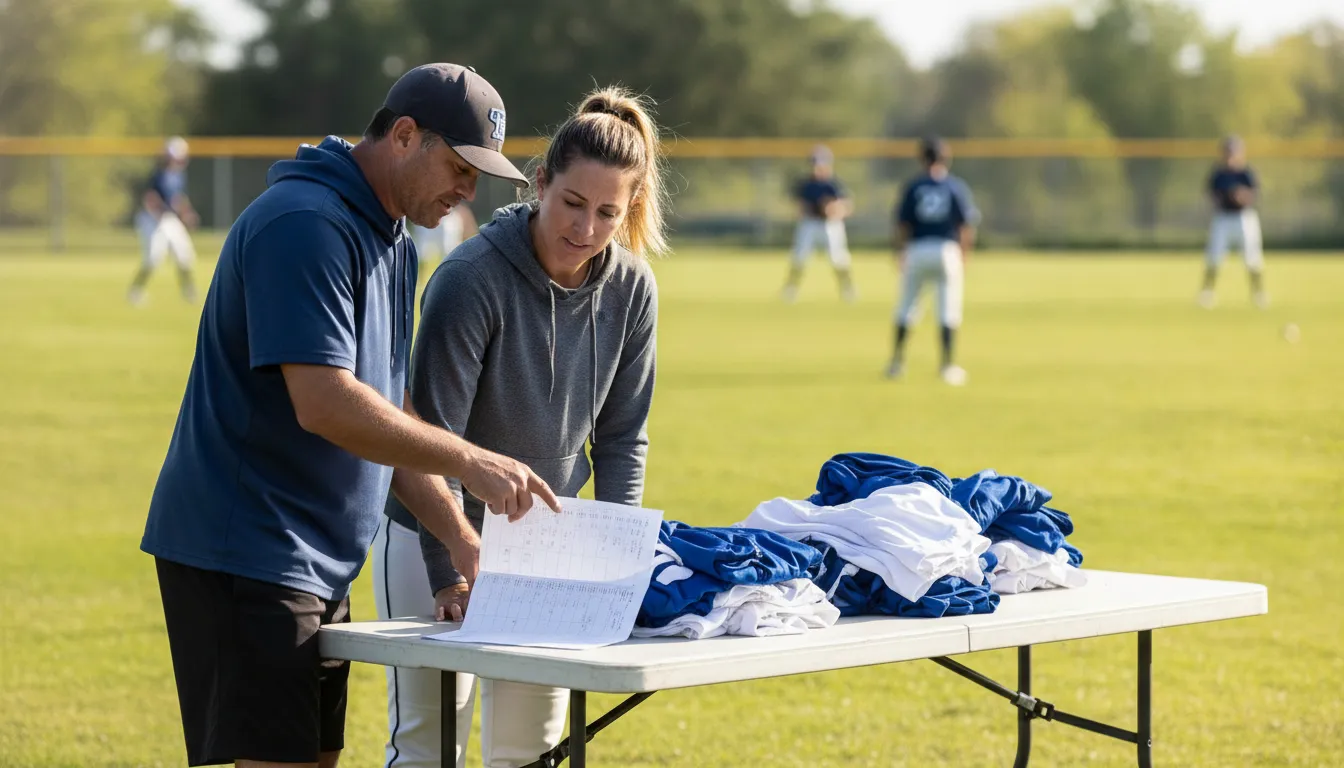
Finally, assign a receiving plan before the uniforms ship. Decide whether pieces will be sorted by player, handed to coaches in team sets, or delivered in another way. The order owner should retain the final approved roster and use it to check quantities and labels upon arrival. This step turns a box of apparel into a game-ready team distribution plan.
What should coaches check on a uniform proof before approval?
Review the proof as a production instruction, not just a visual concept. Confirm that it represents the selected garment and shows the team's intended colors, artwork, placement, and personalization. Check the roster details independently, then send one consolidated list of corrections through the agreed contact. Approval should mean the authorized person has checked the complete order, not simply that the design looks close.
Use a repeatable proof review:
- Match the item.
Confirm the garment type, style, and any requested options match the order.
- Check the design.
Review colors, logo, lettering, and placement against the approved team direction.
- Verify every personalization.
Compare spelling and numbers line by line with the final roster.
- Check quantities.
Make sure the order includes the correct pieces and counts.
- Resolve open questions.
Ask for clarification or a revised proof before approving anything uncertain.
- Record approval.
Have the designated decision maker send approval in the supplier's requested format and retain a copy.
If the team has a specific decoration preference, decide it early enough to evaluate the proof properly. Decoration options and how they appear can vary by garment and design. The Uniforms 101 resource can help frame questions about uniform choices; for method-specific comparisons, consult the relevant decoration guide. These references support an informed discussion, but the proof for your actual order remains the document to approve.
A useful outside perspective is the University of Detroit Mercy account of a custom-uniform process, which notes that teams begin with fundamentals such as team name, colors, and logos. Read the university's account of how teams express their identity through uniforms. For a coach, those basics are a practical starting checklist before the artwork is finalized.
What timeline should you confirm with the uniform supplier?
Ask for dates and dependencies, not a single number of days without context. A useful turnaround answer explains when the timeline begins, which approvals or materials must be complete first, what delivery estimate applies, and what the team should do if a milestone slips. Confirm that the stated timing is for the exact garment mix and order details you plan to submit.
These questions help make the schedule specific:
What is the current expected turnaround for this design, quantity, and set of items?
Does the estimate begin after the order is placed, after all information is received, or after proof approval?
What is the deadline for the final roster, sizes, artwork, and approval?
Is a rush option available for this order, and what conditions or limits apply?
What shipping method and delivery window are included in the estimate?
How will the team be notified if a production or shipping milestone changes?
Who should the order owner contact with a time-sensitive question?
Do not interpret “rush” as a guaranteed result or assume it means the same thing for every product. Availability, scope, and pricing should be confirmed for the particular order. If timing is tight, disclose the actual wear-by date before selecting products and ask the supplier to identify the feasible options. Avoid compressing the team's own proof review so much that errors become more likely.
When comparing suppliers, compare the schedule assumptions as well as the estimated duration. One quote may begin only after a complete roster and approved proof; another may describe a general production window. Ask what is included, how delays are communicated, and what responsibility the team has for keeping the order on schedule. A clear, realistic commitment is more useful than the shortest number stated without conditions.
How can you compare uniform options without losing time?
Choose a uniform option by looking at the complete team need: garment, design, fit, decoration, coordination with other pieces, and deadline. A fast decision is valuable only if the selected option fits the program. Use the table to organize the discussion, then confirm the details and current timing with the supplier before treating any choice as available for your order.
Planning choice | What to decide | Schedule question to ask |
Jersey and garment style | Which jersey style and related pieces the team needs | Does this exact combination fit the current production window? |
Design and decoration | Colors, logo, lettering, and placement | What artwork or proof approvals are needed before production? |
Personalization | Names and numbers, if requested, using one approved roster | When must the final roster be submitted, and can later changes be accepted? |
Fit and sizing | How sizes will be selected and confirmed for every player | Which sizing guidance applies to these particular garments? |
Rush request | Whether the team needs an accelerated schedule | Is a rush option available for this order, and what are its conditions? |
Receiving plan | Who will accept and inspect the shipment | What delivery window and tracking updates should the team expect? |
Keep the table with your order notes and fill in actual answers after speaking with the supplier. It is a decision aid, not a substitute for a written order or confirmed quote. For a visual starting point, the uniform builder can help your team explore a design direction. Once the concept is settled, ask how to submit the final requirements and what proof you will receive to review.
Budget planning should focus on the complete scope rather than an isolated garment. List the items, quantities, requested customization, and shipping requirements, then ask the supplier for a current written quote covering that exact combination. Do not rely on an old quote or details shown for a different product. This helps prevent missing pieces or unspoken assumptions from undermining the team's plan.
What can a team do when the season deadline is close?
When the calendar is tight, disclose the deadline immediately and ask what options are realistic before investing time in an unworkable design. A supplier can only assess the request against current capacity and the actual order requirements. Be ready to make timely decisions, provide complete roster information, and consider acceptable alternatives without assuming that every custom detail or rush request can be accommodated.
Use this triage sequence:
- State the fixed date.
Explain when the uniforms must be worn and whether an earlier team event is affected.
- Share the complete request.
Include the item list, quantities, artwork status, sizing status, and personalization needs.
- Ask for feasible choices.
Find out whether the requested design and product mix can fit the window, and ask about alternatives if not.
- Confirm tradeoffs.
Discuss which details are essential and which could be simplified without changing the team's identity or requirements.
- Get the schedule in writing.
Record the approval deadline, production assumptions, delivery estimate, and next contact.
- Respond quickly.
Assign an approver who can review proofs and answer questions promptly.
Do not treat an unapproved design, an estimated shipping date, or a verbal possibility as proof that the order will arrive for a game. Keep a contingency plan in mind for team distribution and communicate honestly with administrators and families until the schedule is confirmed. If no option fits, deciding early gives the program more time to consider alternatives than waiting for a deadline to pass.
Uniforms Express offers football uniforms and team apparel, with timing that should be confirmed for the exact request. Use the football apparel product path to explore the relevant category and contact the team to discuss the deadline, order scope, and available schedule. A direct conversation is the right next step when the opening-day date is fixed.
Frequently asked questions
These quick answers address common questions coaches face while planning a team order. Use them as a starting point, then confirm product-specific sizing, decoration, and current turnaround directly for the order. The supplier's written schedule and approved proof should guide final decisions, especially when the season start date leaves little room for changes.
How early should we order custom football uniforms?
Start as soon as the program knows the wear-by date and has enough information to choose the garments and design. Work backward from the earliest team event, then ask the supplier for a current schedule tied to your order. Leave time for roster collection, proof review, delivery, and checking the shipment. Do not use a general turnaround claim as the team's confirmed arrival date.
How do we choose the right sizes for the roster?
Use the supplier's sizing guidance for each selected garment and collect one confirmed size per player in a master roster. Avoid guessing from another brand or assuming every style fits the same way. Resolve blanks before finalizing the order, and compare the approved roster against the proof. Ask the supplier about fit questions before the order is submitted if a size choice is uncertain.
Which decoration details should we approve?
Review the team colors, logo, lettering, placement, garment style, and every name or number requested. Decide on decoration preferences early, then compare the proof against the final written directions and roster. If anything looks wrong or is unclear, ask for an updated proof before approval. Keep the approved version so the order owner can refer to one definitive record.
Can a supplier meet a short turnaround or rush deadline?
Possibly, but availability and timing depend on the specific items, order information, approvals, and current schedule. Share the actual deadline and complete order details, then ask whether a rush option is available and what conditions or charges apply. Get the expected timeline in writing. Never assume a rush request automatically guarantees delivery by a particular game.
How should we plan our uniform budget?
Build the request around the full list of garments and quantities, plus customization and shipping requirements. Ask the supplier for a current written quote for the selected combination, and compare complete, like-for-like order details rather than one item in isolation. Confirm what is included before approving the order.
What should we do if a player joins after the order is approved?
Contact the supplier promptly with the added player's size and any personalization details, and ask whether the order can still be adjusted or whether a separate order is needed. The answer may depend on where production stands and the item requested. Do not promise the player a matching uniform or delivery date until the supplier confirms the available option and schedule.
Ready to plan your team's uniform order?
A dependable custom football uniform turnaround starts with a fixed wear-by date, complete roster details, an authorized proof approver, and a schedule confirmed for the actual order. Make each owner and deadline clear, verify the final proof carefully, and plan time to receive and inspect the shipment. When the date is close, share the complete request and ask what can realistically be delivered.
Explore custom football jersey options or review the broader football uniforms and apparel selection, then confirm your team's timeline before approving the order.
With a clear process and early communication, coaches can make informed choices and keep uniform planning aligned with the season calendar.
Comments