


A Coach's Checklist for Custom Scrub Caps | Custom Healthcare Uniforms

When a clinical team starts a new uniform order, small details can create big problems: caps may not fit every wearer, decoration can be hard to read, and an unconfirmed delivery date can collide with a staffing or onboarding deadline. A clear checklist makes custom healthcare uniforms easier to evaluate and gives coaches, administrators, and team managers a practical way to collect requirements before requesting a catalog or quote.
What should a team decide before ordering custom healthcare uniforms?
Start by defining who will wear the items, what each role needs, and when the order must be ready. Then identify workplace rules, approved colors, decoration requirements, and the person who can approve the final design. A written brief helps a supplier confirm which garments and scrub cap options are available before the team invests time in sizing and artwork.
For a coach or administrator coordinating a team, the first step is to identify the buyer and the wearer as separate roles. A department manager may authorize the purchase, while nurses, technicians, or support staff need to wear and care for the garments every day. Collect input from both groups early. A uniform that satisfies a purchasing checklist but feels unsuitable to the people wearing it is not a successful program order.
- List wearer groups:
Record departments, job functions, locations, and any differences in uniform expectations. Keep the first list at the role level rather than asking for personal measurements immediately.
- Define the order purpose:
Is this a new staff issue, a replacement order, a new location, or a coordinated program refresh? The answer affects quantities, repeatability, and the need to match existing colors or decoration.
- Check workplace requirements:
Ask the organization’s appropriate administrator or infection-prevention and safety contacts which garment types, colors, coverage, and laundering practices are acceptable. Do not assume one department’s rules apply everywhere.
- Name the decision makers:
Identify who can approve garment selection, artwork, color, sizing, and purchase authorization. Agree on one person to combine feedback so that conflicting comments do not create several competing versions.
- Write down the deadline:
Note the date items must be received, plus any internal review or distribution time. Treat the date as a requirement to confirm with the supplier, not as a delivery promise.
Separate essential requirements from preferences. “Must match the organization’s approved color list” is different from “we would like a contrasting tie.” Mark each item as required, preferred, or open for discussion. This makes it easier for a supplier to explain available choices and for the team to make a deliberate trade-off if a preferred detail is not offered.
Uniforms Express offers medical uniforms and workwear as well as custom team apparel. Product selection and available customization can vary, so use the catalog request page to start with the current options rather than assuming every style or feature is available. For a broader view of the company and its background, see the Uniforms Express story.
Which scrub cap requirements should buyers confirm?
Scrub cap selection should begin with the wearer’s setting and the organization’s own rules, not with decoration alone. Confirm what styles are offered, how they fit, and whether they can be ordered in the needed colors or sizes. Ask the appropriate workplace contact to review requirements, then request supplier confirmation of the exact options before choosing a cap for the full group.
Scrub caps can vary in shape, coverage, adjustability, and how they stay in place. Do not select one style based only on a product photo or on what one team member already wears. Ask the supplier to explain the available cap constructions and request representative samples or clear product details when those are available. Then involve a small group of intended wearers in reviewing comfort and fit.
Decision area | What to establish | What to confirm before approval |
Cap style | Which style or silhouette is suitable for the wearer group? | Availability, coverage details, and any fit or adjustment options |
Fabric and care | What fabric characteristics and care expectations matter? | Supplier-provided material details and care instructions |
Color | Which colors are approved for each role or department? | Available color choices and how the selected color is represented |
Decoration | Is a logo, name, role, or other identifying detail required? | Available decoration method, placement, size, and proof process |
Quantity and sizing | How many wearers need each style, size, or color? | Minimums, size availability, and how changes to the roster are handled |
Timing | When must the order arrive and be distributed? | Current production and delivery estimate for the exact order |
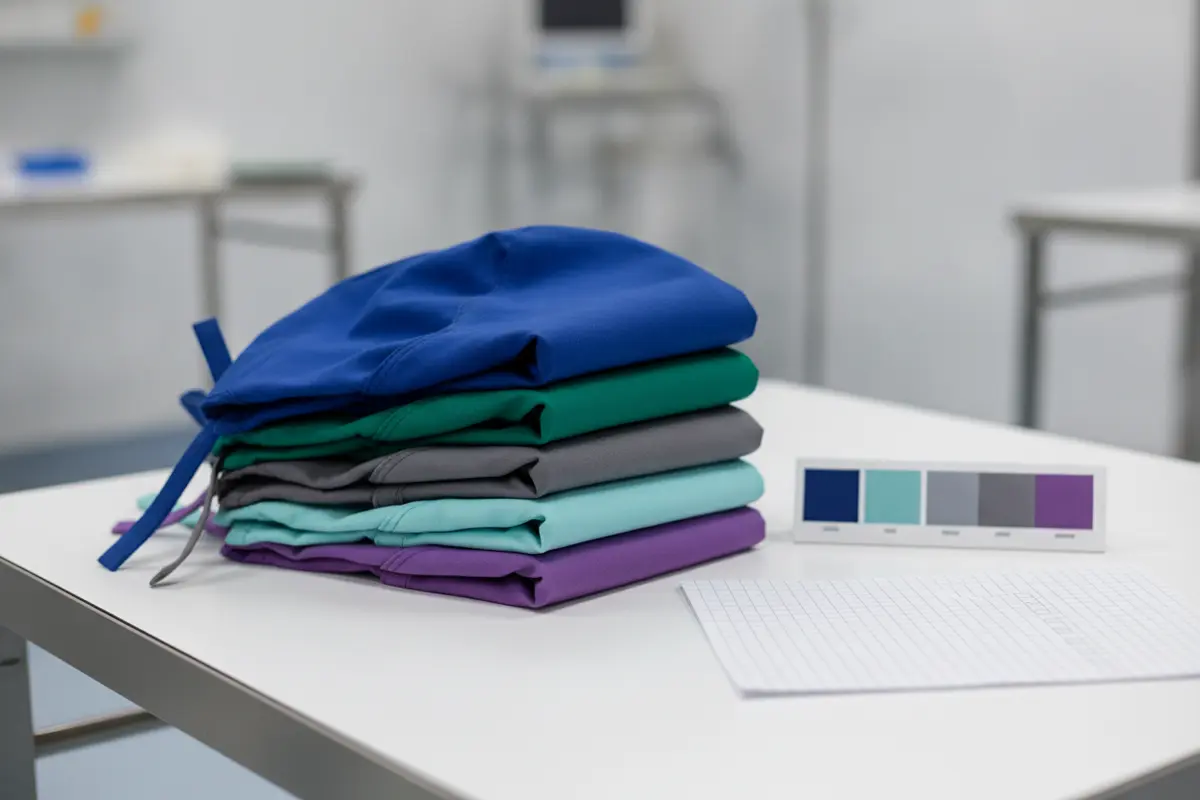
Make a short requirements sheet before selecting options. Include whether caps are mandatory or optional, the roles that will wear them, approved colors, any coverage preferences, and the organization’s cleaning or care rules. Some workplaces may have requirements related to hair coverage or infection prevention. Those decisions belong to the organization’s designated clinical or safety personnel; the supplier can help clarify product details but should not be asked to interpret policy.
For authoritative infection-prevention information, consult the Centers for Disease Control and Prevention and follow the facility’s own policies and qualified guidance. That reference is not a substitute for local requirements or clinical direction. The practical ordering point is simple: document the requirements your organization has already established, then ask the supplier whether the selected product matches them.
How can teams choose fit, sizing, and a workable roster process?
A reliable order depends on accurate wearer information and a clear method for handling uncertainty. Decide how sizes will be collected, who can see the roster, and when entries become final. Do not guess a wearer’s size or substitute a single sample wearer for the whole group. Confirm the supplier’s available size information and use its guidance when gathering selections.
For a team order, roster management is often harder than choosing a color. Create one master list with a row for every wearer or approved quantity, and separate required information from optional notes. Depending on the product, the list may need garment style, size, color, role, and decoration details. Ask the supplier what information it needs instead of building a complicated form around assumptions.
- Choose a roster owner.
One administrator should collect updates and maintain the current version. Make it clear where staff should send corrections and who is authorized to make them.
- Use a consistent collection window.
Give the group a stated date to provide sizing information, followed by a brief correction period. Avoid placing the order while multiple versions are still circulating.
Use supplier sizing information.
Share the supplier’s current size chart or product-specific guidance. The
Uniforms Express sizing charts
can be a starting reference for applicable products, but confirm that the chart applies to the exact item being considered.
- Keep size and decoration fields distinct.
A wearer’s size does not determine their name, role, or preferred decoration. Capture each data point in its own field and confirm spelling before artwork is prepared.
- Flag exceptions rather than guessing.
If a person is between sizes, needs an alternate fit, or cannot provide a selection by the deadline, record the issue for follow-up. Ask the supplier what options exist for that item.
- Lock the roster for approval.
Date the final version and share it with the authorized approver. Changes after approval may affect the order details, so check the supplier’s process before making late edits.
Use the sizing process for the specific product, not a generic apparel assumption. Different garments can fit differently, and a cap may have a different fit or adjustment approach from a scrub top or jacket. If samples are available, decide who will review them and how their feedback will be recorded. A brief wear test can reveal practical concerns that a size chart alone will not settle, but it should not replace the organization’s policy review.
Limit access to roster information to the people who need it to coordinate the order. Collect only the details required for selection and decoration, and follow your organization’s procedures for handling staff information. The supplier can confirm what information is needed for its order process.
Which decoration and design details should go on the approval list?
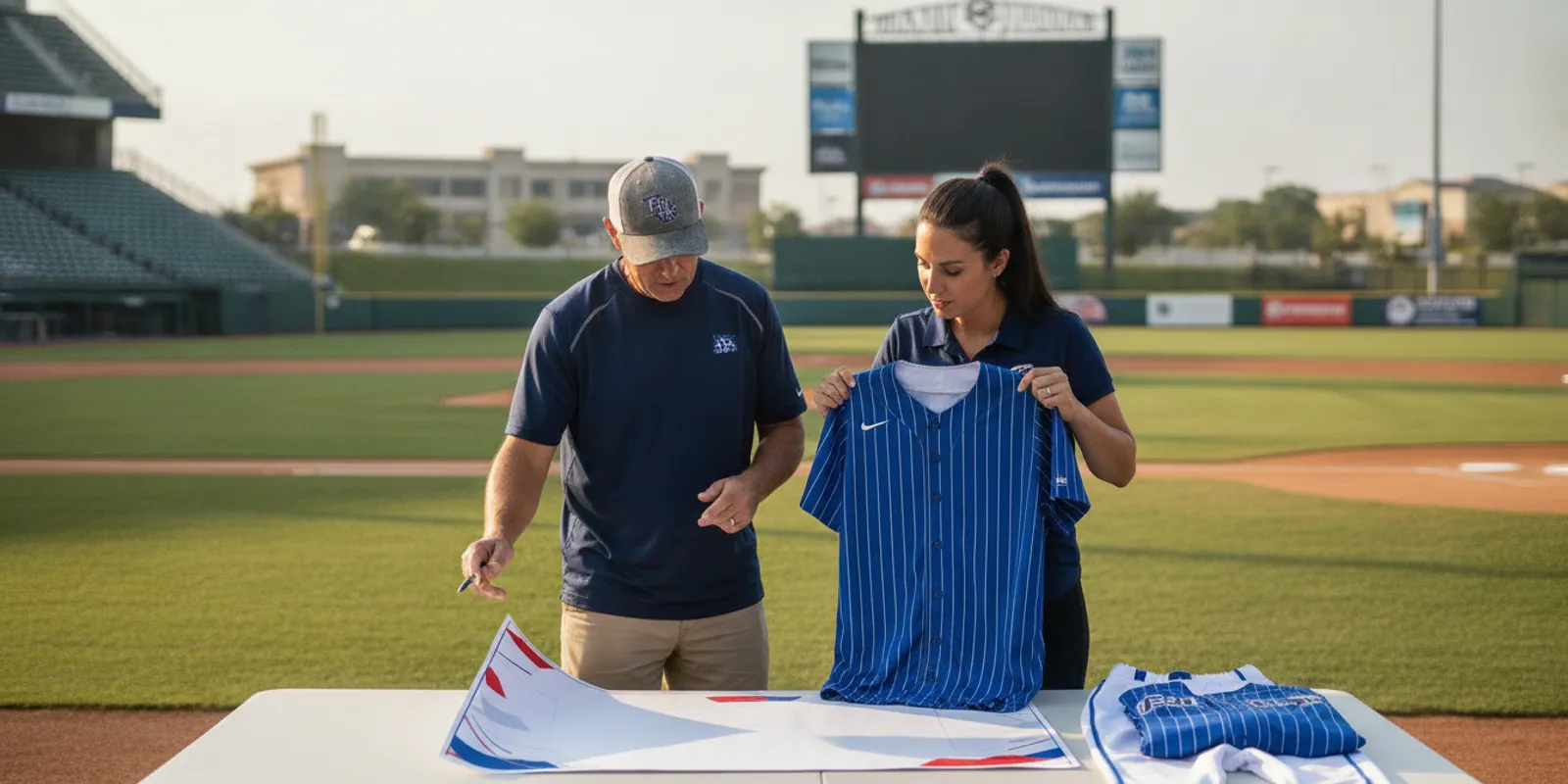
Decoration should identify the team or organization without making the garment difficult to use or approve. Decide whether the order needs a logo, name, department, or no personalization, then confirm which decoration methods and placements are available for the chosen item. Approve a final proof that matches the intended garment, colors, and roster before authorizing production.
First establish the purpose of decoration. A logo may support a consistent organizational appearance, while a name or role may help distinguish wearers in some settings. These are different needs and should not be bundled into a vague request to “add branding.” List the exact text or artwork required, where it should appear, and which wearer groups need it.
Uniforms Express provides in-house customization options across its product offering, including embroidery and other decoration methods. Availability depends on the garment and design, so request confirmation for the specific scrub cap or workwear item rather than assuming that every method works on every product. The online uniform builder can help teams explore design choices where the tool supports the product; confirm its relevance to the healthcare item you are ordering.
- Provide clean artwork.
Submit the approved logo file and identify any version that must not be used. Check that the artwork is current and that small details remain legible at the proposed size.
- Specify placement.
Describe the location and orientation in plain language. Ask the supplier to show the placement on the actual selected item, not only on a generic mockup.
- Confirm color representation.
Review the color choices against the organization’s approved palette and ask how the proof represents the product. Do not rely on a screen image as an exact physical color guarantee.
- Review all text carefully.
Verify spelling, capitalization, role titles, and any names. For a roster order, check a sample of entries against the final list and identify who is accountable for final proofreading.
- Check decoration constraints.
Confirm size limits, available methods, and whether the requested design can be produced on the chosen fabric and shape. If a detail is not feasible, ask for a clear alternative before approval.
Use a proof checklist to prevent avoidable revisions: correct product, correct color, correct logo version, legible text, right placement, complete roster, and agreement from the decision maker. If the proof does not show an important feature clearly, ask for clarification instead of approving based on an assumption. Keep the approved version with the order record so the team can compare the eventual delivery with what it authorized.
How should buyers compare product options and supplier information?
Compare options against the requirements the team already agreed on. A useful comparison includes garment availability, fit information, customization, care guidance, order minimums if applicable, proof handling, and the supplier’s current timing estimate. Ask the same questions about each option and record answers in one place. That makes trade-offs visible without letting one attractive feature obscure a requirement the team cannot compromise.
Start with the catalog or product information, then ask focused questions about anything unclear. The purpose is not to compare every possible uniform in the market; it is to establish whether a particular option fits the workplace rules, wearer needs, and order plan. A Uniforms Express uniform guide offers general uniform information. For healthcare products, verify that any detail you rely on applies to the exact item under consideration.
Useful questions include: Is the selected product currently offered in the needed style and color? What size range or fit details are available? Which decoration options can be applied to this item? What information is needed for a quote and proof? How are roster changes handled after approval? What care instructions accompany the garment? What is the current expected schedule for this specific combination of products and customization?
Avoid treating broad turnaround language as a guaranteed date for every order. Timing can depend on the product, decoration, quantities, proof approval, and order details. Give the supplier the real deadline and ask it to confirm whether the exact order can meet it. Uniforms Express describes rush production and quick turnaround for some products, but availability and timing must be checked for the requested items; do not assume an expedited option or fee arrangement applies universally.
Keep the comparison grounded in the total requirements. If one option has a preferred style but does not meet a workplace rule, it is not the right selection. If the team prioritizes easy repeat ordering, confirm how the approved product and artwork can be referenced next time. If the group expects staff to launder items at home or through a facility process, ask for the manufacturer’s care instructions and determine whether those instructions fit the organization’s process.
What should the team confirm about budget, quantities, and delivery?
Build a complete order estimate from the actual number of wearers, selected items, and approved decoration. Do not compare a basic undecorated item with a customized option as if they were equivalent. Ask for written confirmation of what is included, what can change the final amount, and when the order details become final. This gives the buyer a more useful basis for approval than a rough per-item assumption.
Before requesting a quote, prepare a preliminary quantity by style, color, and size, plus any decoration details. Mark the number as provisional if the roster is still being collected. Ask whether there are minimum quantities or other order conditions for the specific products. For a fair comparison, ask each supplier to state the assumptions behind its estimate: the item and style, the quantity, decoration and personalization requested, and whether the roster is final. If the team is comparing several options, use the same brief for each request and note what is included or still undecided. This keeps an early estimate useful without treating it as a final commitment. If the roster changes, ask how the revised count affects the estimate before approving the order. Keep a copy of the final written scope with the approved proof so that the buyer can see which version of the request was authorized. The customer’s content rules prohibit publishing fluctuating prices in this article, so use a current product or supplier response for order-specific pricing rather than relying on a general figure.
- Separate confirmed and estimated quantities.
Label the roster clearly so the supplier knows which counts are final and which may change.
- Include the complete scope.
State whether the request covers caps alone or also tops, jackets, or other workwear. Identify which items require decoration and which do not.
- Ask what affects the estimate.
Confirm how product selection, quantity, personalization, artwork, or timing may affect the order. Request clarity about any charges or terms before approving.
- Set a decision date.
Work backward from the required in-hand date, allowing time for roster collection, proof review, authorization, and distribution. Let the supplier confirm the production and delivery schedule.
- Plan for new hires and replacements.
Decide whether to include a small reserve, place future additions separately, or use another process. Ask how closely later orders can match the approved product and decoration.
Consider the order in stages: requirement gathering, product selection, roster completion, estimate review, proof approval, order authorization, production, delivery, and distribution. Assign an owner and a target date to each stage. This does not guarantee a particular schedule; it helps the buyer spot delays early and provide the supplier with complete information. Uniforms Express explains its general ordering and service approach in its terms and conditions, which buyers should review for applicable order details.
If you need help identifying the right catalog or next step, request a Uniforms Express catalog and include the team or department, garment needs, likely quantities, and target date. For an order with several roles or locations, a concise written brief usually makes the conversation more productive.
How can a team approve and track the order without confusion?
Use one approval chain and keep a record of the final selections. Before authorization, verify product, color, sizes, quantities, artwork, personalization, timing, and the contact responsible for questions. After approval, save the proof and order confirmation together. A single source of truth reduces the risk of different departments working from different versions of the roster or design.
Assign distinct responsibilities where possible. The wearer representative can consolidate fit feedback; the department or program lead can confirm policy and visual standards; the purchasing contact can review the estimate and payment process; and one final approver can authorize the order. In a smaller organization, one person may hold several roles, but each decision still needs an identified owner.
When the supplier sends a proof or order summary, compare it line by line with the approved brief. Check the item name and style, color, available size selections, quantities, decoration method and placement, all text, and any stated timing or order conditions. If the order has several groups, reconcile each group’s count against the final roster. Ask for corrections in a single written list and wait for the corrected version before giving approval.
Once the order is authorized, document what happens next: who receives updates, where delivery should go, who will check cartons and counts, and how items will be distributed. On receipt, compare the delivery with the confirmation and report discrepancies through the supplier’s stated process. Keep the approved specifications for future replacements, but re-confirm current product availability and terms before placing a repeat order.
Teams looking for help with product selection can review the available online booking option or contact Uniforms Express through the provided ordering channels. A conversation is most useful when the buyer has the requirements sheet, a preliminary roster, artwork, and a realistic deadline ready to discuss.
Frequently asked questions
These answers address the practical questions team buyers often need to settle before they submit a custom healthcare uniforms request. Confirm product-specific details, available options, and timing directly with the supplier, and follow your organization’s policies for clinical attire and purchasing.
How do we choose a scrub cap style for a group?
First confirm workplace requirements with the appropriate organizational contact. Then review styles that are actually available, compare their fit and coverage details, and gather feedback from a representative group of wearers. Ask the supplier for product-specific information and samples or other fit guidance when offered. Do not choose a single style based only on a picture or one wearer’s preference.
How should we handle sizing when staff cannot try items on?
Use the current sizing information for the exact product and collect entries through one roster owner. Flag uncertain selections for follow-up rather than guessing or assigning a size for someone. Ask the supplier whether samples, fit guidance, or other options are available, and set a clear date for finalizing the list before approval.
Can we add a name, logo, or department to scrub caps?
Ask the supplier which decoration methods, placements, and products are available for the specific cap or garment. Provide the approved artwork and exact text, then review a proof for size, placement, spelling, and color. Do not assume that a decoration method offered on one uniform product is available on every item.
How long does a custom healthcare uniform order take?
Timing depends on the selected product, quantity, decoration, proof approval, and order details. Share the date the team needs its items and ask the supplier to confirm a current estimate for the exact order. Do not treat general turnaround language or an expedited option as a guaranteed schedule until it has been confirmed.
How can we plan a budget without a final roster?
Prepare a provisional count by item and wearer group, identify which quantities are confirmed, and ask for an estimate based on the stated assumptions. Confirm what is included and what may change the amount, especially personalization and quantity changes. Finalize the estimate against the approved roster and current product details before authorizing the order.
A thoughtful order begins with clear requirements, a reliable roster, and explicit approval of the product and proof. Gather those details first, confirm current options and timing with Uniforms Express, and use the catalog or a direct conversation to choose a next step that fits your team.
For ordering questions, call 888-661-7044 or use the contact page to reach Uniforms Express.

Comments