


How to Choose Custom Jerseys: A Team Buyer's Guide

A jersey order can look settled on paper and still create problems when the box arrives: numbers are hard to read, sizes are off, or the design does not match what the team approved. Choosing custom jerseys is easier when coaches make a few decisions in the right order and check the details before production.
What should a team decide before choosing custom jerseys?
Start with the job the jersey needs to do, not with a color or decoration technique. Identify the sport, level of play, expected use, number of players, and date the team needs the uniforms. Those answers narrow the fabric, fit, design, and ordering choices, and make a supplier conversation far more productive.
First, establish the scope. Is this a full set for a new team, a replacement run, or a small group of additions to an existing roster? Decide whether the order is for game jerseys only or part of a coordinated uniform. Write down which pieces are included, which players need them, and whether coaches or staff need matching apparel. If you are ordering for baseball, the custom baseball jersey options provide a useful starting point; teams buying for another sport should review the relevant sport-specific product information as well.
Next, confirm the buying authority and approval path. A coach may select a design, while an athletic director, school purchasing office, league administrator, or parent committee approves the final order. Find out who can sign off on the artwork, quantities, and delivery plan. This prevents a late change caused by a decision-maker seeing the design for the first time after everyone else believes it is final.
Then agree on a practical order brief. Include:
Sport, team level, intended use, and season or event date.
Estimated roster count, likely additions, and any replacement needs.
Preferred jersey style, colors, team identity, and any existing uniform pieces to match.
Names, numbers, positions, or other personalization the team wants.
Who will collect sizes, review the proof, and approve the order.
Any league, school, or association rules the design must follow.
Keep the brief focused. It should answer the supplier's basic questions without pretending every detail is settled. If a team is considering a complete baseball set, compare its jersey needs with the matching baseball uniform package options so the group can decide whether it wants jerseys alone or coordinated pieces. For a different sport, start with that sport's uniform range, such as custom basketball uniforms or football uniforms.
Finally, separate must-haves from preferences. A required school color, number format, or approved emblem is a must-have. A particular neckline or accent is usually a preference. That distinction gives the team room to compare suitable choices without losing its identity. It also helps avoid choosing a jersey solely because a digital mockup looks appealing, before the team has considered comfort, durability, order details, or the realities of its season schedule.
Which jersey fabric and construction details matter?
The right jersey balances comfort, movement, durability, and the team's actual playing conditions. Compare fabric feel and weight, airflow, stretch, seam construction, and how the garment is expected to be cared for. There is no single best choice for every sport or roster; the strongest decision is the one that fits the team’s use and is clearly specified before ordering.
Ask what fabric choices are available for the style you are considering and how each behaves during play. A jersey worn through frequent practices may face different demands from one used mainly for games. Consider the climate, activity level, layering habits, and whether the players need a lighter feel or a more structured appearance. Request clear product details rather than assuming that two jerseys with similar pictures use the same material or construction.
Check mobility in the areas that matter for the sport. A baseball player reaches, throws, and swings; a basketball player moves the arms overhead and changes direction; a football player wears additional protective equipment. These differences affect how a team should think about cut, sleeve shape, length, and fit. If ordering soccer kits, review the dedicated custom soccer uniform range and confirm that the selected style suits the team's match and training needs.
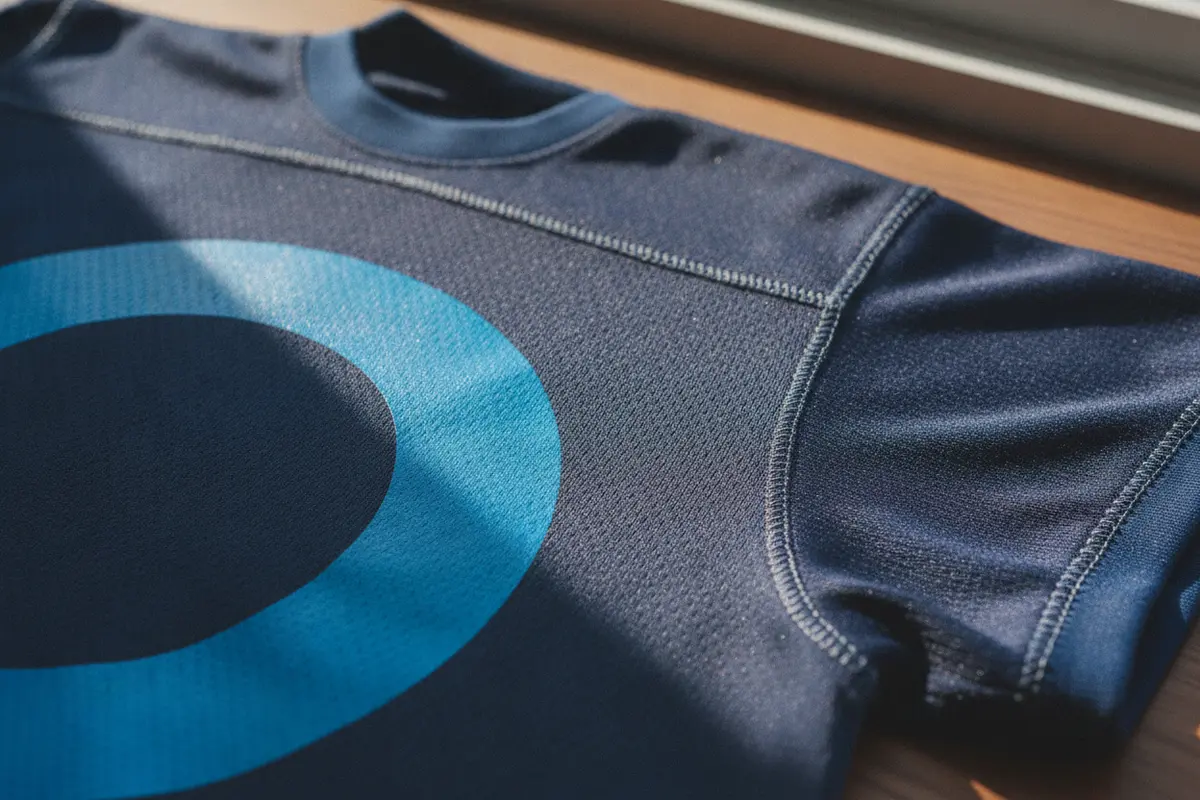
Construction deserves a direct conversation, too. Ask how seams are finished and which areas receive reinforcement, especially if the team expects repeated wear and washing. Look closely at collars, hems, sleeve openings, and any panels where different fabrics meet. For decorated jerseys, ask how the proposed decoration method works with the chosen fabric and design. A bold graphic may look excellent in a concept image, but the final choice should account for how it will be applied to the actual garment.
Use a simple comparison to keep the discussion concrete:
Decision area | What to compare | Question to ask before approval |
Fabric | Feel, weight, stretch, and expected care | Which available fabric best suits our sport and use? |
Fit and cut | Movement, length, and room for layers or equipment | How should players use the size chart for this style? |
Construction | Seams, hems, collar, and high-wear areas | What construction details should we review on this garment? |
Decoration | Method, placement, colors, names, and numbers | How will the selected decoration work on this fabric? |
Order plan | Roster, proof approval, production, and delivery steps | What dates and decisions must our team meet? |
Use the table to compare actual options, not assumptions. Ask for a product description or sample when one is available, and have the team identify the trade-offs it values most. A single fabric or construction feature should not decide the order in isolation. The complete jersey has to work as a garment, represent the team well, and fit the practical requirements of the program.
How do you choose a fit and collect accurate team sizes?
Use the size chart for the exact jersey style and make sizing a roster task, not a guess based on age or another brand's label. Give each player the measurement instructions, collect choices in one controlled roster, and resolve uncertain sizes before the order is approved. Consistent information reduces avoidable changes and makes the final order easier to verify.
Begin by locating the supplier's current team uniform sizing charts. Check that the chart corresponds to the garment being ordered. A size label does not guarantee identical dimensions across different styles or manufacturers, so do not copy an old roster without confirming the chart and product. If the team has a familiar jersey that fits well, use it as a discussion aid, but do not assume the measurements transfer exactly.
Choose one person to manage sizing. Share the same instructions with every player, establish a deadline, and request the measurements or size selection the chart calls for. If players will wear protective equipment or layers underneath, explain that before they choose. Encourage anyone uncertain to ask for help early rather than select a size at random. For youth teams, follow the actual chart and the team's approved sizing process; do not infer fit from a player's age alone.
Capture each order detail in a single roster file or form. Useful columns include player name, jersey size, number, name to display, requested style, and any special note that the supplier needs to review. Keep the spelling and number format consistent. If the roster changes, update the master version and mark the date, so the proof reviewer and the person submitting the order are not working from different copies.
Before the roster is final, look for common sources of confusion:
Players submitting a size from a different product or brand's chart.
Names with inconsistent spelling, capitalization, or spacing.
Duplicate numbers or a number that conflicts with a league requirement.
Players choosing different styles without the team's approval.
Late additions or likely replacements that the team has not discussed.
Do not order extra jerseys or alter a player's selection simply to make the spreadsheet easier. Instead, document the team's actual requirements and ask the supplier about available options and minimums for the order. If the team is comparing headwear or other pieces alongside jerseys, keep those item-specific decisions separate; for example, the custom baseball hats page addresses a different garment and should not be used to infer jersey sizing.
Once collected, have a second person review the roster against the original submissions. Confirm the player count, size totals, names, and numbers. That short cross-check is especially valuable when one administrator has transferred information from messages, spreadsheets, and paper forms. For teams placing a broader order, the baseball uniform ordering page can help connect the jersey discussion to the team's larger uniform requirements.
Which decoration choices make a jersey readable and durable?
Choose decoration by balancing team identity, legibility, garment fabric, and the detail the design requires. Decide the logo, lettering, names, numbers, and placements together, then ask which decoration methods suit the style. Review a final proof at realistic size. Colors and artwork that appear clear on a screen can become difficult to read when reduced to a jersey panel.
Start with the information a player or official needs to recognize quickly: team identity, player number, and any required name or emblem. Make numbers large and visually distinct from the jersey background. Avoid crowding the front, back, or sleeves with details that compete for attention. A clean hierarchy usually works better than trying to include every graphic element in every available space.
Decoration methods can produce different appearances and suit different designs. Uniforms Express offers methods including sublimation, tackle twill, screen printing, heat press, and embroidery. Ask which methods are available for the particular jersey, what the finished effect looks like, and whether the design or fabric limits the choices. Teams comparing stitched and printed lettering can read the guide to tackle twill and sublimated lettering as background, then confirm which options apply to the garment under consideration.
Next, prepare clean, usable artwork. Send the current approved emblem or logo file if the team has one, state the intended colors, and identify any elements that must not be altered. Do not assume a low-resolution image copied from a webpage will reproduce sharply. Ask what file format or artwork is needed and whether the supplier will prepare a proof for review. A proof is the chance to catch layout and data errors; it is not a substitute for confirming the roster and specifications.
Review the proof against a written checklist:
Are the garment style and colors correct?
Are the logo, lettering, and numbers in the right locations?
Are all names spelled correctly and all numbers matched to the approved roster?
Is the contrast strong enough to read from a distance?
Do front, back, and sleeve views show all requested artwork?
Does the proof reflect the design version the team approved?
Assign one person to consolidate feedback, rather than sending conflicting revisions from multiple team members. Mark the specific issue and requested correction; then review the updated proof. Save the approval and final roster together. If a league or school has uniform requirements, check those directly with the relevant organization before approving. The National Federation of State High School Associations is one place to begin for high-school sports information; teams should confirm the rules that apply to their own sport, competition, and season with the governing body.
How should a team plan the order timeline and delivery?
Work backward from the date the jerseys must be ready, leaving time for roster collection, artwork, proof review, corrections, production, shipping, and distribution. Ask the supplier to confirm a realistic timeline for the exact order. A stated turnaround can depend on the product, design, quantity, approval timing, and current production schedule, so get the terms and milestone dates before relying on it.
Write down the date of the first game or event and the date by which players need their jerseys in hand. Allow room for sorting and correcting any order issue before that deadline. A delivery date is not the same as a team-ready date: someone still needs to receive the package, compare it with the order, separate player items, and arrange distribution.
Ask the supplier to explain what happens after the order is submitted. Find out when artwork and roster details are considered final, how proof approval affects the schedule, and when the team should expect an update. Make sure the person who can approve changes is available during that period. If a decision is delayed, ask how it could affect the requested delivery date rather than assuming the original estimate remains unchanged.
Uniforms Express describes game-ready custom uniforms as available in as little as two weeks in some circumstances. Treat that as a qualified possibility, not a blanket guarantee for every style, design, order, or date. Confirm the expected schedule for the team's specific requirements and ask whether a rush option is available, what it covers, and whether it changes the cost. Do not plan around rush service until the supplier has confirmed the details.
For a complete order, keep a milestone list:
Confirm product, quantities, and the decision-maker.
Collect sizes, names, and numbers using one roster.
Submit approved artwork and requested design details.
Review and approve the proof, including any corrected version.
Confirm the production and shipping estimate in writing.
Receive, check, sort, and distribute the jerseys before the team's deadline.
Check the package promptly when it arrives. Compare the contents with the approved order and roster, and record any discrepancy with clear details. Share the plan for handing out jerseys so players know where and when to collect them. If ordering for multiple squads or age groups, label the cartons or sorting groups in a way that matches the roster without changing the approved garment details.
Teams that want a consultation can use the Uniforms Express booking page to discuss their order planning. Bring the event date, product preference, roster estimate, and artwork status to the conversation. Clear information helps the supplier assess the request and explain what timing is feasible for that particular order.
How can you compare suppliers and keep the team order on track?
Compare suppliers on the full ordering experience, not one attractive mockup or a single turnaround claim. Ask each provider the same questions about garment details, customization, proof approval, roster changes, production schedule, and support. Then choose the option that meets the team's requirements and can explain its process clearly, with responsibilities and assumptions stated before the order is placed.
Ask for specifics rather than broad assurances. What jersey style and fabric are included? Which decoration choices are possible? What does the team need to supply for artwork? How are proof changes handled? What information is needed to quote the requested order? Which date starts the production estimate? What should the team do if the roster changes after approval? These questions expose differences that may not appear in a product image.
Review the supplier's ordering information and communication path. Uniforms Express offers a uniform ordering and education resource to help teams understand choices. The company also has sport-specific options, including custom football jerseys and custom volleyball uniforms. These links help teams explore relevant product paths; confirm the precise garment and customization details for the team's needs before submitting an order.
Budget planning should focus on the complete requirement rather than an isolated jersey. The total can be affected by garment style, decoration, personalization, quantity, and whether the team adds other uniform pieces. Prices and promotions can change, so request a current quote for the actual order. Compare like with like: the same number of jerseys, similar materials, matching decoration, names and numbers, and comparable delivery expectations. Do not treat a lower initial figure as a direct comparison if important elements are missing.
Keep the team organized with one order owner and one source of truth. Store the approved artwork, final proof, roster, supplier correspondence, and order confirmation together. Tell players when sizes are due and when they can expect distribution. If a change comes up, route it through the order owner, record the correction, and ask the supplier to confirm whether it affects the proof or timeline.
Before submitting, read the order confirmation carefully. Verify the product, color, size count, names, numbers, decoration, delivery details, and any stated conditions. Resolve a mismatch before production begins rather than hoping it will be corrected later. The team can also start a discussion through the contact page or explore a relevant product page, such as baseball jerseys, when defining its request. A careful final check is more useful than rushing to submit an incomplete order.
Frequently asked questions
Most jersey-order questions come down to matching the product to the team, providing reliable roster information, and approving details early. These practical answers can help coaches prepare, but product availability, timing, and final specifications should always be confirmed for the team's particular order.
How do we choose the right custom jersey for our team?
Start with the sport, playing conditions, intended use, required colors, and the date the jerseys are needed. Compare available fabric, fit, construction, and decoration choices for the specific style. Then confirm the roster, number and name requirements, and any rules that apply to the team before approving a proof.
How should players choose a jersey size?
Use the current size chart for the exact jersey style, and follow its measurement directions. Do not assume that another brand's size or a player's age will identify the right fit. Collect selections in one roster, explain any layering or equipment expectations, and ask the supplier for guidance when a player is uncertain.
Which decoration method should we choose?
Compare the design, fabric, desired appearance, and available methods for the specific garment. Uniforms Express offers decoration methods that include sublimation, tackle twill, screen printing, heat press, and embroidery. Ask which options suit the selected jersey, then review the full proof for placement, contrast, spelling, and number accuracy.
How long does a custom jersey order take?
Timing depends on the product, design, quantity, approval process, and production schedule. Uniforms Express notes that some custom uniforms may be game-ready in as little as two weeks, but that is not a universal promise. Give the supplier the team's date and requirements, and request a confirmed estimate before planning around a turnaround.
How should we set a budget for custom jerseys?
Request a current quote based on the actual jersey style, quantity, decoration, personalization, and delivery needs. If comparing suppliers, make sure each quote covers equivalent items and specifications. Prices can change, so use current product and order information rather than relying on an old estimate or a general price claim.
With the team brief, roster, artwork, proof, and schedule checked in sequence, coaches can make a confident choice and give the supplier the information needed to move the order forward.
Comments