


Custom Soccer Goalkeeper Jerseys: Fit and Team-Set Planning

A goalkeeper’s jersey has to stand out, fit comfortably over the player’s usual layers, and match the team’s uniform plan. A color or size decision made late can leave coaches coordinating an extra piece while the rest of the roster is already set. Planning custom soccer goalkeeper jerseys with the full order helps protect the team look and gives the goalkeeper a kit that works through a full match.
What should a coach decide before ordering custom soccer goalkeeper jerseys?
Start with the match requirements, the team’s visual plan, and the goalkeeper’s practical fit needs. Confirm who needs a goalkeeper top, whether the order includes one or more keepers, and how the chosen color works alongside the field players’ kits. Then gather roster sizes, decoration details, and the season deadline before requesting a quote or approving artwork.
A goalkeeper top is part of the team uniform, not an isolated add-on. Before choosing a style, write down what must be consistent with the field-player kit and what should be distinct. Coaches can use this short planning list:
- Role and quantity:
identify each goalkeeper who needs a jersey, including reserve or alternate keepers who may need a matching option.
- Competition use:
check league or tournament requirements and the colors your squad expects to wear. Ask the organizer when a rule or color conflict is unclear.
- Team identity:
decide which crest, team colors, player numbers, and other approved details should appear.
- Fit preference:
ask whether the keeper will wear a base layer beneath the jersey and whether a relaxed or closer fit is preferred.
- Order deadline:
work backward from the first match and leave time for design review, size confirmation, and any needed revisions.
Build the brief around the complete kit. If players are getting matching tops, shorts, socks, or other pieces, note which elements should coordinate. Uniforms Express offers custom soccer uniforms and a soccer uniform option for teams; using the relevant product path can help keep the goalkeeper decision connected to the broader order.
Do not assume the goalkeeper’s preferred color is available or compatible with every opponent kit. List the team’s likely colors and ask about the available choices during planning. Also consider whether your program needs a primary and alternate goalkeeper color. The goal is to settle the important decisions before artwork moves forward, rather than discovering a mismatch after the order is assembled. Also establish who has final say on the design and who checks the roster. A head coach may own the visual choices while an administrator verifies purchasing and delivery details. Recording those roles prevents conflicting feedback and avoids treating an unconfirmed mockup as the approved version. If the uniform order includes several garments, identify the keeper top as its own line item while preserving the shared team design references. That simple distinction helps the coach compare the special-role jersey with the field-player kit without accidentally blending quantities or sizes.
How do fit and sizing work for a goalkeeper jersey?
A good goalkeeper fit gives the player room to move without leaving excess fabric that distracts or catches during play. Consider the player’s measurements, preferred ease, sleeve coverage, and any layer worn underneath. Collect sizes from each keeper individually, consult the available size chart, and confirm the final size list with the team before submitting the order.
Goalkeepers reach, dive, twist, and recover repeatedly. A jersey that feels acceptable while standing may pull at the shoulders or ride up once the keeper moves. Fit should therefore be assessed with the player’s normal soccer layers in mind, not chosen from age or position alone. A youth player and an adult player may have different sizing needs even if they fill a similar role.
Use a consistent roster process. Ask each goalkeeper for the size they normally wear in comparable athletic apparel, then compare that selection with the manufacturer’s actual chart. When practical, take measurements using the chart’s instructions. Avoid adding a size based only on a guess that a looser top is automatically better; an oversized jersey can feel cumbersome, while a close fit may not leave room for a base layer.
Planning choice | What to check | Useful next step |
Close or relaxed fit | Movement, comfort, and whether the keeper wears a layer underneath | Ask each goalkeeper for a preference and compare measurements with the size chart |
Short or long sleeves | Player preference, weather, and the team’s intended look | Confirm the style available for the selected jersey before approving art |
One or more sizes | Primary keeper, reserve keeper, and any roster changes | Make a named size list and have a coach verify it |
Color options | Contrast with field-player and opponent uniforms | Check competition guidance and agree on primary or alternate colors |
Keep the collected sizes in one roster document. Include the player name, requested size, and any relevant fit note, then have a second person check the list against the final order. This makes it easier to spot a duplicated name, a missing keeper, or a size copied into the wrong row. For reference, review the team uniform sizing charts and have players confirm their selections before the order is finalized.
For a team with more than one goalkeeper, avoid assuming that both players should receive identical sizes or styles. Ask each player directly, especially if one wears a base layer or has a different fit preference. If a reserve keeper is not available during the initial size check, mark that entry as pending rather than copying a teammate’s size. Resolve the open item before final approval, or ask the supplier how a later addition would be handled.
It also helps to distinguish a fit preference from a sizing fact. A note such as “prefers room for a warm layer” gives useful context, but it does not replace the size chart or the player’s measurements. If the coach has questions about garment sizing, use the team uniform planning resources alongside the size chart, and confirm any product-specific detail before the order is locked.
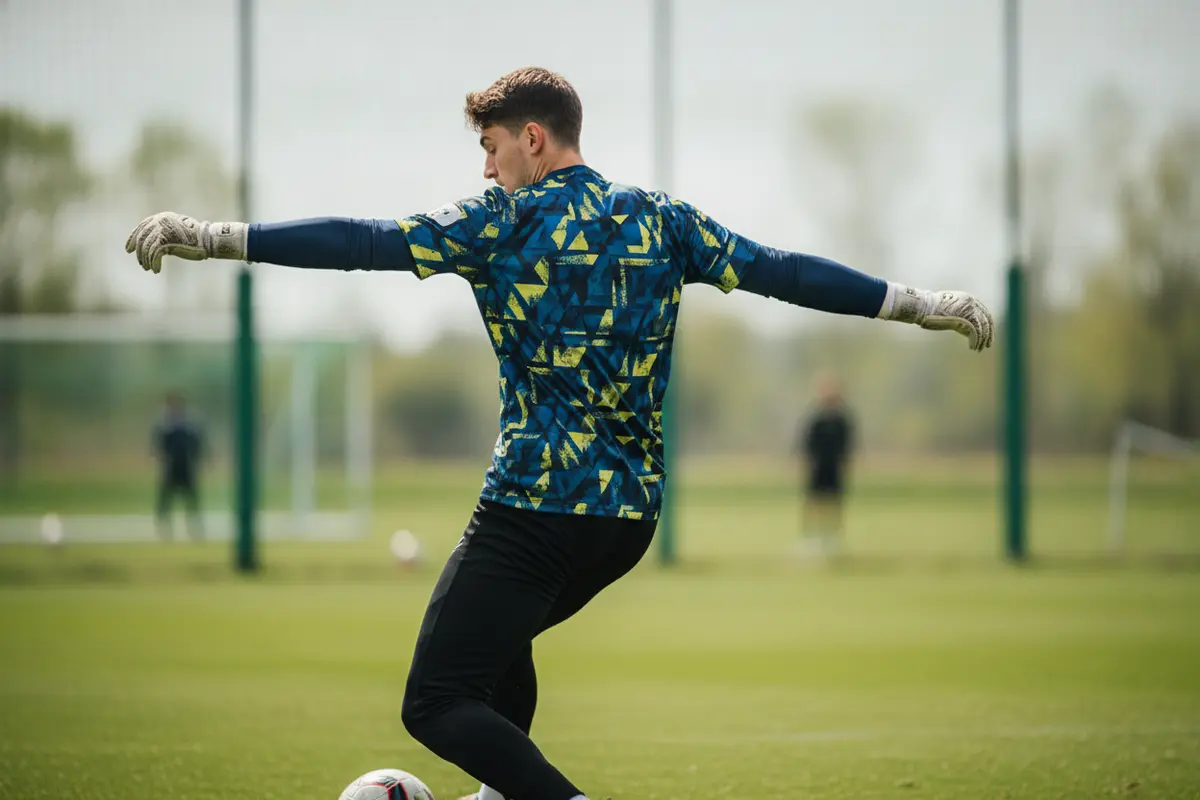
How can the goalkeeper jersey stand out and still look like part of the team?
Use a clear visual plan: give the goalkeeper an identifiable jersey color while carrying over selected team elements such as the crest, number style, and coordinated design details. Check the full combination against the field-player kit before approval. A distinct color supports quick recognition, while consistent branding makes the keeper look like part of the same program.
Start with the elements that are non-negotiable for the team: the approved crest, colors, number treatment, and any required sponsor or school identity supplied by the program. Then decide which parts should differ on the goalkeeper’s top. Color is usually the most visible difference, but the overall design can still relate to the player kit through a shared accent, a repeated pattern, or consistent placement of team marks.
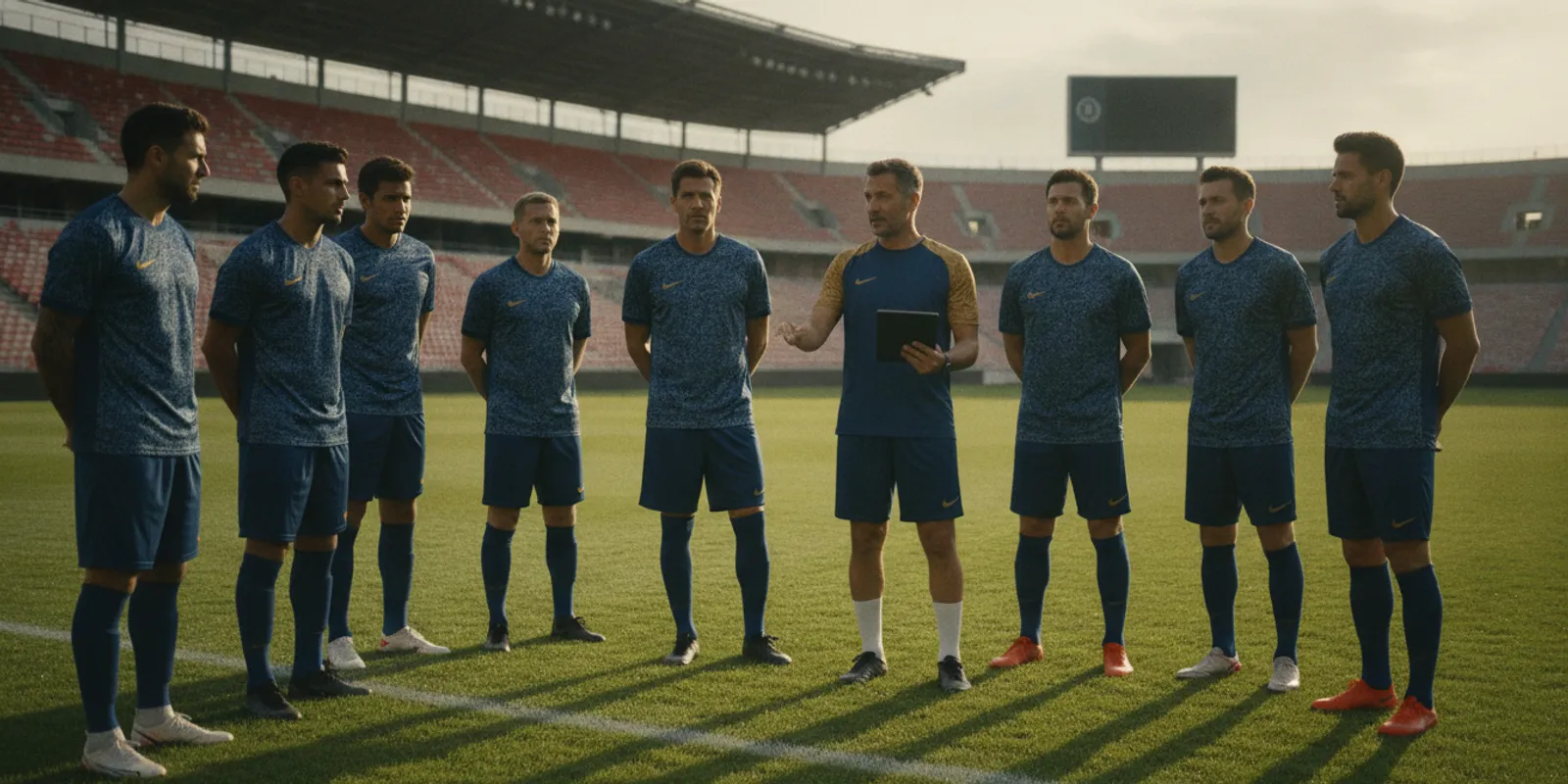
Look at the proposed design as a complete uniform, not just a color swatch. Put the goalkeeper option beside the field players’ jersey and consider shorts, socks, and any alternate kit. Check whether the contrast is easy to see in daylight and under the lighting where the team commonly plays. If the squad has multiple field-player kits, identify possible combinations and ask the league or event organizer if there are specific uniform rules. The International Football Association Board is the official source for the Laws of the Game; consult current competition rules for the requirements that apply to your team.
Before artwork approval, inspect every detail at a useful viewing size. Look for clear crest placement, accurate colors, legible numbers, and consistent alignment. Confirm spellings and number assignments against the current roster. If the goalkeeper jersey is being ordered separately from the rest of the team, share the field-player artwork or a description of its key elements so the design can be coordinated rather than recreated from memory.
Think through visibility from both the sideline and the player’s perspective. A tiny preview may hide a crowded layout, while a full-screen mockup can make a number appear larger or clearer than it will on the garment. Review the proof at its intended scale and check whether the number remains easy to identify against the jersey color. Confirm that contrasting details are used consistently and that the crest is not competing with the number or other marks. If the team has an existing identity guide, share it with the artwork and specify which colors are required versus optional. This gives the designer a useful boundary while leaving room to adapt the goalkeeper option to the available garment and color choices. Ask for clarification if a proof does not show a detail clearly; do not approve based on assumptions about a hidden or omitted view.
Teams can explore a uniform builder as part of visual planning. Treat a preview as a design aid, not a substitute for reviewing the final production details. Before approval, make sure everyone is looking at the same version and that the color, crest, name or number details, and quantity match the written order.
Which decoration and construction details should be checked?
Decoration choices affect the appearance and feel of a team jersey, so confirm the method and artwork details rather than assuming all marks are applied the same way. Review the crest, numbers, names if included, color matching, and placement on the actual garment style. Ask how the chosen decoration will be represented in the proof and approve the final version against the roster.
Uniforms Express offers several decoration methods across its sports apparel, including sublimation, screen printing, heat press, embroidery, and tackle twill. The appropriate choice depends on the product and design. A large multicolor graphic has different production needs from a simple number or embroidered crest, so provide the complete design brief and confirm which options fit the goalkeeper jersey being considered.
Ask for clarity on these details before signing off:
- Artwork source:
supply the approved, current team crest and confirm the file or art version being used.
- Color reference:
document team colors and review a visual proof carefully. Screens can display colors differently, so discuss any critical matching requirements.
- Number and name list:
verify each keeper’s number and spelling against the roster. If names are not needed, state that clearly.
- Placement:
check that marks and numbers appear where expected and do not conflict with seams or the jersey design.
- Decoration method:
ask which methods are available for the selected jersey and artwork, and how that choice affects the look and feel.
Keep the decoration request specific but flexible where you have no strict preference. For example, identify the crest file, exact player numbers, and required color placement, then ask which decoration methods are suitable for the selected jersey. Do not instruct the supplier to reuse an old file unless you have checked that it is the current artwork. Teams sometimes update a crest or typeface between seasons, and an outdated file can make an otherwise accurate order look inconsistent. If the keeper will wear a different color from field players, ask how the same marks will appear on that background. A proof should answer those practical questions before the team gives final approval.
Construction details also deserve a practical check. Consider the jersey’s fabric feel, how the garment will be used, and the keeper’s preference for a layer underneath. Avoid assuming a particular material or technique without confirming it for the product under consideration. A concise question to the supplier can prevent the team from approving a design based on an incorrect expectation.
When the proof arrives, treat approval as a checkpoint for the whole order. Compare it to the team brief, not just to an earlier draft. Check the front and back, number visibility, spelling, color, artwork placement, and all quantities. Keep the approved proof with the roster and order confirmation so coaches can refer to one source of truth if a question comes up later.
How should the team coordinate quantities, timing, and approval?
Coordinate the goalkeeper jersey with the main team order whenever possible, or clearly document how a separate order should match it. Confirm all sizes and quantities, request an accurate production and delivery estimate for your deadline, and allow time for proof review. Rush options and timelines depend on the order details, so confirm availability and any applicable terms directly before planning around them.
Set a date for each decision instead of relying on a single final deadline. First, complete the roster and color plan. Next, submit the design information and review the proof. Then confirm sizes, quantities, delivery details, and the expected schedule. This sequence gives the coach a chance to resolve a missing number or size while there is still time to make a correction.
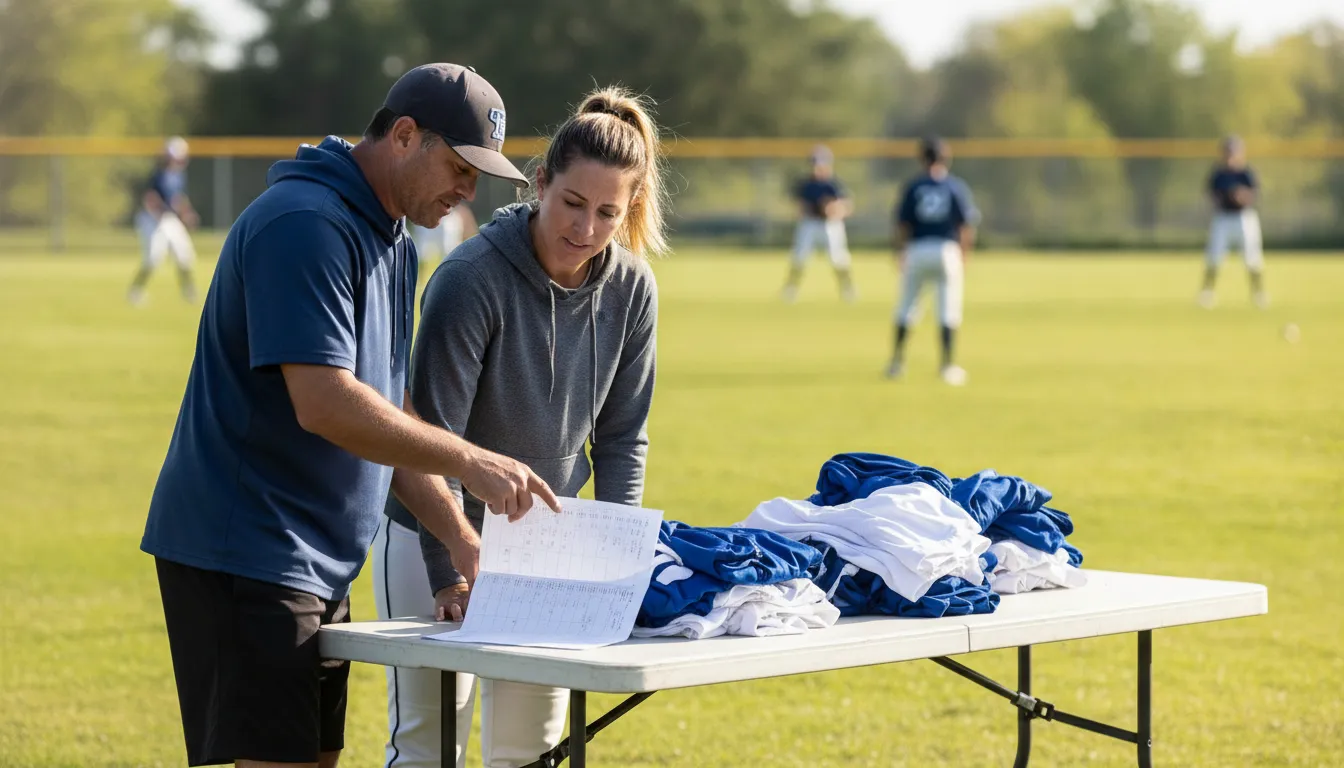
Use a simple order tracker with columns for player, role, garment, size, number, artwork status, and approval. Mark whether each item is confirmed or still pending. This is especially useful when a team has a reserve keeper, a late roster addition, or an alternate color. If the goalkeeper order is being placed apart from the field-player order, include the original color and design references in the tracker.
Before choosing a supplier timeline, explain the actual deadline: the date uniforms must be in hand, not just the first match date. Include any fitting, distribution, or travel days. Ask for the expected schedule for your specific order and find out whether it changes with the selected style, decoration, quantities, or proof revisions. Do not treat a general turnaround statement as a guarantee for every combination.
Uniforms Express describes custom team products and offers a catalog request path for teams that need product information. If the program has questions about its particular quantities, deadline, or customization, use the contact page to discuss the order. Ask about rush production only in relation to the project details, and confirm both timing and pricing terms before making a commitment. Never base a season plan on an unconfirmed delivery assumption.
Keep the last approval in writing. A clear confirmation should identify the correct jersey, color, sizes, numbers, quantities, decoration, delivery destination, and requested arrival date. It should also record any approved alternate. This final review may feel repetitive, but it is far easier to resolve an inconsistency on paper than after a team has received its uniforms.
For a separate goalkeeper order, give the supplier a reference to the team’s earlier approved design and confirm that the same colors, logo version, and number treatment are intended. Reordering from memory can introduce small differences that become obvious when the kits are laid out together. If the roster changes after approval, report the specific change and ask whether it affects quantity, artwork, or the schedule; do not edit the approved list informally and assume the order record has been updated. Keep any revised proof with its approval date so the staff knows which version is current. Coaches who are coordinating several items can use the broader online uniform planning tool to organize design decisions, then confirm the actual order details with the team supplier.
Frequently asked questions
These answers address common goalkeeper jersey decisions for coaches and team managers. Confirm product availability, exact sizing, decoration, and schedule for your own order before final approval, since those details depend on the selected style and team requirements. Treat the answers as a starting checklist, then verify the details that apply to your league, players, and specific product before submitting the final roster.
How do we choose a goalkeeper jersey color?
Compare the available goalkeeper colors with your field-player kits and any alternate uniform, then check the rules set by your league or event. Ask the organizer when requirements are unclear. Consider the opponents and combinations your team is likely to face, and confirm that the final color and design are available for the style you plan to order.
How should a goalkeeper choose a jersey size?
Use the product’s size chart and the player’s measurements rather than relying only on age or a generic preference for a loose fit. Consider the layer the keeper plans to wear underneath and whether the player prefers more room through the body or sleeves. Verify each size with the player and record it on the final roster.
Can the goalkeeper jersey match the team’s decoration?
Yes, the design can carry shared team elements such as a crest, number style, and selected accent colors while using a different jersey color. Share the current team artwork and explain what must remain consistent. Confirm the available decoration method and review the actual proof before approval.
When should we order custom soccer goalkeeper jerseys?
Start early enough to finalize the roster, artwork, sizes, proof review, and delivery plan before the uniforms are needed. Give the supplier the date the team needs the jerseys in hand and ask for the schedule that applies to the chosen product and decoration. Any rush availability or timeline should be confirmed for the specific order.
How can we plan the budget for a goalkeeper jersey?
Ask for a current quote based on the exact garment, number of jerseys, sizes, decoration, and any related team items. Comparing complete, like-for-like order details is more useful than considering a jersey alone. Prices and options can vary, so confirm the terms with Uniforms Express before approving the order.
Make the goalkeeper order part of the team plan
Well-planned custom soccer goalkeeper jerseys begin with an accurate roster, a distinct but coordinated color choice, and a fit that supports each player’s movement. Confirm the decoration, review the proof, and get a schedule for the actual order before approval. With those details settled, the keeper’s uniform can be ready as a considered part of the team kit.
Comments