


Custom Team Uniforms San Diego: A Coach’s Local Buying Guide

The first game is fixed, but the roster is changing and nobody can confirm when the uniforms will arrive. If you are searching for custom team uniforms san diego, you need more than a catalog: you need a clear order plan, a supplier who can answer specific questions, and a reliable process for approving every detail.
What should San Diego teams decide before choosing a supplier?
Start with the in-hand date, complete item list, roster owner, approval process, and design brief. Then ask each provider to explain the schedule for your exact garments, decoration, quantity, and destination. A written order-specific plan is more useful than a general turnaround statement or a location label.
Set the date uniforms must be ready for distribution, not the date someone hopes to place an order. Work backward from the first game, team photo, tournament, or equipment night. Include time for purchasing approval, size collection, artwork review, production, shipping, inspection, and correction of any discrepancy. If the schedule is tight, say so at the first conversation.
Name every person involved. A coach may approve the look, an administrator may handle purchasing, and a manager may collect player details. Decide who can approve the proof, who confirms the roster, who receives status updates, and who can authorize a change. One decision path keeps a proof from sitting in several inboxes while a deadline approaches.
- Set an in-hand date:
Identify the event that cannot move and leave a buffer for review and delivery issues.
- Count the full set:
List jerseys, pants, hats, socks, belts, warm-ups, coaches’ gear, and replacements separately.
- Confirm purchasing steps:
Find out whether a school or league needs a purchase order, vendor setup, approval form, or specific payment process.
- Choose one roster coordinator:
Assign one person to gather names, numbers, sizes, styles, and player-specific notes.
- Define the brief:
Record sport, level, player count, colors, logo files, garment styles, decoration, and deadline.
For a baseball program, review baseball uniform and apparel options while preparing the brief. Uniforms Express is headquartered in San Diego and manufactures custom athletic uniforms. Ask where your particular order will be produced, what schedule applies, and how delivery timing will be confirmed. The useful comparison is the written commitment for the actual order, not a broad estimate or a supplier’s address.
How can you compare providers serving San Diego?
Compare process, accountability, and scope rather than proximity alone. Ask who owns the artwork proof, who confirms production status, what the quote includes, how changes affect timing, and what happens if the delivered order has an error. Record answers beside each proposal so every provider is evaluated on equivalent terms.
Teams may consider a local shop, an online custom provider, a dealer, or a direct manufacturer. An in-person meeting can suit a team that wants to discuss samples face to face. Online coordination may work for a roster spread across neighborhoods or schedules. A direct manufacturing relationship can make the production contact clearer. None of these routes removes the need to verify the details of your own order.
Ordering route | Possible fit | Questions to resolve |
Local shop | Teams that value an in-person discussion | Who makes the garment, handles updates, and confirms delivery? |
Dealer or reseller | Programs comparing several product lines | Who is responsible if a manufacturer schedule changes? |
Direct manufacturer | Teams seeking a clear production contact | Where is this order made, what starts its schedule, and how are issues handled? |
Online custom provider | Teams coordinating remotely | Can the whole proof be reviewed, and can a person confirm sizes and shipping? |
Request written answers on production, delivery, correction procedures, design responsibility, order scope, and communication. Ask what starts the production clock: payment, completed roster, approved artwork, or another event. Confirm the expected arrival date and ask how later changes affect it. On quality questions, ask how to report a wrong number, spelling, size, or construction concern; do not assume every provider offers the same remedy.
Uniforms Express offers a team uniform education resource for buyers who want to understand the process. You can also review the company’s background and approach, then request commitments specific to your order. For baseball comparisons, look at the custom baseball uniform page and use the same brief when speaking with each provider.
Which design, fabric, and decoration details matter?
Choose a design that preserves team identity while staying readable and consistent across the roster. Set primary and secondary colors, logo use, lettering style, number treatment, and decoration method before approval. Then inspect front, back, side, and detail views for each garment instead of reviewing only one jersey image.
Begin with color and contrast. Names and numbers need to remain legible from the stands, in photographs, and under different lighting. Screen previews can differ from fabric, so ask how color is represented on the proof and whether a physical reference is useful. If new pieces must coordinate with existing apparel, identify the reference garment and ask how closely colors can be matched across products.
Decoration methods include sublimation, screen printing, heat press, embroidery, and tackle twill. The appropriate choice depends on artwork, garment, desired appearance, and use. A detailed multicolor graphic may call for a different approach than a simple chest mark or sewn number. Ask how the selected method appears on the specific fabric and how edges, seams, and repeated washing may affect the finished look. This guide to sublimation and tackle twill can help frame the discussion.
Use a proof checklist before anyone approves production:
Team name, mascot, and every player name are spelled correctly.
Numbers are legible, placed as intended, and not duplicated by mistake.
Logos and sponsor marks appear on the agreed panels and at the agreed scale.
Colors and outlines provide enough contrast on every garment.
Multiple styles share consistent placement and proportions.
Artwork is not clipped by seams, edges, sleeve openings, or pant construction.
The proof matches the quoted garment list, not just the main jersey.
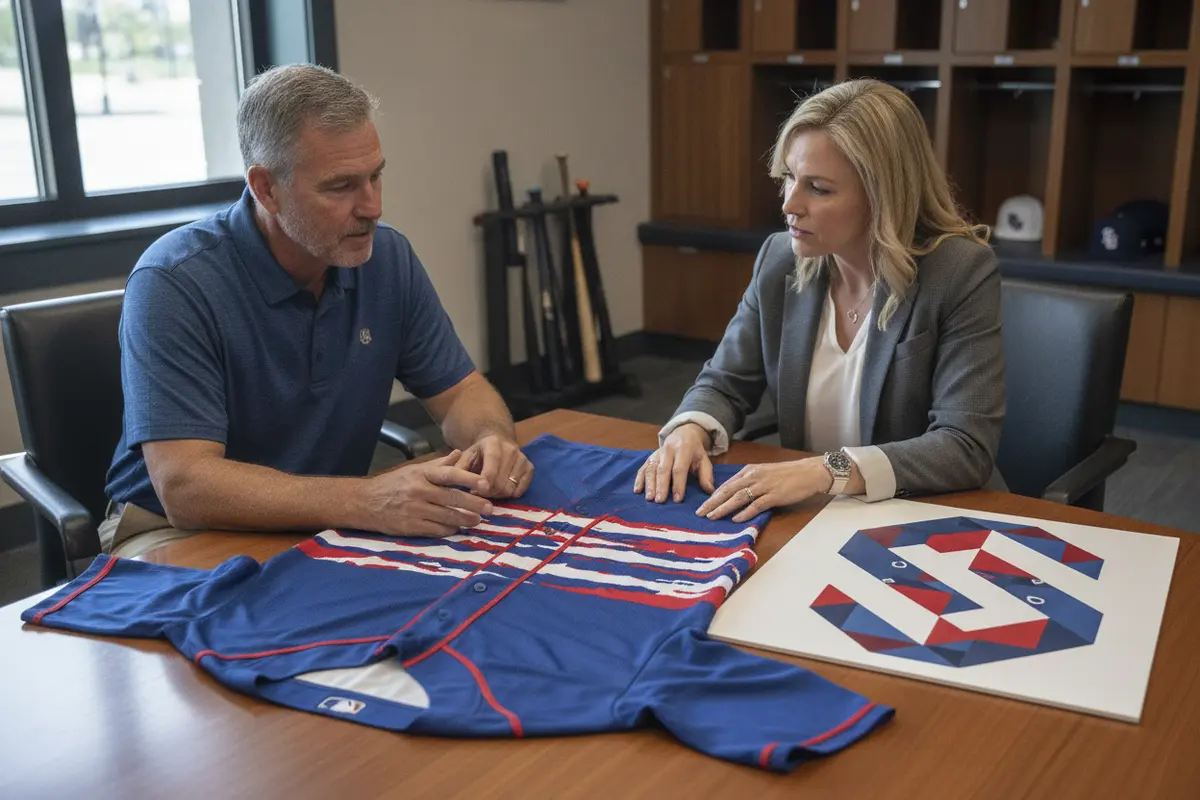
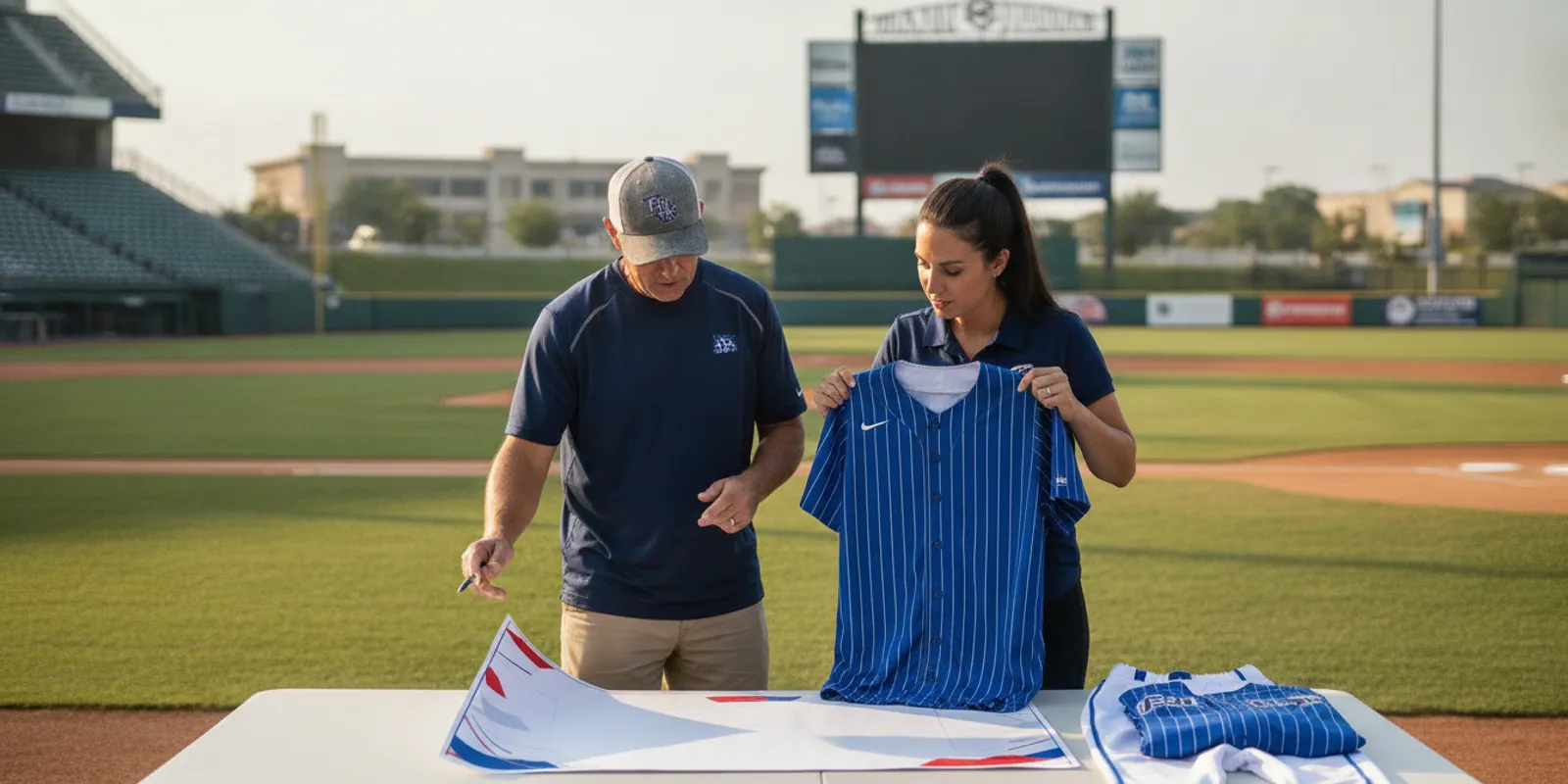
Request front, back, and side views when several panels are decorated or the order includes multiple garment types. Keep the approved version with the quote and roster. Confirm the final proof reflects actual number assignments and pieces. Teams can compare custom baseball jersey styles against the selected decoration and complete uniform plan.
Look beyond the artwork when assessing construction. Ask which fabric and garment cut are being quoted, how the seams and reinforced areas are finished, and whether the intended fit allows the player’s normal range of movement. For a team ordering more than one jersey style, compare equivalent views and details. If a player tries on a sample, record the style and size so the observation is useful when the group finalizes its roster. Do not treat a digital mockup as a substitute for confirming the actual garment specification.
Use a simple approval sequence: first settle the overall look; then check colors and logo scale; next review garment-specific views; finally reconcile the approved artwork with the player list and quote. If the coach approves a design but the administrator notices the pants are missing from the proof, pause and resolve the mismatch. Approval should mean that the design, roster, and promised set all agree, not merely that the jersey looks appealing.
How should you manage sizing and roster changes?
Use the size chart for each exact garment rather than guessing from age or casual-shirt size. Give one coordinator responsibility for collecting measurements and selections, set one cutoff date, and verify unusual entries before approval. This reduces the risk that a late roster change or inconsistent size assumption becomes a production problem.
Use one spreadsheet or form with separate fields for player name, number, garment style, size, and personalization. A second person should compare the final list with the team roster. A duplicate number might be intentional for separate sets, or it might be a data-entry error. Resolve that question before sign-off rather than after production begins.
Share the size chart for each garment, not one chart for the whole order.
Follow measurement instructions and note whether players measure over base layers.
Record measurements and selected sizes separately so unusual choices can be checked.
Set a firm cutoff and ask how late additions or replacement pieces are handled.
Verify spelling, numbers, sizes, garment counts, and decoration before approval.
Save the approved roster and proof in a shared location with the approval date.
Use the uniform size charts and confirm which chart applies to each item. If a player falls between sizes, ask how that particular style is intended to fit rather than assuming all cuts are alike. If the team expects additions later, ask whether a single-piece order can match the original color, fabric, and personalization and what timing applies.
For example, suppose a high school adds two players after the initial list is nearly complete. The coordinator should not simply append names to the old sheet and assume the first proof remains accurate. Check the number assignments, repeat the size and garment selection process, and ask whether the additional pieces can share the original design and expected delivery window. Record the supplier’s answer beside the revised count. If the team has already approved artwork, identify exactly which files or lists changed so the provider can confirm whether a new proof is needed.
Separate the roster into confirmed and pending entries when a player’s place is uncertain. Keep the confirmed order list as the production reference and ask how the provider handles a later addition. That avoids changing settled information silently. If the team must order before every name is final, decide whether unpersonalized pieces are an option and clarify how names and numbers would be added, if available, before placing the order.
When should a team place its order?
Plan backward from the date players need the uniforms, allowing separate time blocks for purchasing, roster collection, design review, approval, production, shipping, inspection, and distribution. The schedule may depend on garment, quantity, decoration, and season demand. Ask for an order-specific date and leave room to resolve a discrepancy.
Use these checkpoints as a planning framework, not a guaranteed production schedule:
- Eight or more weeks out:
Confirm purchasing steps, choose a coordinator, discuss pieces, and collect preliminary sizing information.
- Six to eight weeks out:
Finalize the design brief and request a written proposal that states scope, assumptions, and timing.
- Before production:
Verify the roster and proof, resolve open questions, and retain written approval.
- After acceptance:
Confirm the status contact and expected ship or arrival date.
- At delivery:
Check quantities, sizes, names, numbers, and decoration promptly, then report discrepancies through the stated process.
Event dates are hard constraints. For example, the Rocky Mountain Athletic Conference lists its 2026 softball championship for May 7–9, 2026; a team preparing for a fixed championship date would plan backward from that event rather than from a hopeful order date. See the RMAC championship schedule for that event detail. Your own league or tournament should be checked directly because dates and requirements vary.
Uniforms Express describes some custom jerseys as available in as little as two weeks, depending on the order. Treat that as a possibility to verify, not a universal promise. Ask which date starts the clock, whether your garment and decoration fit that schedule, and whether a rush option changes availability or cost. Schools and leagues should also account for approval time and player-detail collection.
For a multi-team program, settle shared colors and artwork before separate orders begin. A baseball uniform package overview may help identify coordinated pieces to discuss. Confirm that every team’s sizes, numbers, and delivery needs appear in the proposal.
A useful way to find hidden schedule risk is to mark each step with an owner and a date. The athletic director can own purchase approval, the coach can own design approval, and the manager can own roster completeness. Then add a decision deadline for every unresolved question. If artwork must be approved by Friday but the logo file is still missing on Wednesday, the team can escalate that task instead of discovering the delay after the production date has moved.
Build a buffer before the first event. The buffer is not idle time; it is space for a carton to arrive late, a spelling error to be reviewed, or a player to need an exchange. Ask the supplier whether delivery is estimated or committed and what notice the team should expect if a schedule changes. Do not plan distribution for the same afternoon as the first game if the team can avoid it.
What should you include in a uniform budget?
Build the budget around the complete order, not a single jersey. Total scope can depend on garment style, decoration, quantity, personalization, shipping, and optional pieces. Request a current written quote for the actual roster and compare what each proposal includes. This avoids treating two different uniform sets as if they were equivalent.
List required items separately from optional ones: game jerseys, pants, hats, socks, belts, alternates, warm-ups, and coaches’ apparel. Confirm whether names, numbers, logos, artwork preparation, and shipping are included. Ask about minimum quantities, payment timing, late additions, replacements, and quote changes if the roster grows or shrinks. Pricing fluctuates, so use the current written quote rather than an old example.
Compare like with like. If one proposal includes an extra garment or uses a different decoration method, request a revision that matches the other quote. Note assumptions such as the number of revisions, approved artwork, delivery destination, and roster cutoff. A lower headline total may not represent the same finished set. Compare line items and deliverables instead.
For a fixed budget, rank decisions in advance. Keep required game pieces separate from optional fanwear. Decide whether every player needs the same package or whether coaches’ gear and replacements belong in a second line. Ask what can be added later without changing the core team look. A clear priority list makes a late tradeoff less disruptive.
Consider a hypothetical 18-player team comparing two proposals. One covers a jersey and pants for each player, while another includes jerseys, pants, socks, and personalized names. The second total may be higher but includes more items; the first may require add-ons to reach the same scope. Ask both providers to quote the same garment list, decoration, personalization, and shipping destination. Then compare what each player receives and what assumptions remain open.
Also distinguish one-time preparation from repeatable pieces. If the program expects a second order later, ask which design files and garment specifications will be retained and what the provider needs to reproduce the look. Do not assume a later order will have identical timing or availability. Make the repeat-order question part of the current proposal so the team understands whether a future addition is practical.
How can you prepare for delivery and distribution?
Delivery is not the final administrative step; it is the team’s quality-control window. Assign two people to count the shipment against the approved roster and quote, inspect personalization, and set aside any questionable item before distribution. Report an issue promptly through the supplier’s stated process and retain photos, packing details, and the approved proof.
Create a receiving checklist:
Count cartons and compare them with shipment information.
Count each garment type and compare quantities with the order.
Check names, numbers, sizes, colors, and logo placement.
Compare decoration across matching garments for consistency.
Set aside an item that needs review instead of handing it to a player.
Record the date, contact, and evidence for any report.
Distribute by player, not only by garment type. A labeled roster list can show whether each player received the complete set and whether a replacement is pending. For multiple teams, use team-specific bins or tables and keep each team’s approved roster with its distribution record. This prevents a correct item from being assigned to the wrong player.
Imagine the shipment arrives two days before a uniform handout. One person can check quantities while another reads names and numbers against the approved roster. If a discrepancy appears, photograph the garment with its label and record the matching roster line. Keep that item separate, contact the supplier promptly, and avoid making an unapproved alteration before the supplier has responded. The team can then distribute correct pieces while tracking the open issue.
For future orders, record what worked: actual approval and delivery dates, fit notes, replacement needs, and player feedback. A short post-season record gives the next coordinator a better starting point and helps the team ask more precise questions about repeat orders.
Uniforms express team identity as well as serving a practical game-day purpose. When players receive matching pieces that fit the agreed design, coaches spend less time sorting out last-minute differences and more time preparing the group. That result comes from decisions made early: a checked roster, readable artwork, a complete quote, and a receiving plan that someone owns.
Frequently asked questions
How do we choose a uniform style?
Start with sport, level, climate, and use. Compare cut, fabric, decoration, and the complete garment set, then review a full proof to make sure the pieces coordinate. Baseball teams can begin with the relevant custom baseball uniform options and ask which styles suit the order brief.
How should players determine their sizes?
Use the supplier’s chart for each garment and follow its measurement instructions. Have one coordinator collect the information, verify unusual selections, and check the roster before approval. Do not assume a casual-shirt size translates directly to every athletic cut.
Which decoration method should we select?
Base the choice on artwork, garment, desired appearance, and use. Ask the supplier to explain options for your particular fabric, then check colors, scale, edges, and placement on the proof. Keep the approved decoration details with the roster.
How long does a custom order take?
Timing depends on scope, design, approval date, production schedule, and shipping. Ask what starts the clock and request an order-specific timeline. If a fast or rush option is described, verify it applies to your exact garment and decoration and ask whether availability or cost changes.
How can we keep the order within budget?
Separate required and optional pieces, request an itemized quote for the full roster, and compare the same scope across providers. Confirm decoration, shipping, minimums, and later-addition terms before approval. Review the current quote because prices and availability can change.
With a defined deadline, checked roster, complete proof, written order details, and a delivery inspection plan, San Diego coaches can make a more informed supplier choice and prepare a coordinated uniform order for the season.
Comments