


Little League Baseball Uniforms: A Team Buyer's Guide

A uniform order can become a season-opening problem if sizes are missing, names are wrong, or the delivery plan is unclear. Planning little league baseball uniforms carefully gives coaches and league administrators a chance to catch those issues before production begins.
Start with the roster and first game date, then settle the design, decoration, sizing, and approval process. This guide walks through decisions that help a league place a complete, well-checked team order.
What should a league decide before ordering little league baseball uniforms?
Before comparing styles, define who is ordering, how many players and coaches need gear, and when the uniforms must be ready. A short written brief keeps the league, coach, and supplier aligned. Include the season date, roster status, required pieces, preferred colors, and who has authority to approve the final proof.
Little League International calls a uniform one of the meaningful annual purchases for a league and recommends budgeting appropriately; its uniform buying tips for purchasing agents reinforce the value of planning ahead.
- Set the order owner.
Name the person who collects sizes, communicates with the supplier, and resolves questions.
- Confirm the complete roster.
Identify registered players, coaches, and likely late additions. Avoid estimates when actual names and sizes are available.
- List what is included.
Decide whether the order covers jerseys only or a coordinated set with pants, caps, socks, belts, or other accessories.
- Write down deadlines.
Include artwork approval, roster submission, and first-game dates. Ask the supplier for a production and delivery schedule for the specific order.
- Agree on approvals.
Choose one final decision-maker and establish how the team will review the proof.
For a product starting point, review baseball uniform package options. If you are assembling items separately, the custom baseball uniform product path can help frame the conversation. Confirm the exact pieces and choices before assuming a package contains a particular item.
It also helps to distinguish decisions the league can make internally from questions that need supplier confirmation. The league can settle its preferred colors, number policy, approval authority, and budget ceiling. The supplier should confirm garment availability, sizing instructions, decoration compatibility, current production expectations, and what the quoted order includes. Recording those responsibilities prevents unresolved assumptions from showing up as rushed decisions later.
A useful brief can fit on one page. Put the season and age division at the top, followed by the number of players, coaches, required garments, approved colors, artwork status, and decision-maker. Add a section titled “questions to confirm” for uncertain items such as late-player additions or exchanges. This prevents a casual conversation from becoming the only record of an important decision.
How can coaches plan sizes for a changing roster?
A dependable size plan begins with individual measurements or a consistent fitting process, not a guess based on age. Players of the same age can have different builds, and brands or garment styles may fit differently. Use the current sizing chart and instructions for the selected product, and have families provide measurements in the same way.
Collect information in one roster sheet. Keep names spelled correctly and separate each garment’s size where a uniform includes multiple pieces. A player may need one size jersey and another size pant. Include a clear identifier so two players with similar names do not get mixed up. Decide who can see the roster and keep it in a consistent, controlled location; repeated versions circulated by email can cause the team to approve different information.
Send families the correct chart for the selected garment and explain how to measure.
Ask for measurements over the clothing layer players will typically wear underneath, when relevant to the supplier’s instructions.
Record jersey and pant sizes separately, along with player name and number preference if numbers are being assigned.
Flag uncertain fits and arrange a sample or fitting option when available.
Have a second person compare the final roster against original responses.
Mark the sheet with a version date and identify who made or approved any changes.
Do not automatically size every young player up for future growth. Excess fabric can interfere with movement and comfort, and an oversized garment may not match the intended look. Instead, ask how the specific garment fits and what room it allows. If the league expects roster changes, discuss how late additions or exchanges are handled before approving the order. It is useful to ask whether the team should order a small reserve quantity, but make that decision only after checking the budget, product rules, and likely registration changes.
Uniforms Express provides a team uniform sizing guide. Check the chart for the specific product and use its measurement directions. Keep a dated copy of the final size roster so the approver can verify it against the proof and order details.
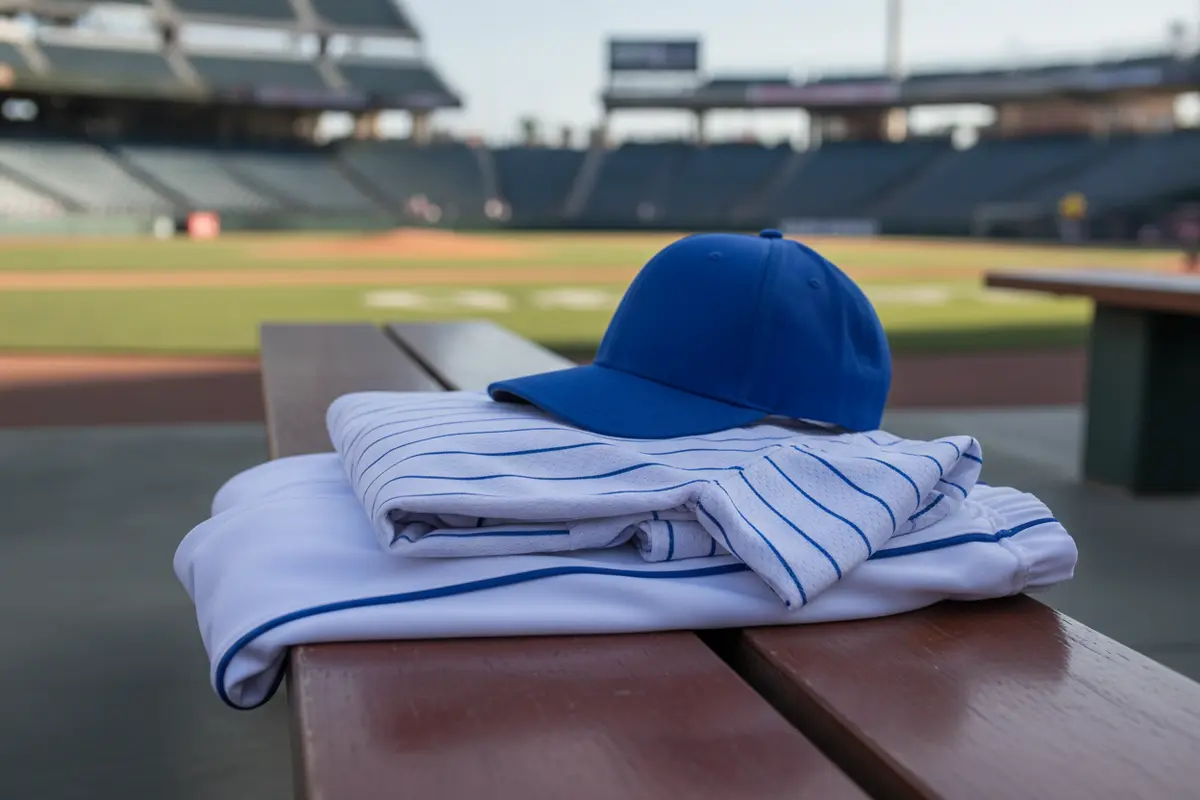
Before sending a roster, perform a simple completeness check: every player has the required garment sizes, every number is unique if the league requires unique numbers, and every player name matches the spelling the family provided. Use a separate field for notes rather than adding comments to size cells. This makes it easier to export clean information and spot blanks. If a player’s fit is uncertain, mark the question clearly instead of silently substituting a size.
Give families a clear response deadline and explain what happens when information is late. A missing measurement should remain visibly unresolved rather than being replaced with a convenient guess. Once the deadline passes, sort the roster by player name or number and compare it with the registration list. That second view often reveals a duplicate, a missing player, or a name entered under the wrong division.
Growth is worth discussing, but it should not replace a fit decision. Ask whether the player will wear a base layer, how much movement the garment requires, and whether the selected cut is intended to be relaxed or athletic. For pants, pay particular attention to waist and inseam information when the supplier requests it. A written note about the fitting assumption gives the league a useful reference if a family asks why a size was selected.
Which uniform pieces and design details should teams coordinate?
A coordinated uniform is more than a jersey color. Decide how the jersey, pants, cap, and accessories will work together in home and away settings. Consider readability from the stands, contrast between jersey and lettering, and whether numbers remain visible against the design. These choices contribute to team identity and a professional appearance, but they should also be practical for the league’s schedule and the garments players will actually wear.
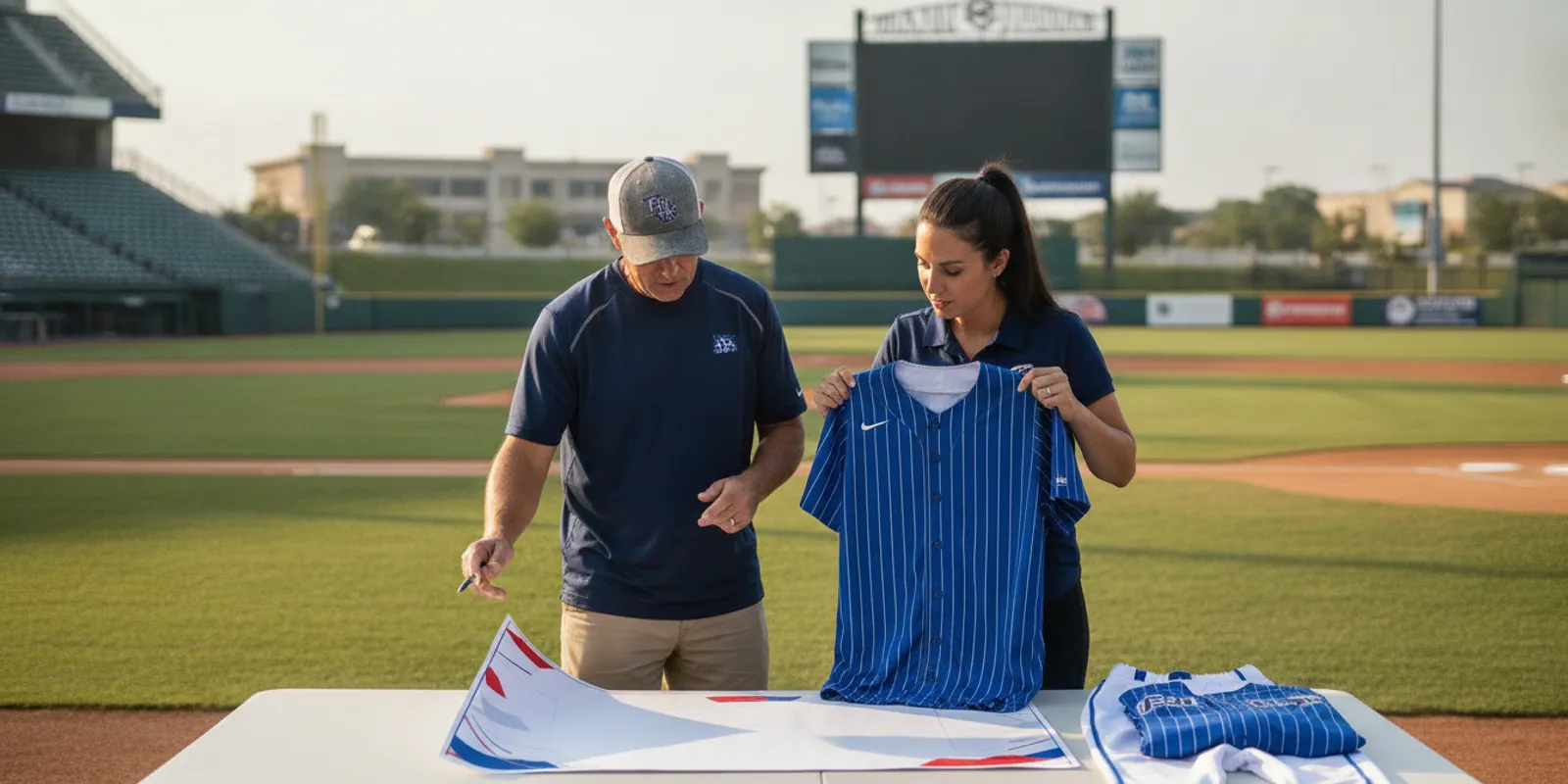
Use a simple design brief to avoid conflicting feedback. Include the team name, approved colors, logo or mascot artwork, player-number requirements, and any league rules about appearance. Send clean, high-resolution artwork if available. Do not assume an image copied from a small online preview will reproduce clearly at garment size. If the league has more than one uniform look, state which garments use each colorway and label home or away versions plainly.
Decoration methods suit different visual goals. Sublimation can integrate color and graphics into a design, while tackle twill creates layered lettering and numbers. Embroidery may be appropriate for selected logos or accessories. The right method depends on the garment, design, durability expectations, and available construction. For a closer look at two common approaches, see this guide to sublimated twill and tackle twill.
Decision | What to compare | What to confirm |
Uniform pieces | Jersey-only order versus coordinated set | Which garments and accessories are included |
Decoration | Integrated color, layered lettering, or embroidery | Method, placement, colors, and garment compatibility |
Roster details | Names, numbers, and garment-specific sizes | Spelling, duplicates, and late-change process |
Timing | Proof, production, and delivery milestones | Supplier-confirmed schedule for this order and season date |
When reviewing options, avoid selecting decoration by appearance alone. Ask how the design will look on the actual garment, whether requested artwork is suitable, and how colors and lettering will be represented on the proof. Uniforms Express offers custom baseball jerseys as one product route, as well as baseball accessories for completing a coordinated look.
Think through construction and placement as well as color. Lettering should be easy to read at game distance, and player numbers should stand out from the background. Ask whether the selected decoration method works with the garment and design scale, and whether any thin lines or small details may need adjustment. A design that looks clear on a laptop can become crowded when translated to a jersey front or sleeve. Request a proof that shows the intended placement, then compare it with the brief before discussing aesthetic refinements.
For a practical review, view the front and back separately and check each colorway. Confirm that the team name, player name, number, logo, and any league mark appear where expected. If the team uses a second jersey, make sure the two looks are distinguishable and that players’ numbers remain readable on both. Keep feedback consolidated: one person gathers comments, removes contradictory suggestions, and sends a single marked-up response to the supplier.
Coordinate accessories instead of treating them as an afterthought. A cap or belt can make colors appear different from the jersey, especially under field lighting. Check the approved color names or references across the complete order, and ask whether colors can be matched across garments. Also decide whether coaches need the same decoration and whether their gear should be separated on the roster. These small choices make distribution easier and reduce last-minute substitutions.
What should you inspect on the proof and order confirmation?
The proof is the team’s last clear opportunity to catch visual and roster errors before production. Review it against the written design brief and roster, not from memory. A coach should check the overall appearance, while another person checks text and player-specific details line by line. Treat proof approval as a formal decision: once approved, later changes may affect the schedule or order terms.
Verify the team name, logo, colors, lettering style, and number placement.
Check that every name and number is present, legible, and assigned to the correct player.
Compare the proof with approved artwork and confirm that no element is cut off or unexpectedly altered.
Confirm each garment and size against the final roster.
Review the order summary, quantities, shipping destination, and supplier-confirmed schedule.
Make comments specific. Instead of saying “the number looks off,” identify the player, location, and requested correction. Keep one current version of the proof and record who approved it and when. If the league changes a name, size, number, or design after approval, ask whether that affects production timing or other order terms before authorizing the change.
Assign separate review passes rather than asking everyone to inspect everything at once. One reviewer can focus on team identity and colors; another can compare all names, numbers, and sizes; the purchasing contact can check quantities, shipping destination, and order scope. A final read-back against the roster catches transposed digits and spelling mistakes. Save the approved proof and final order summary together, with the approval date, so the league can refer to the same record if questions arise.
Do not treat a proof as a guarantee of a particular delivery date. Ask for expected milestones in writing, including when the supplier needs final artwork and roster information. Uniforms Express discusses its team-order process in its uniform planning resources. For order-specific timing and available options, get confirmation directly rather than relying on a general estimate.
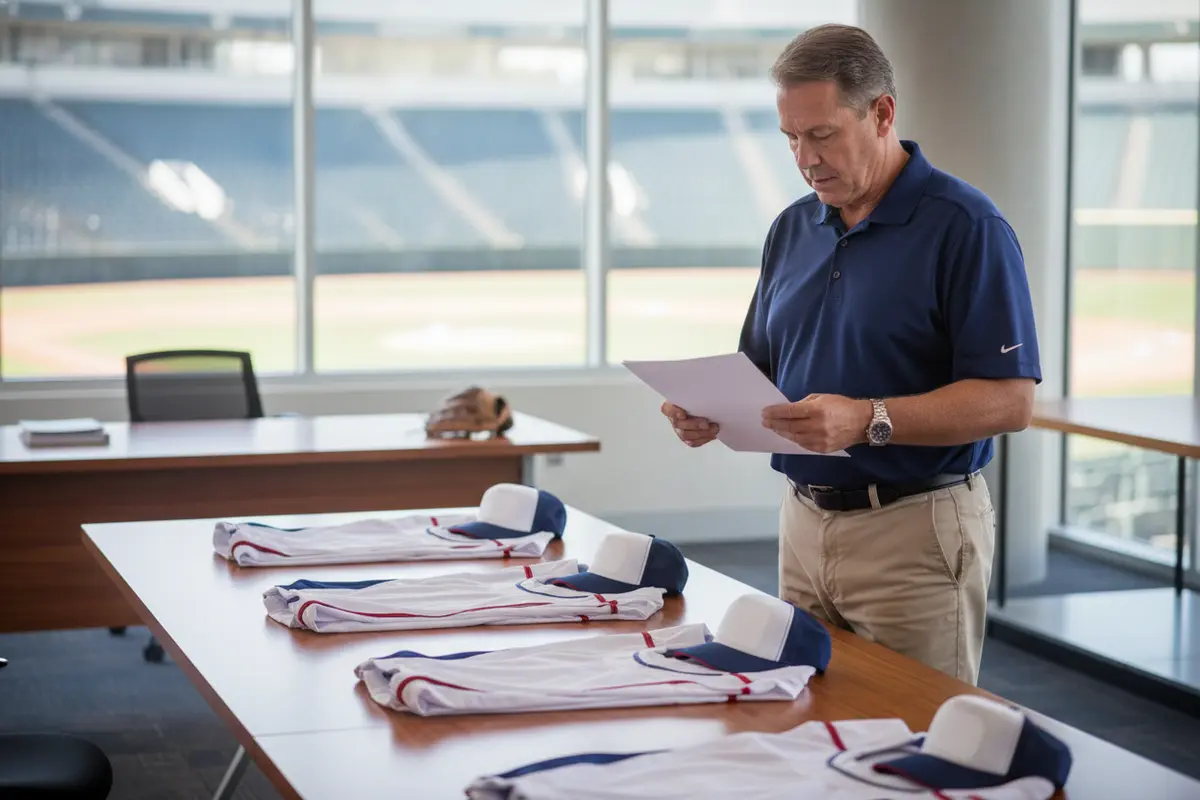
Use a two-column correction log during proof review. Put the current proof detail on the left and the requested correction on the right, then mark each item as resolved when the revised proof arrives. This is more reliable than sending several disconnected messages. Before final approval, read every correction back against the new proof rather than assuming the supplier carried each change forward.
Check the order confirmation as a separate document. A visually correct proof can still be paired with an incomplete quantity, an incorrect shipping destination, or a missing accessory. Confirm the recipient name, address, contact information, garment totals, and any division-specific requirements. If the league has multiple teams, make sure each team’s roster and delivery details are clearly separated.
How should a league plan the order timeline and budget?
Start backward from the first game, but leave room for collecting sizes, approving artwork, and resolving questions. The exact schedule depends on the products and order details, so request a supplier-confirmed timeline for your team. Do not wait until practices begin to identify the decision-maker or gather artwork. A calendar with owners and due dates makes a season order manageable.
Work in milestones: set the internal roster deadline, submit artwork and requirements, review the proof, approve the order, and confirm delivery arrangements. Add a buffer between the expected arrival and the first game for sorting and distributing gear. That buffer is not a promise about production time; it is a planning safeguard against leaving no time to check quantities or resolve a discrepancy. If the season date is fixed, tell the supplier at the start and ask what information is needed to assess feasibility.
A practical calendar might begin with the design brief and product discussion, followed by a family sizing window, roster cleanup, proof review, final approval, production, shipment, and team distribution. Assign one owner to every milestone. If the artwork owner is different from the purchasing contact, show both names on the calendar. That simple distinction prevents a proof from waiting in an inbox while the deadline approaches.
Build a budget around the full team requirement. Include all required garments and accessories, decoration, shipping, and any contingency the league’s purchasing process requires. Compare complete order scopes rather than headline prices for a single jersey. When reviewing choices, ask what is included, whether the same design applies to every piece, and how additional players or replacements would be handled. No single item price tells the whole story if the team still needs pants, caps, or numbers.
Make a simple comparison sheet for each option. List every item, quantity, size range, decoration, shipping, and stated schedule, leaving unknown fields marked for confirmation instead of assuming they are included. This exposes meaningful differences between proposals. If the available funds cannot cover every preferred detail, rank requirements: first identify league rules and essential garments, then decide which optional pieces or design elements matter most. Share any purchasing approval limits with the supplier early so the final proposal is appropriate for the league’s process.
Plan for changes without letting them control the whole order. Registration can shift, a player can leave, or a number can be reassigned. Ask in advance about the process for additions, exchanges, and replacements, including which details must be supplied and whether a separate schedule applies. Keep those answers with the order record. Clear expectations help the league respond quickly without reopening settled design decisions.
Little League’s purchasing guidance can support the league’s planning conversation, but each program must follow its own approval and purchasing rules. To request help with a team order, use the Uniforms Express contact page and provide the sport, team size, pieces needed, and target date. This gives the conversation a practical starting point without assuming a price or turnaround that has not been confirmed for your order.
How can a league organize distribution after delivery?
Delivery is not the end of the uniform process. A short receiving and distribution check helps the league catch discrepancies while the order record is still available. Count the cartons, compare the contents with the confirmation, and sort garments by player before the first team meeting. Keep unresolved items separate and documented rather than mixing them into completed sets.
Record the delivery date and inspect the outside of each package for visible damage.
Count jerseys, pants, caps, and accessories against the approved quantities.
Sort each player’s items together using the final roster and number list.
Check names, numbers, sizes, and decoration against the approved proof.
Note any discrepancy with a photograph or written description and contact the supplier promptly.
Have families confirm receipt without changing the master roster informally.
Use a distribution sheet with one row per player and a column for each required item. Mark an item as received only after it has been checked, not merely because it appears on a packing list. If the league has multiple coaches or volunteers distributing gear, give everyone the same current roster. After the handout, store the completed sheet with the proof and order confirmation.
Ask families to inspect fit at home before the first game, while keeping the league’s exchange process clear. A player who reports a concern should identify the garment, size, and nature of the issue. Do not alter the master record without confirming the next step with the order owner. This keeps a single source of truth for any follow-up.
Frequently asked questions
How do we choose the right size for each player?
Use the current chart for the exact garment and follow its measurement directions. Collect sizes individually, record jersey and pant sizes separately, and confirm uncertain fits with the supplier before finalizing the order.
Can a league order jerseys and pants in different sizes?
Ask the supplier how sizes are recorded for the products selected. Keep garment-specific sizes in the roster so the order does not assume every player wears the same size in each piece.
Which decoration method should our team select?
Choose based on the design, garment, desired appearance, and available construction. Compare the proof for lettering, number placement, color, and legibility, and ask how the selected method will be applied.
When should we place the order?
Work backward from the first game and ask for a schedule that includes roster submission, proof approval, production, and delivery. The supplier should confirm timing based on your products and order details.
How can we keep the team order within budget?
Define the full set of required pieces before comparing options, then compare complete order scopes. Ask for a current quote and clarify what is included, how additional players are handled, and whether shipping or other charges apply.
A complete roster, clear design brief, careful proof review, organized distribution, and confirmed schedule give your league a stronger foundation for a smooth uniform order.
Comments