


Wholesale Custom Baseball Jerseys: A Team Buyer’s Guide

A coach can have every color picked and still miss opening day if the roster count is wrong. One missed size, one unchecked name, or one proof nobody signed can hold a whole shipment. A wholesale custom baseball jerseys order works when one person owns the roster, the proof, and the date the jerseys must be in hand.
This guide is for the buyer at a school, club, league, or multi-team program. It covers quantity, a shared size list, one design spec, proof review, delivery, and the file you will need for a later reorder. It is not a style catalog. For garment choices, start with the custom baseball jerseys collection, then come back here to build the order.
What should you lock before you request wholesale custom baseball jerseys?
Name the teams, the garments, the approver, and the in-hand date before you ask for a quote. A written scope keeps three coaches from sending three different lists. It also stops a jersey count from being mixed up with a full uniform count.
Put one buyer in charge. That person keeps the master roster, collects updates, and sends the supplier one final file. Other coaches can check sizes or colors. They should not send a second spreadsheet after the first one is already in review.
- Name every squad.
List the level, season, and whether teams share a design or need their own colors and marks.
- Say what the order includes.
A jersey-only count is not the same as a count for pants, hats, or a full set.
- Split confirmed players from maybes.
Staff pieces and spare pieces get their own lines. Do not hide them inside the player total.
- Name the approver.
One person signs the artwork, the roster, and the final order. That person must be free when the proof arrives.
- Write the in-hand date.
Work back from the first game, photo day, or handout. Ask the supplier for a plan that fits that date.
Browse the baseball uniform and apparel category to see the product range, then say whether this purchase is jerseys only. If the program also needs pants and other pieces, the baseball uniform packages page shows how a full set is grouped. The page frames the request. Your roster still sets the real quantity.
How do you count wholesale custom baseball jerseys across teams?
Build the quantity from named people, not from a round number. A bulk buy can cover many teams, but each team and each garment still needs its own count. Keep confirmed rows apart from players who might join later. Ask how minimums, late adds, and replacements work before you treat a draft total as final.
Use one line per team and one line per garment. A player who needs a full jersey is not the same as a player who needs a replacement. Track coaches apart from players so staff pieces do not inflate the roster.
Order group. | What to count. | What to confirm. |
Confirmed player jerseys. | One row per rostered player, with size and personalization. | The roster is current and each player appears once. |
Staff garments. | Coaches and other approved staff, kept off the player list. | Who is included, and whether staff use the same design. |
Players not yet confirmed. | A planning note, not a final jersey. | Whether they can be added later, and on what timing. |
Replacements or spares. | A specific piece, with style, size, and use. | Whether it is a spare now or a separate reorder later. |
A few extra jerseys do not fix every roster change. An extra may be the wrong size, the wrong number, or the wrong team. Decide if you need blank spares, player-specific extras, or a path to order later. Confirm that path with the supplier. Do not rely on a verbal guess.
Keep one shared roster file and date every version. Mark each row confirmed, pending, or replacement. Before you send the order, count the confirmed rows and compare that count with the quantity on the quote. That check catches a duplicate name, a missing size, and a coach total that does not match the administrator's total.
When several teams share one purchase, keep the team names on the sheet. Separate varsity from junior varsity even when the colors match. A correct program total can still hide a missing team.
How should a program collect sizes for a bulk jersey order?
Use one size chart and one set of instructions for every player. A roster only helps if every entry was collected the same way. Do not translate a size from another brand. Clear up blank or unsure rows before the order goes in.
Send families the team uniform sizing charts with a deadline and plain instructions. If you can hold an in-person sizing day, write down the size each person picks and who reported it. If you collect sizes from home, give every family the same chart.
Pick the chart that matches the jersey style you are ordering.
Tell each player how to read that chart. Follow the supplier's fit notes.
Record the size exactly as the chart shows it. Do not invent a shorthand.
Flag any blank or unsure row and follow up before approval.
Save a dated copy of the final size list with the proof and the order confirmation.
Last year's order is not a size list. Players grow, styles differ, and a returning player may want a different fit. If the order includes more than jerseys, collect each garment on its own. A jersey size does not set the size for pants.
For a full uniform, treat baseball pants options as a separate count. Write down sizing questions and settle them before the roster is approved. The goal is not to force a size. The goal is one correct size, from the right chart, on every row.
After collection, check that each player appears once and that every size is readable. Have a second person who knows the roster read the sheet. That second pass matters most when names, numbers, and sizes came from different coaches.
Which design details must stay the same on every jersey?
Consistency comes from one written spec, plus a short list of approved differences. Confirm the jersey style, colors, team marks, personalization, and decoration with the supplier. A shared design does not mean every shirt is identical. The file must say what stays the same and what changes by squad.
Decide whether every team uses one look or whether levels need their own version. Name each color in plain words and say where it goes. If you have artwork, send the current file and say which version is the one to use. Do not send three old logos and hope the right one gets picked.
Names and numbers need their own check. Confirm spelling, capitalization, and which player gets which number. If the league limits numbers, write that rule on the roster. Set a cutoff for number changes. Do not assume a number can be edited after the order is final.
Decoration changes how a jersey looks and how it is built. Ask which method fits the artwork. Uniforms Express can apply sublimation, tackle twill, screen printing, heat press, or embroidery. The right one depends on the garment and the design. The tackle twill and sublimation guide explains those two methods. The uniform buying guide covers how direct makers differ from dealers. Use both as background, then confirm the method on your proof.
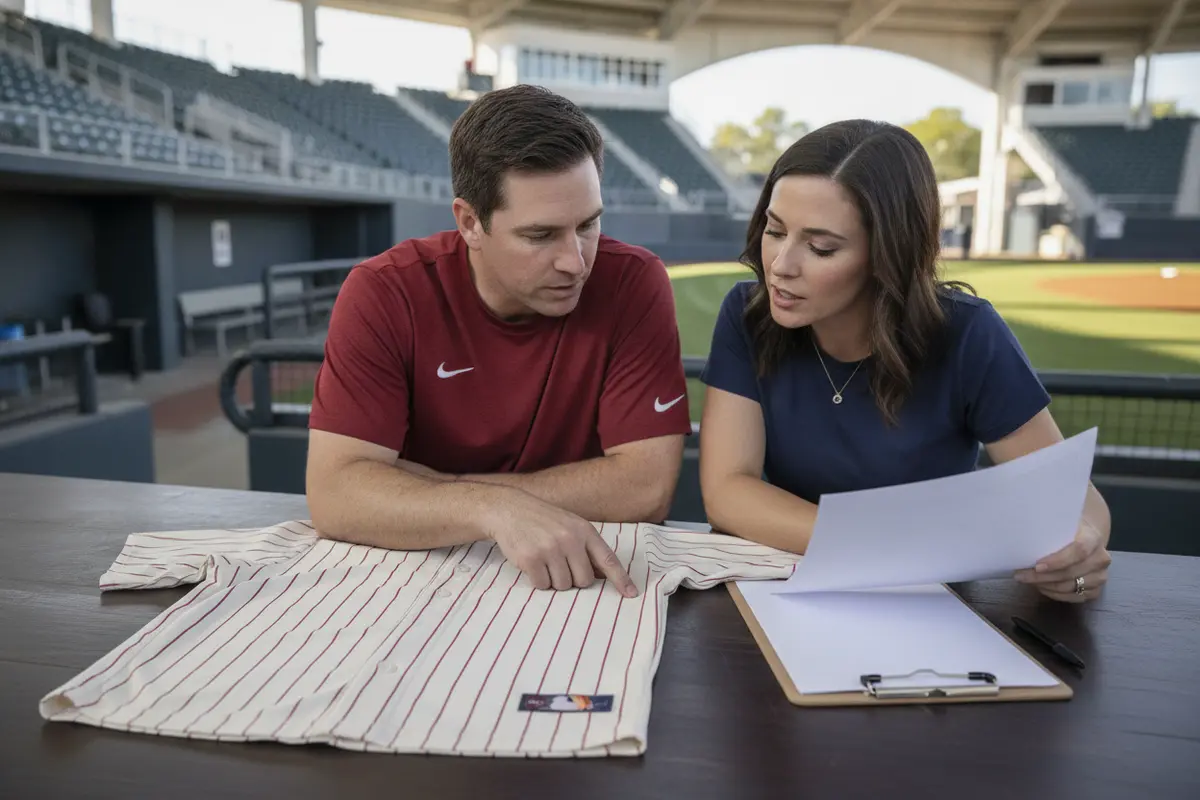
Write a short spec for the program file. Include the garment, base colors, where the team name sits, the personalization rules, and any difference by squad. Every coach then reviews the same decisions. The administrator uses that same page when the proof arrives and again on a later reorder.
What should the buyer check on the proof?
Treat the proof as a checkpoint, not a courtesy. The approver should compare it with the current roster and the written spec. Check the overall look and every personalized detail. Send every correction in one response. Ask for a new proof when a change touches the art or the roster.
Review these items before anyone signs:
- Team identity.
Match the name, colors, and logo to the approved file.
- Garment and version.
Confirm the style, and confirm the proof is for the right squad.
- Personalization.
Read every name and number against the final roster.
- Quantity and sizes.
Match the item list to the approved count. Label staff, extras, and replacements.
- Differences between groups.
Confirm any approved change. Do not assume two similar teams share one art file.
- Timing.
Read the confirmation, the delivery note, and any approval deadline.
Have a second person check names and numbers. One person reads the roster. The other reads the proof. That is more reliable than checking from memory or looking at one sample image. If the proof does not show every personalized jersey, ask how the full roster will be checked and which file controls the order.
When something is wrong, list every fix in one note. Name the proof version. Describe each change in plain words. Then review the new proof, especially the parts that changed. Keep the signed proof with the roster so the program can see what was approved.
Product photos on the custom baseball jerseys collection help you pick a style. They do not confirm your art, your names, your count, or your date. The signed proof and the written order do that.
How do you plan delivery and hand the jerseys out?
Work backward from the day the jerseys are needed, then get a schedule for this order. The start of practice, the first game, and the delivery address all matter. Ask for the steps and the approval deadlines. A general turnaround line is not a promise for every design or every quantity.
Build the inside calendar around steps you control. Those steps are the roster deadline, size collection, art approval, final confirmation, and handout. Leave time for the approver to read a proof and send a correction. A plan that only works if every family replies the same day will slip, especially with several teams.
Confirm the delivery address and who can receive the boxes. A school may want one dock. A league may want a drop for each team. Ask how boxes will be labeled and what paperwork comes with them. Do not assume the cartons are sorted by roster unless that was agreed.
Plan the handout before the truck arrives. Make a checklist with team, player, size, and the name or number that identifies each jersey. Set staff pieces and extras aside. When the shipment lands, match the pieces to the order and note any gap the same day. Follow the supplier's stated process for that note.
If the jerseys are for high school play, check the rules before you approve art. The NFHS baseball uniform rules say team members should wear the same color and style. Each player needs a plain contrasting number on the back at least eight inches high. No two players on the same team may share a number. Read the current NFHS baseball uniform rules, then confirm any extra limit with your state association or league. Your supplier can build the order. Your program still has to meet the rule that applies to your teams.
How do you set up the next reorder before this one ships?
A later reorder is easier when the first file still shows what was approved. Keep the final proof, the garment details, the size roster, the name list, and the order confirmation in one place. When you need more jerseys, name the earlier order and describe what is new. Do not assume last season's details are still current.
Save the approved art and label it with a season or a date. Record the style and the decoration, plus any supplier reference number. Store the roster apart from the art file so a new team list does not overwrite the logo. Limit access to the people who will place the next order.
Before you repeat an order, review what usually changes. That list is names, numbers, sizes, team level, colors, garment, and the in-hand date. Ask whether the previous product and art are still available, and whether the new request can match. A similar-looking jersey is not the same jersey until the supplier says so.
Keep a short change log. Note who was added, who was dropped, which pieces were replacements, and which design choice changed. The next coach can then see that a reorder is not a copy of the whole prior order. One owner should keep that file even when staff turns over.
If the program is adding pieces beyond jerseys, look at the baseball accessories category and keep each item's count separate. A clear item list is easier to check than one total that mixes products. Ask the supplier to confirm how the grouped order will be handled.
How should you compare wholesale custom baseball jerseys suppliers?
Compare every supplier against the same written scope. Look past the jersey photo. Check roster handling, proof review, decoration, communication, and the delivery plan. Ask each supplier the same questions so you can see what is confirmed and what is still a guess.
Comparison area. | Question to ask. | What to write down. |
Product scope. | Is this jerseys only, or are other pieces included? | Garment types and quantities by team. |
Roster process. | How do we send sizes, names, numbers, and changes? | Roster format, owner, and cutoff date. |
Design and decoration. | What stays the same, and what changes by team? | Approved art and the written spec. |
Proof and approval. | What will the proof show, and who must sign it? | Proof version and the correction record. |
Schedule and delivery. | What delivery plan applies to this order? | Dates, destination, and receiving contact. |
Reorders. | How do we request a later add or a replacement? | Saved product details and the order reference. |
Use the comparison to find open questions, not to score a winner on price alone. Current terms belong on a quote for this scope, not in an old estimate. If a schedule or a change process is unclear, ask for it in writing. Compare like with like. A jersey-only request is not the same as a full package.
Keep a one-page summary the whole staff can use. State the number of teams, the garments, the confirmed quantities, the roster owner, the design version, the approver, and the in-hand date. Attach the full roster and the proof. Do not try to squeeze every name onto the summary.
Uniforms Express builds custom team uniforms in its own facilities and has done so since 1996, with live support on weekdays. That is useful context when you ask who controls production and who can answer a roster question. Still judge the quote against your written scope. Call (888) 661-7044 or use the contact page if you want that conversation started.
Frequently asked questions
A volume order still turns on fit, decoration, art approval, schedule, and how the program buys. These answers help a coach or administrator prepare the request and see what to confirm with the supplier before production starts.
How many jerseys should a team order?
Start with the confirmed roster. Add staff, replacements, and spares as their own lines. Do not count an unconfirmed player as final, and do not assume an extra will fit the next roster change. Ask about minimums and about adding players later. Then approve a total that matches the real need.
How should players choose jersey sizes?
Use the chart for the jersey you selected, and give every player the same instructions. Write each choice on the roster. Clear every blank row before approval. Do not convert a size from another garment or another maker. Ask the supplier if the chart is unclear.
Which decoration method is best for a team jersey?
No single method fits every design. The garment, the artwork, and the look you want all matter. Share the design and ask which methods fit it. Then confirm that the chosen method and the art both show on the proof.
How far ahead should a program place its jersey order?
Work back from the day you need the jerseys. Leave time for the roster, the proof, corrections, production, and delivery. Ask for a schedule based on this order, and confirm the approval cutoff. Do not trust a general estimate when the game date is fixed.
How should a team plan its uniform budget?
First write what the order includes. That may be jerseys only, or jerseys plus other pieces, staff counts, personalization, and replacements. Product choices change the total, so ask for current terms on the exact scope. Keep that scope the same when you compare options. Do not publish or reuse an old price as if it were still current.
A reliable wholesale jersey order comes from a current roster, a clear spec, a careful proof, and a delivery plan that matches the season. Put one person on the master file, confirm open questions with the supplier, and keep the approved files ready for handout and for the next reorder.
Comments