


Custom Practice Jerseys: A Coach's Guide

Updated: 7 days ago
Practice gear has a different job than a game uniform. It needs to help coaches identify players quickly, support movement through repeated drills, and hold up across a busy season without complicating team ordering.
The right custom practice jerseys depend on how your team trains: reversible pinnies suit two-color drills, practice T-shirts offer a simple lightweight option. And scrimmage vests make group identification easier when contact or competition increases.
Start by matching the garment to your sport, drill format, equipment layers, roster, and schedule. A high school program coordinating several teams may need a repeatable system, while a youth league may value easy group ordering and clear choices. Understanding what each practice option is designed to do makes the decision more practical.
What Are Custom Practice Jerseys?
Custom practice jerseys are team-branded athletic tops made for training, drills, scrimmages, camps, and warmups rather than formal competition. They can use a team's colors, logo, name, or other design details while giving coaches practical options for daily workouts. Common formats include reversible pinnies, lightweight practice T-shirts, and scrimmage vests.
Unlike a game jersey, a practice jersey is selected primarily for how it supports training. Coaches may need players to identify groups quickly, move comfortably through repeated drills, or wear a visible layer over pads and other equipment. The right choice depends on the sport, practice activity, weather, contact level, washing routine, and whether one garment needs to serve several purposes.
How practice jerseys fit with home and away uniforms
Practice apparel does not replace a team's home or away uniform. It complements those sets. Home and away jerseys create a consistent game-day appearance and help teams meet the visual requirements of competition. Practice tops are usually more flexible. They can make everyday training easier while preserving the game uniform for scheduled contests.
Many club and travel programs plan for home, away, and practice apparel as part of a broader uniform system. A school athletic department may also coordinate practice gear across several sports and teams. Planning the pieces together can help keep colors, logos, and naming conventions consistent, even when each sport uses a different jersey style.
For a broader explanation of how team garments, decoration, and uniform packages work together, see Uniforms 101.
What makes a practice jersey custom?
Customization can be simple or highly detailed. A youth league might choose a team color and logo so players are easy to identify. A club program may want coordinated colors, player names, numbers, or a design that matches its game uniforms. Available decoration approaches can include tackle-twill, sublimation, screen print, heat press, and embroidery, depending on the garment and the desired look.
The goal is not to make practice apparel decorative for its own sake. Custom details should support recognition and organization without getting in the way of training. For example, consistent colors can help coaches divide players into groups, while a shared design can give a multi-team program a more unified appearance.
When choosing custom practice jerseys, start with the actual training environment. Consider whether players need two color options, a layer that stays visible during a scrimmage, or a lightweight top for repeated movement. Then compare the garment with your roster, equipment, schedule, and budget. That practical approach produces a practice kit that works alongside the team's home and away uniforms instead of duplicating them.
Which Practice Jersey Type Fits Your Team?
The best practice jersey depends on how your team trains. Choose reversible pinnies when two-color identification matters, practice T-shirts for flexible daily movement, and scrimmage vests when coaches need clear group visibility. Consider contact level, weather, washing frequency, roster size, and whether the garment supports practice, camp, warmups, or scrimmages.
Type | Best fit | What to consider |
Reversible pinnies | Teams that regularly divide players by color or need two visible sides | Useful when quick team identification and reversible use are central to drills |
Practice T-shirts | Daily training, camps, warmups, and programs seeking a straightforward practice top | Evaluate movement, breathability, weather, washing needs, and how the shirt fits over equipment or layers |
Scrimmage vests | Contact practices and sessions where coaches need to distinguish scrimmage groups | Prioritize visibility, intended contact level, layering, and whether the vest will be used over existing gear |
Choose reversible pinnies for fast color changes
Reversible pinnies make sense when coaches frequently split a roster into two groups. One garment can support both sides of a drill, which can simplify equipment management for practices, camps, and small-sided activities. They are especially useful when color identification needs to happen quickly and the team does not want to distribute separate garments for every exercise.
Review the colors against the playing environment and the rest of the uniform. The goal is easy recognition, not simply adding another team color. If football is part of the program, review the available reversible football jerseys for a sport-specific reference before deciding whether a reversible format matches your drills.
Use practice T-shirts for flexible training coverage
Practice T-shirts are a practical choice when the same top will move between routine training, warmups, camps, and informal team activities. Compare options by the conditions your players actually face. Ask whether the garment allows comfortable movement, works with expected weather, and can be washed as often as the schedule requires. Also consider whether players wear pads or other equipment over or under the shirt.
This format can work well for a broad roster because it keeps the practice layer simple. It may also complement a separate home and away uniform set, giving the program a distinct training option without treating practice apparel like game-day gear.
Pick scrimmage vests when visibility leads
Scrimmage vests are most useful when the coaching priority is separating groups during contact or competitive drills. Football teams, for example, may need visible distinctions between scrimmage groups. In sports with substantial equipment, check how the vest interacts with existing layers and whether players can identify teammates without confusion.
There is no universal winner among these three options. Match the garment to the drill, the climate, the equipment, and the number of players who need it. That use-case decision will produce more useful custom practice jerseys than choosing a style based only on appearance.
How Should You Choose Between Reversible, Lightweight, and Scrimmage Gear?
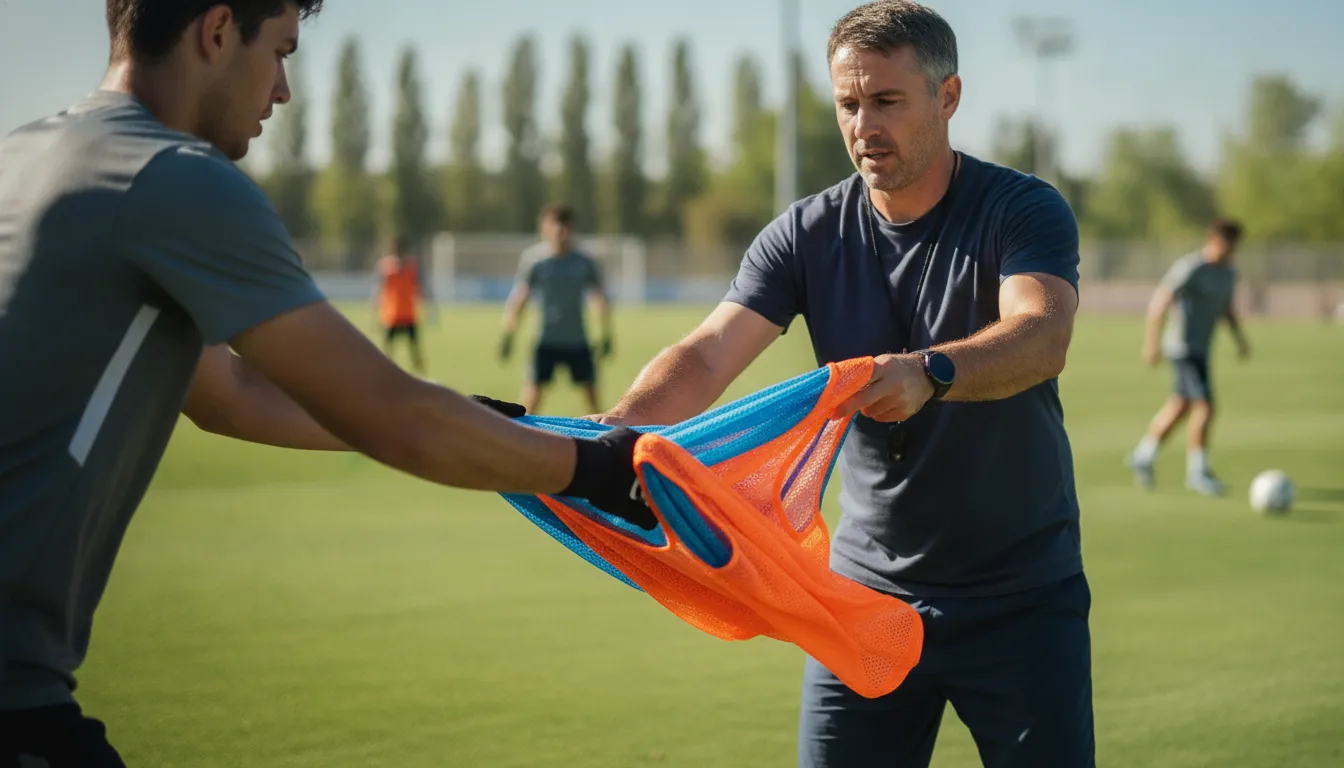
Choose practice apparel by the job it needs to perform, not by a universal ranking. Reversible jerseys suit teams that switch between two groups or colors. Lightweight tops work well when movement and comfort lead. Scrimmage gear is useful when coaches need players identified quickly. Consider the sport, contact level, weather, washing routine, roster, and whether the garment is for practice, camp, warmup, or competition drills.
Start with color and visibility
If your coaches regularly divide players into two teams, a reversible jersey can simplify drills. One garment provides two visible color options, which can reduce the need to distribute separate pinnies or vests. This is especially practical when groups change often or a program serves several teams.
When the main need is quick identification during a controlled scrimmage, a clearly contrasting scrimmage vest may be the more direct choice. Think about the viewing conditions, too. Outdoor practices, crowded fields, dim gyms, and equipment-heavy sports can make color contrast more important than decoration. Ask whether players, coaches, and officials can distinguish groups at a glance.
Match the garment to movement and contact
For conditioning, warmups, camps, and high-repetition drills, prioritize a cut that lets athletes move without unnecessary bulk. A lightweight practice T-shirt or training top may be appropriate when the garment sits close to the body and players are not facing significant contact. Do not assume that the lightest option fits every session. Football, lacrosse, and hockey players may wear protective equipment or additional layers, so the practice garment must work over or around that equipment.
Contact level also affects the decision. A top used for non-contact skill work has different demands from gear worn during full-speed scrimmage activity. Define the drill before choosing decoration, fit, and construction. Your team may need one option for daily training and another for clear scrimmage identification.
Plan for weather, washing, and roster changes
Weather and laundry frequency matter because practice apparel is used repeatedly. Consider how quickly garments become soiled, whether athletes will carry them between sessions, and how often the team can wash them. A simple, repeatable care routine is valuable for youth leagues and large programs where families share ordering and maintenance responsibilities.
Roster size should guide the order as well. A high school program coordinating several sports may need a consistent system across teams, while a youth league may value easy group ordering and straightforward color choices. Club and travel teams may prefer practice gear that coordinates with home and away sets. If you expect new players, exchanges, damaged garments, or mid-season additions, document the color, design, and sizing decisions so replacements remain consistent.
Once you know the use case, customize your team apparel and compare colors, layouts, and logo placement before requesting a final quote.
What Works Best for Basketball, Soccer, and Court Training?
For basketball and soccer practice, choose a garment that helps players identify groups quickly without restricting movement. Reversible jerseys can make color changes simple during scrimmages, while a lightweight practice top may suit drills, conditioning, and warmups. The right option depends on the activity, roster, weather, and how often the gear will be washed.
Start with the way your team separates players. If coaches regularly divide a squad into two colors for half-court games, small-sided soccer, or transition drills, a reversible design can reduce the need for separate pinnies. One side can represent each group, giving players an immediate visual cue as they move through the drill. This is especially useful when a session changes quickly and coaches want players focused on the activity instead of changing equipment.
For basketball, prioritize freedom of movement through the shoulders and torso. Players need to cut, jump, rebound, and handle the ball without a practice garment becoming a distraction. A simple color layout with strong contrast can help teammates and coaches identify assignments in a busy gym. Consider whether the jersey will be worn over a base layer, especially during cooler travel or outdoor training sessions, and allow enough room for that use.
Soccer creates a different movement pattern. Players cover more ground, so visibility and comfort remain important during passing patterns, possession games, and conditioning. Brightly separated team colors can make small-sided groups easier to recognize across a large field. If the practice jersey will be layered over another top, confirm the fit and color combination before ordering. The garment should support the session without competing with the coach's instructions or the team's regular kit.
Use case should guide the final choice:
- Choose reversible gear
when two-color identification is central to scrimmages or rotating groups.
- Choose a practice T-shirt
when the team wants a straightforward training top for movement-heavy sessions, camps, or warmups.
- Choose a visible scrimmage vest
when coaches need a clear distinction during fast drills or mixed-group play.
Review the available colors with the whole program, not only one team. High school athletic departments may need a consistent approach across several sports, while youth leagues may benefit from an easy option that simplifies group ordering. Club and travel teams may place more emphasis on coordinated appearance across practice, home, and away apparel.
Uniforms Express offers sport-specific customization and supports basketball and soccer programs. Explore custom basketball uniforms and custom soccer uniforms to compare the visual direction that fits your training plan, then confirm sizing, decoration, and intended use before placing an order.
How Do Football, Baseball, Lacrosse, and Hockey Teams Use Practice Jerseys?
Football teams often use practice jerseys to make scrimmage groups easier to identify, while baseball and softball teams may prefer breathable training tops for movement and repetition. Lacrosse and hockey teams should consider how jerseys fit over equipment layers and remain visible during drills. The right custom practice jerseys depend on the sport, session, and roster.
Practice apparel does not need to duplicate a game uniform in every detail. It should help coaches organize activity, help athletes move through drills, and give the program a consistent appearance. Start by identifying what the garment must do during a typical practice, then choose colors, construction, and decoration that support that use.
Football: prioritize clear scrimmage identification
Football practices can involve multiple groups working at the same time. A visible color distinction can help coaches and players tell one side of a scrimmage from another without relying on a game uniform's full design. Consider whether the jersey will be worn over pads or other layers, and whether it needs to work for contact drills, non-contact work, or both. A simple, legible team mark can also help distinguish the program's practice gear from everyday athletic clothing.
Review the options available for custom football jerseys when you want practice apparel to coordinate with the broader football program. Keep the practice use case separate from assumptions about a particular fabric, fit, or decoration method. Those details should be confirmed for the selected garment and the team's needs.
Baseball and softball: support repeated movement
Baseball and softball players may move between throwing, hitting, fielding, conditioning, and team instruction during one session. For that reason, teams may favor breathable training tops that are easy to identify and practical for repeated use. Think about the weather, how often the tops will be washed, and whether players will wear them alone or with additional layers.
Roster changes can matter here, especially for school programs and leagues that add players during a season. A consistent color and design plan makes replacement or additional pieces easier to align with the group. Avoid choosing a practice top solely because it resembles the game jersey. The best fit depends on how the team actually trains.
Lacrosse and hockey: account for equipment layers and visibility
Lacrosse and hockey players practice in equipment that can affect how a jersey sits, moves, and appears from the sideline. Plan around those layers rather than evaluating the garment on a flat product image alone. The jersey should remain identifiable during drills and team activities, while the color and decoration should support visibility in the practice environment.
For lacrosse, consider whether the garment will be used for position work, conditioning, scrimmage identification, or a broader team warmup. Teams comparing custom lacrosse apparel can use those scenarios to clarify what needs to be visible and what must fit over existing gear. Hockey teams can apply the same planning approach, with particular attention to equipment layers, rink visibility, and the difference between a training top and a full game jersey.
Across all four sports, confirm the roster size, intended session, color plan, care routine, and layering needs before ordering. That short checklist keeps practice apparel aligned with real coaching demands instead of treating one jersey style as the answer for every team.
How Do You Order Custom Practice Jerseys Without Missing the Deadline?
Order custom practice jerseys by defining the use, confirming the roster, choosing the design and decoration, reviewing a proof, and allowing time for production and delivery. Start earlier than the first practice, keep a record of approvals, and plan for additions, exchanges, or replacements so one roster change does not disrupt the season.
- Define the sport and use.
Identify whether the jerseys are for daily drills, scrimmages, camps, warmups, or a full practice program. Note the sport, equipment layers, weather, contact level, and how often the garments will be washed. A football program may need clear scrimmage distinctions, while baseball and softball teams may prefer training tops that support active practice use. The right choice depends on the job the garment must perform.
- Confirm the roster and size needs.
Build one current list of players, sizes, quantities, and any coaches or staff who need matching apparel. Check youth, adult, and unisex requirements rather than estimating from last season's order. Include a small planning margin if your program expects new players, exchanges, or replacements. Those mid-season needs are common, especially when garments are lost or damaged.
Set the color and design direction.
Decide whether you need one team color, two-color identification, or a reversible format for changing practice groups. Gather the official logo, school or club colors, preferred fonts, and any placement requirements before requesting artwork. Uniforms Express supports custom logos and multiple decoration methods, including sublimation, screen print, heat press, tackle-twill, and embroidery. Review options in the
to create a clear starting concept.
- Choose decoration that fits the use.
Tell the supplier whether the priority is simple player identification, a coordinated team appearance, or a more detailed custom design. Specify names, numbers, logos, and any sponsor or program marks that must appear. Keep the practice garment aligned with game uniforms when consistency matters, but do not add decoration that makes a drill garment harder to manage or reorder.
- Review the proof before approving it.
Check spelling, player numbers, logo proportions, color placement, garment type, and the complete size breakdown. Have a coach, athletic director, or team administrator review the proof instead of relying on one person. Approval should be written and final. A clear proof reduces avoidable corrections after the order enters production.
Request timing guidance with the complete details.
Share the sport, quantity, decoration needs, roster information, and required-in-hand date when requesting a quote. The
collects the key order details and provides an emailed quote with design illustrations. High school programs with fixed season dates should plan around those dates, while youth leagues can coordinate a single group order.
- Keep a replacement plan.
Save the approved design, size chart, roster, and order contact in one shared location. Ask how additions, size exchanges, damaged garments, and rush needs should be handled before the season begins. For club and travel programs with year-round schedules, this record makes future reorders easier and helps maintain a consistent team appearance.
Frequently Asked Questions
What is the difference between a reversible pinnie, practice T-shirt, and scrimmage vest?
A reversible pinnie gives coaches two visible color options in one garment, making it useful for dividing players during drills. A practice T-shirt is a straightforward training top for repeated movement and washing. A scrimmage vest is designed to help identify groups quickly when visibility matters during competitive practice.
How do I choose custom practice jerseys for my sport?
Start with the activity, equipment, and practice conditions. Basketball and soccer teams often prioritize lightweight movement and fast color identification. Football teams may need clear scrimmage distinctions, while baseball and softball teams may prefer breathable training tops. Lacrosse and hockey teams should allow room for equipment layers and keep visibility in mind.
Can practice jerseys include our team colors and logo?
Yes. Customization can include team colors, logos, names, numbers, and a choice of decoration method. Depending on the look and use case, options may include sublimation, tackle-twill, screen print, heat press, or embroidery. Review the design with your team before ordering to confirm every detail.
How should we handle sizing for a full team order?
Collect each player's measurements using the supplier's current size chart, then review the roster for youth, women's, and unisex needs where applicable. Account for the layers players wear during practice, especially in sports with protective equipment. Confirm quantities and sizes before approving the final design.
How can we request a quote without publishing a price?
Provide the sport, estimated quantity, garment type, decoration needs, team details, and target date through the Virtual Quote process. The team can use that information to prepare an emailed quote and design illustrations. You can also use the Design It tool to explore the look before submitting your request.
Ready to Choose the Right Practice Jerseys?
The right practice gear can make drills, scrimmages, and team organization easier across the season. Share your sport, roster needs, preferred colors, and customization goals with the Uniforms Express team. Request a team quote for custom practice jerseys and discuss the right option for your sport.


Comments