


High School Basketball Uniforms: Athletic Director Guide

The season rarely gets disrupted by the design conversation. It gets disrupted when roster counts change, approvals stall, or a replacement uniform was never included in the plan. Athletic directors can avoid many of those problems by treating the purchase as a documented school procurement project, not a last-minute apparel order.
Request a current team quote after confirming the sport, product mix, decoration needs, quantities, and decision-makers.
Buying high school basketball uniforms requires more than choosing colors. Build a quantity worksheet for each program level, collect measured sizes, approve artwork and numbers in writing. Confirm the budget and purchase-order process, then save the final specifications for reorders.
The first planning question is deceptively simple: how many complete sets does the program actually need? A roster-based count, separated by team level and use, gives the quote a reliable starting point and exposes replacement needs before funds are committed.
How Many High School Basketball Uniforms Does a Program Need?
Most programs should calculate uniform quantities by school level and actual use, not by ordering one set for the entire basketball department. Start with varsity, junior varsity, freshman, and any additional teams, then confirm each active roster, coaching staff needs, game rotation, practice requirements, and a small replacement reserve. Record every decision in a worksheet before requesting a quote.
For each level, list the expected active roster and distinguish the items that serve different purposes. A game uniform may include a jersey and shorts, while practice apparel, warmups, shooting shirts, socks, bags, or accessories may belong in separate lines. This prevents a program from confusing the number of athletes with the number of garments needed across the season.
Build the worksheet by team level
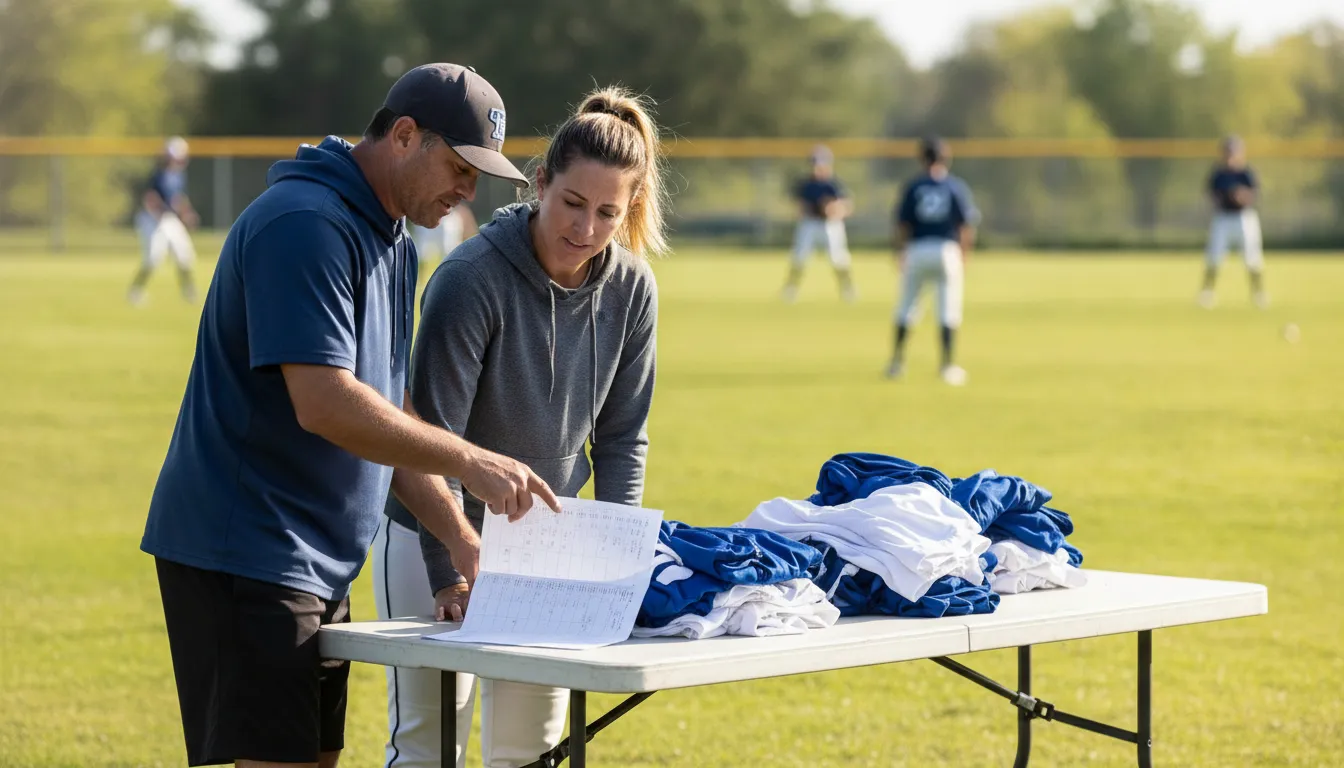
Create one section for varsity, JV, freshman, and other school teams. For each group, record the projected roster, confirmed players, and any likely additions. If the roster is still changing, mark the estimate clearly rather than presenting it as final. Include coaches and staff separately when they need coordinated gear, since their apparel should not quietly reduce the player count or disappear from the purchase order.
Next, identify the use case for each item. Some programs need one primary game set; others may need separate home and away garments, reversible jerseys, or dedicated practice apparel. The right choice depends on the school schedule, laundry process, uniform policy, and whether players share equipment. A written distinction between game sets and practice use makes the final quantity easier to review.
Allow for changes without losing control
A replacement reserve can cover normal roster changes, misplaced garments, damage, or a late addition. But it should be based on the program's experience rather than an arbitrary percentage. Review recent seasons with the coach and athletic office. Ask how often sizes changed, whether players were added after the order, and which items required replacement. Keep that reserve visible as its own worksheet line.
Before approval, assign ownership for each decision. The coach can confirm roster and functional needs. The athletic director often coordinates the full request, while an administrator, purchasing office, or booster club may control design approval, funding, or the purchase order. Confirm who approves quantities, artwork, and spending so the vendor receives one documented direction.
Uniforms Express documents roster management, size records, bulk ordering, and fill-in orders in its customer portal. Those tools can support continuity, but the program should still retain its own approved worksheet, final sizes, artwork, and order history. That record makes the next complete team uniform packages review more precise and helps separate a true replacement need from a new request.
How Should Athletic Directors Handle Basketball Uniform Sizing?
Use measured player data, garment samples, and the supplier's size chart rather than assigning sizes by age, position, or last season's order. Record each player's measurements, preferred fit, jersey size, short size, and inseam in one worksheet, then have the coach and program administrator review exceptions before approval.
Review basketball uniform sizing and fit guidance before collecting the roster.
Start with measurements and samples
Ask players to try representative samples whenever possible. A sample gives the staff a practical way to compare shoulder room, chest fit, body length, arm openings, waistband comfort, and ease of movement. It also helps reveal whether a player prefers a closer athletic cut or a roomier fit for layering and movement. Do not assume that two athletes with the same height or position need the same size. Body shape, growth, personal preference, and the cut of the garment all affect the final choice.
Use the supplier's size chart alongside the samples, and document which sample each player tried. If a player falls between sizes, note the reason for the selected size instead of relying on memory. That record gives the coach and ordering contact a clear basis for resolving questions before the purchase order is submitted.
Separate jersey, short, and inseam decisions
Jersey and short sizes do not have to match. Record them as separate fields so a player who needs a larger jersey can still receive shorts that fit securely and comfortably. Also confirm the desired short length across the program. Uniforms Express documents basketball shorts in Hydratech or Hydratech Stretch Woven fabric, with a standard 9-inch inseam and 10-inch and 11-inch options. Select the inseam as a program decision, then flag individual exceptions for review.
Basketball jerseys are documented as fully sublimated in 100% Polyester Hydratech Performance Fabric. That fabric and decoration method should be included in the product notes, but sizing still needs to be validated through measurements and samples. A fabric choice does not replace a fit check.
Build a worksheet that survives roster changes
Your worksheet should include player name or roster ID, team level, jersey size, short size, inseam, measured date, sample tried, fit notes, and approval status. Keep varsity, junior varsity, freshman, and other program levels separated. Add columns for late additions, replacements, and any approved size changes. Before submitting the order, compare the worksheet against the active roster and have one designated person confirm the final counts.
Save the approved size records with the artwork and order details. This creates a useful starting point for future reorders without treating last season's data as automatically correct. Recheck returning players when the garment cut, fabric, or preferred fit changes.
How to Choose High School Basketball Uniforms for School Branding
Choose a basketball uniform design by documenting the school's approved colors, marks, typography, player names, numbers, and placement before production. Then compare the decoration method with the garment and review a complete visual proof. Use an online design tool to collect feedback from coaches, administrators, and other authorized stakeholders.
Start with the elements that must remain consistent across every team level. Record the official color references, primary and secondary marks, mascot treatment, lettering style, and any requirements for player names and numbers. A school may have more than one acceptable logo, but that does not mean every version belongs on a jersey. Identify which mark goes on the front, side panel, short, or warmup, and specify whether names appear above the number, below it, or not at all.
Numbers deserve their own review. Confirm the number range, font, outline, contrast, and location so the design remains readable from the stands and consistent across the roster. Keep a written artwork proof that shows the front, back, and any alternate or reversible views. It should also list the final color and placement decisions, rather than relying on a screenshot or an informal message.
Match the decoration method to the garment
Decoration terms describe different production approaches, so avoid treating them as interchangeable. Uniforms Express documents tackle-twill, sublimation, screen printing, heat press, and embroidery across its offerings. However, basketball jerseys are specifically documented as fully sublimated, meaning the design is incorporated into the fabric rather than treated as a separate patch. Confirm the method available for each garment before approving the final artwork, especially when jerseys, shorts, warmups, and accessories are ordered together.
The product and decoration choice should support the intended look, wear, and consistency of the program. Review how the school mark, name, and number will appear on the selected fabric and color combination. If the basketball jersey is fully sublimated, check the complete digital rendering. Do not assume a logo will be applied in the same way as tackle-twill or heat press decoration.
Use shared design review to prevent late changes
An online design tool can make stakeholder review more concrete. The Uniforms Express tool supports team colors, lettering fonts, layout choices, logo upload and placement, saved and shared designs, and real-time 3D visualization. Use it to create a starting concept, invite focused feedback, and narrow the discussion to decisions the school can actually approve.
Before requesting a quote, circulate one final proof with the design name, garment views, decoration method, color choices, and roster-specific name and number rules. Ask the coach to verify basketball usability. Have the administrator or athletic director verify school branding, and ask the authorized purchaser to confirm the approved version. This simple record reduces artwork changes and gives the program a dependable reference for future reorders. Explore the online uniform design tool when the group is ready to visualize options together.
What Should the School Approve Before Ordering?
Before ordering, the school should approve the final artwork proof, quantities by team level, player sizes, the current quote, purchase-order requirements, and the source of funds. Assign each decision to the right person, record the approval, and keep one final specification file so the order is clear to everyone.
Start with the artwork proof. It should show the school colors, logos, team name, player numbers, lettering, and placement on each garment. Check both sides of reversible items if applicable, and compare the proof with the school's approved marks. A design tool can help coaches and administrators review colors, fonts, layouts, and logo placement before the proof is routed for sign-off. The proof is not approved until the designated decision-maker confirms that the version matches the intended order.
Next, reconcile the quantities and sizes against the latest roster information. Separate varsity, junior varsity, freshman, practice, warmup, coach, and replacement needs rather than combining everything into one total. Have the coach or team manager verify player names, numbers, and sizes. Then ask the athletic office or administrator to confirm that the quantity worksheet matches the funds being requested. A related guide to complete team uniform packages can help teams scope the set before final approval.
Approval item. | What to confirm. | Owner to consult. |
Artwork. | Colors, marks, names, numbers, fonts, and placement. | Coach and school brand approver. |
Order scope. | Team levels, garments, quantities, sizes, and replacements. | Coach and athletic office. |
Purchase. | Current quote, funds, purchase order, and required documents. | Administrator or purchasing office. |
Confirm the quote and purchase process
Request a current quote that identifies the sport, products, decoration method, quantities, and contact information. Review every line against the approved worksheet. Do not rely on an earlier estimate if the roster, garment selection, decoration, or quantity has changed. Current pricing and terms should come from the quote for the specific order, not from a previous season or an informal conversation.
Ask the school administrator or purchasing office whether a purchase order is required, who can issue it, and what documentation the supplier needs before production begins. Some schools may also require a vendor form, tax documentation, or an internal approval number. Those requirements vary, so treat them as items to confirm with the school's own purchasing process rather than assumptions about every school.
Clarify booster-club responsibilities
If a booster club contributes funding, establish its role before anyone submits the order. Decide whether the club approves the design, pays all or part of the order, collects player information, or only recommends options. The athletic director, coach, administrator, and booster representatives may have different authority. Write down who approves design, quantity, and spending so an informal discussion is not mistaken for final authorization.
Keep the approved proof, quantity worksheet, size records, quote, purchase order, payment confirmation, and final product details together. This documentation gives the school a shared reference for delivery inspection, corrections, and future additions. It also helps the next coordinator understand exactly what was ordered without rebuilding the decision from scattered emails.
How Do You Plan the Uniform Timeline and Future Reorders?
Plan backward from the first scheduled game, allowing time for roster finalization, size collection, artwork proofing, production, shipping, and inspection. Confirm the supplier's current turnaround terms for your order, then preserve approved specifications so additions and replacements do not require the school to restart the process.
Start with the date uniforms must be in hand, not the date someone hopes to submit an order. Work backward through these checkpoints:
- Roster finalization:
Confirm team levels, active players, sizes, names, and numbers. Decide how late roster changes can be accepted without disrupting approval or production.
- Proof approval:
Review colors, logos, lettering, number placement, garment styles, and quantities in one written proof. The coach, athletic department, administrator, or booster club should know who has final authority before the proof is released.
- Production and shipping:
Ask when production begins and what event starts the stated turnaround. Confirm how shipping is handled and what rush or emergency options may be available. Uniforms Express describes six-week guaranteed on-time delivery for standard custom orders from payment receipt. Rush availability is subject to conditions and capacity. Confirm those terms for the specific order rather than treating them as a universal promise.
- Inspection:
Build in time to compare the delivered uniforms with the approved proof. Check quantities, sizes, names, numbers, colors, decoration, stitching, and packaging before distributing equipment to players.
For a fuller checkpoint-by-checkpoint planning model, use this team uniform ordering timeline alongside your school calendar and purchase-order process.
Make future additions easier
Keep a final order packet in a shared athletic department location. Include the approved artwork, exact color references, garment names, size breakdown, player names and numbers, purchase order, approval record, delivery notes, and any changes made during production. A portal that retains order history, roster information, and size records can also help the next coordinator work from verified information instead of an old email thread.
When a player joins late or a uniform needs replacement, ask whether one-piece fill-in orders. Exact color and style matching, and any stated protection period apply under the current terms. Uniforms Express reports these options, but conditions should be confirmed before promising a match or schedule. Preserve the original specifications, identify the specific item needed, and compare the new proof with the prior order before approving it.
Request a current team quote and confirm your production timeline once your roster, proof, and delivery date are ready.
Frequently Asked Questions
How many uniforms should a high school basketball program order?
Build a separate quantity worksheet for varsity, junior varsity, freshman, and other levels. Confirm each active roster, coaches' gear, practice needs, likely roster changes, and a small replacement reserve before requesting a quote. Keep game uniforms, practice apparel, warmups, and accessories as separate line items.
How should players be sized for basketball uniforms?
Use current player measurements, a supplier size chart, and sample garments when available rather than estimating from age or position. Record jersey and short sizes by player, verify the intended cut and fit, and confirm short inseams. Basketball shorts are offered with a standard 9-inch inseam plus 10- and 11-inch options.
Which decoration method is best for school basketball uniforms?
Choose the method based on the garment, artwork, durability expectations, and school approval requirements. Uniforms Express documents several methods across its offerings, while its basketball jerseys are specifically described as fully sublimated. Put colors, logos, names, numbers, fonts, and placement in a written proof before approval.
How early should a school order basketball uniforms?
Work backward from the first game, allowing time for roster confirmation, sizing, artwork proofing, approvals, production, shipping, and inspection. Uniforms Express describes six-week guaranteed on-time delivery for standard custom orders from payment receipt, with rush options subject to conditions and capacity. Confirm current terms for the specific order.
How can a school plan its uniform budget?
Separate the budget by team level and identify every included item before comparing quotes. Confirm quantities, decoration, garment choices, shipping, replacement needs, and purchase-order requirements. Establish whether the athletic director, coach, administrator, or booster club approves the design, quantity, and spend, then request a current quote rather than relying on an old price.
Ready to Review Your Basketball Uniform Options?
A focused review can help your school align roster quantities, branding, sizing, and approvals before requesting a current team quote. Review current basketball uniform options and contact the Uniforms Express team to discuss your school's needs and begin a design conversation. Bring your estimated quantities, preferred colors, logo details, and target ordering window so the next step stays clear and practical.
Comments