


Custom Lacrosse Gear: Complete Team Order Checklist

A lacrosse order can look complete when every player has a jersey, yet fail on game day when practice pinnies, sideline layers, accessories, or replacement records are missing. Coaches and team managers can prevent that scramble by planning the full gear system around the roster, the practice schedule, and the dates when players need each piece.
Review custom lacrosse uniforms and apparel before you build your team checklist.
Custom lacrosse gear should bring uniforms, pinnies, warm-ups, accessories, names and numbers, sizing records, and reorder information into one organized plan. Collecting those details together helps protect team consistency while giving your supplier the information needed to confirm product choices, decoration, and order timing.
Start by defining what each player needs for games, practices, travel, and the sideline. From there, the right package becomes a practical sequence of categories, specifications, and roster checks rather than a last-minute scramble.
What Should a Custom Lacrosse Gear Order Include?
A complete custom lacrosse gear order should account for game uniforms, practice pinnies, warm-ups, accessories, personalization, sizing records, and future reorders. Coaches and team managers can audit each category before requesting a quote. Confirm who needs what, which details are approved, and how the order will support the full program.
Start with the season's actual operating needs rather than treating the jersey as the entire order. A school team may need a core game set and practice pieces, while a club or travel program may coordinate multiple sets for year-round competition. Record quantities by player group, then identify shared design and personalization requirements.
Category. | Include in the audit. | Confirm before requesting a quote. |
Core uniforms. | Game jerseys, shorts or bottoms, and any home, away, or alternate set. | Garment types, quantities, sizes, colorways, and roster assignments. |
Practice pinnies. | Training pieces needed for scrimmages, drills, or color separation. | Quantity, reversible or single-sided construction, and decoration scope. |
Warm-ups. | Jackets, hoodies, pants, or other sideline layers. | Which roles need them, size breakdown, and matching team identity. |
Accessories. | Socks, belts, stirrups, and other approved apparel accessories. | Use case, quantity, artwork, and whether items belong in the same delivery. |
Personalization. | Names, numbers, logos, team marks, and decoration locations. | Locked roster, spelling, number assignments, and decoration method. |
Reorder planning. | Expected new players, replacements, size changes, and damaged-item needs. | Saved color, style, and roster records for future matching. |
Keep one controlled checklist and one current roster file. For example, if a high school roster has 22 players, record 22 game sets, the practice-pinnie quantity, any coach or staff layers, and every accessory by recipient instead of estimating from last season's order. The person requesting the quote should be able to explain which items are required, which are optional, and which details still need approval. That distinction prevents a practice item or accessory from being mistaken for a required game piece.
For a broader look at available categories, review custom lacrosse uniforms and apparel. Then ask for order-specific guidance on product compatibility, personalization, production timing, and the cleanest way to handle later roster changes. A thorough first request gives the supplier the information needed to scope the whole team order instead of solving each category separately.
How Do Uniforms and Pinnies Work Together?
Uniforms identify your team during games, while pinnies make practices easier to organize when players need quick color-based groups. A coordinated set can carry the same colors, logos, and numbering across both uses. Reversible pinnies add flexibility by giving coaches two team-color options without replacing the primary game uniform.
Game uniforms are the consistent, finished look your team wears for competition. They typically carry the core visual identity: the approved colors, player numbers, and the decoration choices that need to remain consistent from one season to the next. Practice pinnies have a different job. They help coaches separate squads, scrimmage teams, or defensive and offensive groups quickly, often over a player's regular practice shirt or protective equipment.
Choose the right practice format
A standard pinnie can be a simple, lightweight layer in one team color. A reversible version can provide two coordinated looks, which is useful when a practice requires a clear color change. Reversible pieces may combine team colors, a logo, and numbers on opposite sides. Before ordering, decide whether coaches need a second color for drills or only a single practice layer. That choice affects roster allocation and how much visual information belongs on each side.
Numbered pinnies are especially helpful when coaches need to identify players quickly during drills, evaluations, or video review. If a 22-player squad uses one pinnie per player, keep those numbers aligned with the game roster rather than creating a second system. Reserve any additional pieces as clearly labeled spares only after the coach defines the use case. Keep a record of player name, assigned number, size, color, and garment type so the next order does not require rebuilding the roster from memory. For more detail on numbered options, see this guide to lacrosse pinnies with numbers.
Coordinate the order before production
Start with a shared color reference for uniforms and pinnies. The practice layer does not need to duplicate every uniform detail, but it should look intentional beside the game kit. Confirm which side of a reversible piece carries the primary color, where the logo appears, and whether numbers must be visible on both sides. Decoration methods can include tackle-twill, sublimation, screen printing, heat press, or embroidery, depending on the garment and the intended result. Keep the choice consistent with the rest of the order and confirm the final application with the supplier.
Finally, separate the roster into game uniforms, practice pinnies, and spare pieces before submitting quantities. A practical allocation may give every player a numbered pinnie while reserving a few unassigned pieces for new players, coaches, or replacements. The youth lacrosse pinnies guide can help with the practice-side selection, while your order worksheet should preserve the exact colors, numbers, sizes, and decoration notes used across the complete set.
Which Warm-Ups and Sideline Layers Belong in the Package?
Warm-up jackets, hoodies, and training layers help a team stay coordinated before games, between sessions, and along the sideline. The right package depends on who needs each piece and when it will be worn. Add these items to the same planning conversation as uniforms, practice apparel, and accessories, then confirm product availability, decoration, and production timing for the complete order.
Plan by role, not by habit
Start with the moments your team needs to cover. A lightweight training layer may suit players moving through warm-ups or traveling between fields. A jacket or hoodie may be more useful for coaches, staff, and athletes waiting on the sideline. Club and travel programs may need more than one layer because teams compete across seasons and spend more time in transit. Youth leagues and volunteer-run programs, meanwhile, may benefit from a simpler package that is easy to distribute and reorder.
Make the distinction clear on the roster or order worksheet. Identify the wearer, layer type, size, quantity, and decoration requirements in one place. This prevents a coach from approving a team-wide hoodie while overlooking staff jackets or players who need training apparel in a different size range.
Keep the look coordinated
Warm-ups should support the visual system already established for the team. Carry forward the approved team colors, logo treatment, and naming conventions rather than creating a separate look for outer layers. Depending on the garment and the design, decoration may use methods such as tackle-twill, sublimation, screen printing, heat press, or embroidery. The suitable method should be confirmed for the specific product and artwork, not assumed from the uniform order.
A coordinated layer can also simplify game-day organization. Players can move from warm-up to competition without the program looking pieced together, while coaches and staff remain visibly connected to the team. For a deeper look at jackets, hoodies, and sideline apparel, review custom team warm-up apparel without duplicating that guide's product discussion here.
Confirm timing before promising a delivery date
Include warm-ups in the same schedule review as the rest of the package. Company-owned manufacturing can provide control over production scheduling, quality assurance, and delivery timelines, but the actual timing still depends on the selected products, order details, and available capacity. If the season is close, ask about rush service early. Rush timing is available on request, yet it must be confirmed for the specific order and may involve premium pricing. Treat that conversation as part of planning, not as a guarantee.
Before approval, verify the layer list against the roster, decoration specifications, and target in-hands date. That final check keeps sideline apparel from becoming the overlooked piece of an otherwise complete custom lacrosse gear order.
What Accessories Make a Lacrosse Team Order More Complete?
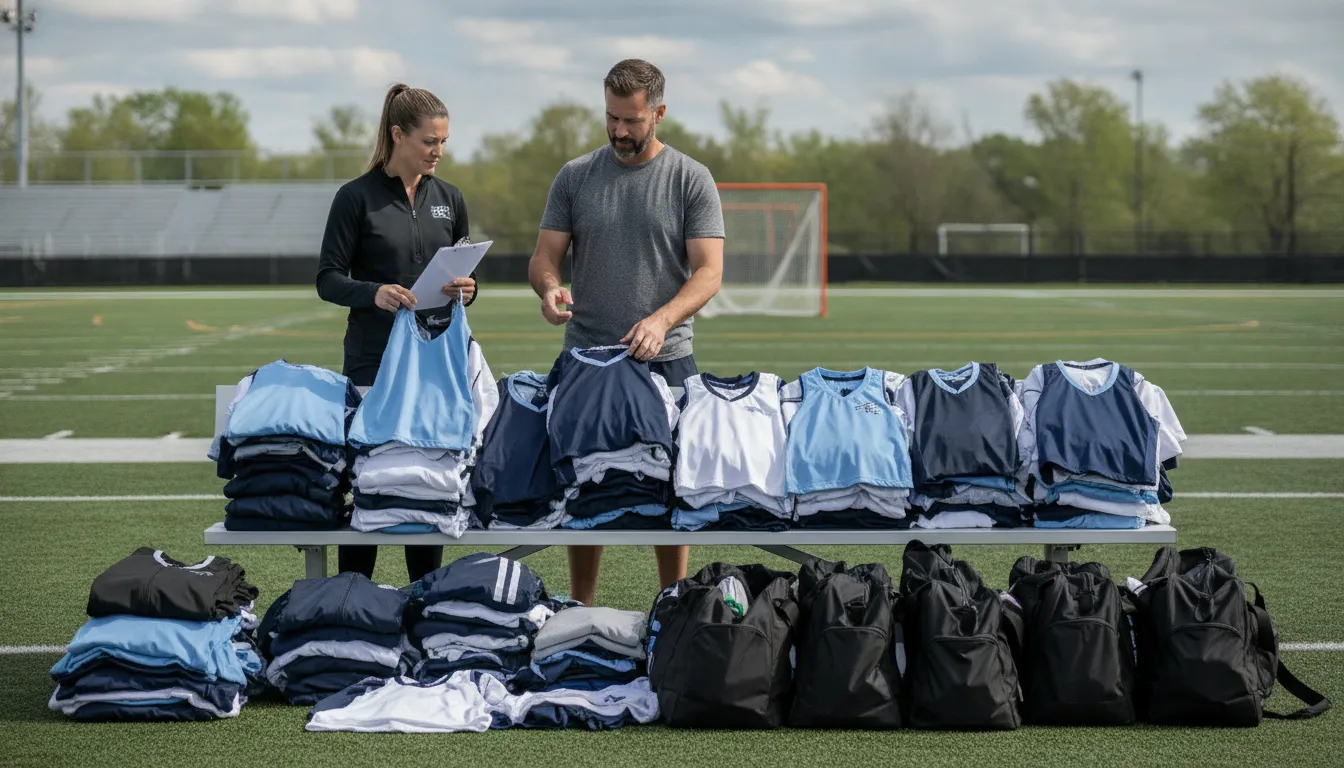
A complete team order connects the items players and staff use beyond the core uniform. Team bags, practice accessories, and coordinated extras can reinforce a shared identity while simplifying distribution. Keep those apparel-related choices separate from protective equipment, which must meet league rules and the original manufacturer's fit, use, and replacement requirements.
Start with the bags players actually need
If your program is considering a team bag, choose a format that matches how it operates. A compact drawstring bag may work for a practice layer or personal essentials. While a larger duffle can help players carry apparel and equipment between practices, games, and travel. Confirm capacity, carrying options, decoration area, and whether the bag will be assigned to every player or reserved for coaches and staff before adding it to the order.
Use the same team colors, logo treatment, and naming convention across bags and apparel where appropriate. That consistency makes distribution easier and helps staff identify team property quickly. It also gives club and travel programs a recognizable look across multiple groups without forcing every accessory to duplicate the uniform.
Coordinate useful extras, not random add-ons
Use verified apparel accessories for a clear ordering plan. Socks, belts, and stirrups can support the lacrosse uniform package when the product and team design call for them. Record the accessory, recipient or size group, quantity, decoration or color requirement, and whether it must arrive with the uniform. If your program is considering a different sideline item. Treat it as a planning question and ask the supplier to confirm availability rather than assuming it is part of the assortment.
Keep the apparel and accessory plan distinct from helmets, pads, gloves, and other protective equipment. Those items are not simply decoration extensions. Coaches and administrators should confirm current league requirements and follow each manufacturer's sizing, inspection, care, and replacement guidance. A custom apparel supplier can help coordinate the visual program, but protective-equipment compliance belongs in its own review.
For a deeper look at the uniform side of the program, use this uniform-focused lacrosse guide. Then add accessories to the same order worksheet, with a product, recipient, size or capacity, decoration, and quantity recorded for each line.
How Should Teams Handle Names, Numbers, and Decoration?
Teams should consolidate names, numbers, logos, colors, decoration methods, and sizes into one controlled specification before production. That single source of truth lets coaches compare every garment category against the same identity rules. Catch roster conflicts early, and preserve a consistent look across game uniforms, practice pieces, warm-ups, and accessories.
Start with the identity decisions that apply everywhere. Record the official team name, approved logo files, primary and secondary colors, trim or outline colors, and any rules for logo placement. Then define which items receive player names, numbers, team marks, or no personalization at all. A jersey may need a full player treatment, while a warm-up or bag may only need the team logo.
Keep the specification structured rather than burying decisions in email threads. A useful sheet can include:
- Roster fields:
player name exactly as it should appear, number, garment size, and any approved exception.
- Identity fields:
team name, logo version, color references, and required contrast treatment.
- Decoration fields:
placement, lettering style, number style, and method for each product category.
- Control fields:
revision date, approval owner, open questions, and the final version used for the order.
Decoration methods can include tackle-twill, sublimation, screen printing, heat press, and embroidery. The right choice may differ by item, but the decision should be intentional. For example, a detailed sublimated pattern may carry the team identity across a garment. While a sewn or pressed name and number may create a distinct finish on another piece. Do not assume that the same treatment belongs on every surface. Specify the method, location, size, and color treatment for each category.
Use the roster as a production control, not just a list of players. Sort it by number to identify duplicates, check names character by character, and compare the roster against every personalized item. Mark unresolved players or numbers as pending instead of guessing. Uniforms Express describes quality assurance that pays attention to sizing and color consistency, but that process is strongest when the team supplies one current, approved specification.
Before approval, review the cross-category result. A number outline that works on a dark jersey may need a different contrast rule on a light pinnie. A logo that is legible on a warm-up may need a simplified placement on a smaller accessory. The goal is not identical decoration everywhere. It is a recognizable team system with clear exceptions.
For a deeper preparation resource, use this uniform design checklist, then bring the resulting decisions back into the broader team-order specification. Keep one named owner responsible for locking the final version, and archive that file for future replacements or roster changes.
How Do Sizing, Reorders, and Season Timing Fit Together?
Build the order around one current roster, one approved size record, and one season timeline. Confirm apparel sizes and personalization before production, then preserve the product, color, and style details for future replacements. Plan reorders for new players, damaged items, and size changes, while confirming any rush request against the product and available capacity.
Set the roster and sizing record first
Start with a single roster that includes each player's name, number, requested items, size, and any approved personalization. Separate confirmed information from open questions so a late response does not become an accidental assumption. For a club or travel program, identify which players need more than one set and which items belong to practice, competition, or sideline use. Keeping these records together makes the initial bulk order easier to review and gives the team a reliable starting point for later fill-in orders.
Check protective equipment separately
Custom apparel planning should not replace equipment-safety checks. Helmet fit varies by brand and model, so follow the manufacturer's fit instructions and sizing chart. The CDC advises that a lacrosse helmet should fit snugly without gaps between the pads and the athlete's head. Do not use a helmet with cracks, broken parts, or missing padding. Review the CDC lacrosse helmet fit and inspection guidance with the appropriate equipment decision-maker. This boundary keeps apparel coordination distinct from protective-equipment selection, and it does not imply that Uniforms Express sells helmets.
Lock color, style, and decoration details
Before approval, compare the roster against the exact garment, color, style, and decoration specifications. This matters most when names or numbers vary by player. Uniforms Express describes quality assurance across production stages, with attention to sizing and color consistency. Keep the approved specification with the order record, rather than relying on memory or a screenshot that does not identify the full item.
Build a reorder reference before the season starts
Save the original order details where the team manager can find them. Reorders may be needed for new players, lost or damaged items, or size changes. Most custom items are subject to a 12-piece minimum, so do not promise a one-piece reorder without product-specific confirmation. For a midseason addition, list the player's exact garment, size, number, color, and prior order reference, then ask Uniforms Express to confirm the current minimum and matching availability. Use this team uniform reorder checklist to identify the information a replacement request should carry.
Connect the purchase order to the season calendar
Work backward from the first game, team photo, tournament, or other date that makes the gear necessary. Allow time for roster collection, size review, artwork or decoration approval, production, and receiving inspection. Company-owned manufacturing provides control over scheduling and quality assurance, but timing remains order-specific. If the season is approaching, ask about rush service early. Rush timing depends on the product and available capacity, and premium pricing may apply. The team uniform purchase order resource can help organize the final submission and approval trail.
The goal is not simply to submit a large order. It is to create a clean record that can be checked before production, received against the roster, and reused when the team changes. That discipline protects consistency without forcing every future replacement into a last-minute scramble.
When Should You Finalize Custom Lacrosse Gear?
Finalize custom lacrosse gear after your team scope, roster information, product specifications, and artwork or decoration details are confirmed. Start earlier than the season deadline so there is time to review proofs, resolve missing sizes or names, approve final specifications, and account for order-specific production timing. A complete schedule depends on the products, order details, and available capacity.
Start with an internal deadline
Set an internal cutoff before you need the gear in hand. Use that checkpoint to confirm which items belong in the order, who needs each item, and whether personalization applies to every product. Collect the roster, size information, player numbers, staff requirements, color choices, and delivery details in one working document. This gives your supplier a complete scope instead of a sequence of partial requests.
Build in time for questions. A missing player number, unresolved size, or late change to a color or decoration method can affect the final specification. Treat proof and spec confirmation as a real approval stage, not an administrative formality. The order should move into production only after the responsible coach, administrator, or team manager has reviewed the details.
Confirm production timing for the actual order
Ask for an order-specific schedule once the product mix and quantities are known. Company-owned manufacturing can provide control over production scheduling, quality assurance, and delivery timelines, but that does not create one universal lead time for every order. Different products, decoration requirements, quantities, and capacity conditions can change the schedule.
If your season or tournament creates a tight deadline, raise it at the beginning of the conversation. Rush service may be available on request, with timing dependent on the product and available capacity. Premium pricing may apply, so confirm the rush option and its terms before treating it as part of your plan. A normal schedule with complete information is usually easier to manage than a late request built around assumptions.
Review lacrosse uniform and apparel options before setting your team deadline, then request timing for the specific package you plan to order.
Frequently Asked Questions
What should be included in a custom lacrosse gear order?
Start with game uniforms, then decide which practice pieces, pinnies, warm-ups, sideline layers, bags, and accessories belong in the same program. Grouping these decisions early helps keep colors, logos, player information, and delivery requirements consistent across the order.
How should we collect sizes before ordering?
Use one roster sheet with each player's name, garment sizes, number, personalization, and any approved notes. Have players try on comparable garments when possible, and separate confirmed sizes from changes that still need review. Keep the completed sheet for future reorders.
Which decoration method is best for team names and numbers?
The right method depends on the garment, artwork, durability needs, and desired appearance. Tackle-twill, sublimation, screen printing, heat press, and embroidery each serve different applications. Confirm the decoration method and placement during the proof review so every product follows the same team standard.
How far in advance should we order custom lacrosse gear?
Set your target arrival date first, then work backward through roster collection, artwork approval, sizing checks, production, and delivery. Timing varies by product, order details, and production capacity, so request order-specific confirmation before committing to a season deadline. Rush service may be available on request but is not universal.
How can we plan a team gear budget without choosing products too early?
Separate must-have items from upgrades, then count players, coaches, replacements, decoration locations, and accessories before requesting a quote. Ask for the scope to be itemized by product and decoration so your group can adjust quantities or categories while protecting the core team look.
What information makes future reorders easier?
Save the final artwork, color references, product names, size records, player numbers, and the original order details. When a new player joins or an item is damaged or outgrown, provide those records and identify the exact replacement need so the supplier can review matching options.
Ready to Build a Complete Team Order?
Review custom lacrosse uniforms and apparel and request help building a complete team order, including the pieces, personalization, and coordination details your coaches and team managers need to bring the season together.
Comments